Having WiFi managed by a separate chip means your code is simpler, you don't have
to cache socket data, or compile in & debug an SSL library. Instead the Airlift Add-On
allows you to send basic but powerful socket-based commands over 8MHz SPI for
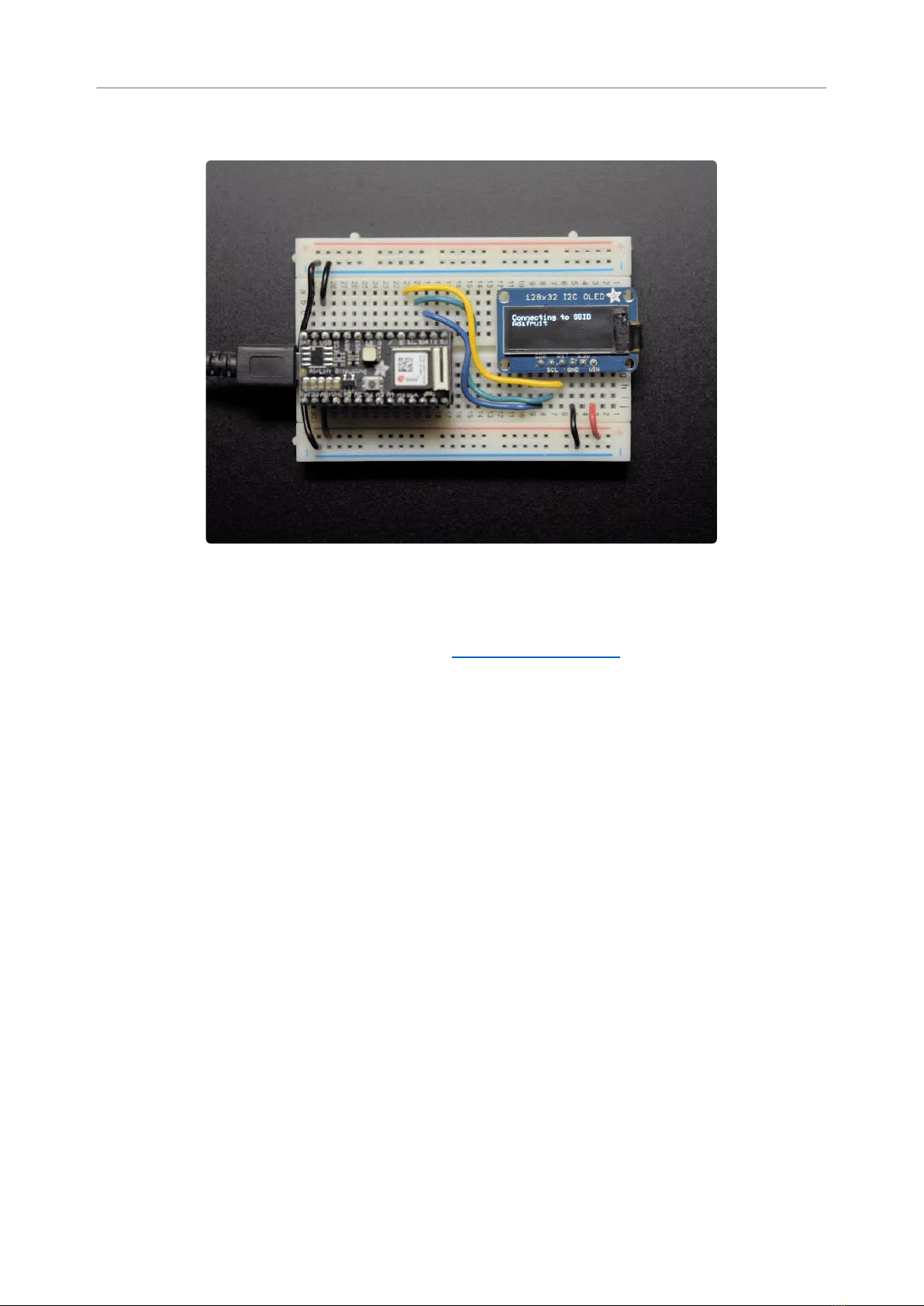
high speed data transfer. You can use the 3V 32u4, M0, or M4 ItsyBitsy in Arduino
although the '32u4 will not be able to do very complex tasks or buffer a lot of databe
causethey do not have a lot of RAM. The add-on also works great with CircuitPython,
though a SAMD51/Cortex M4 minimum required since we need a bunch of RAM. All
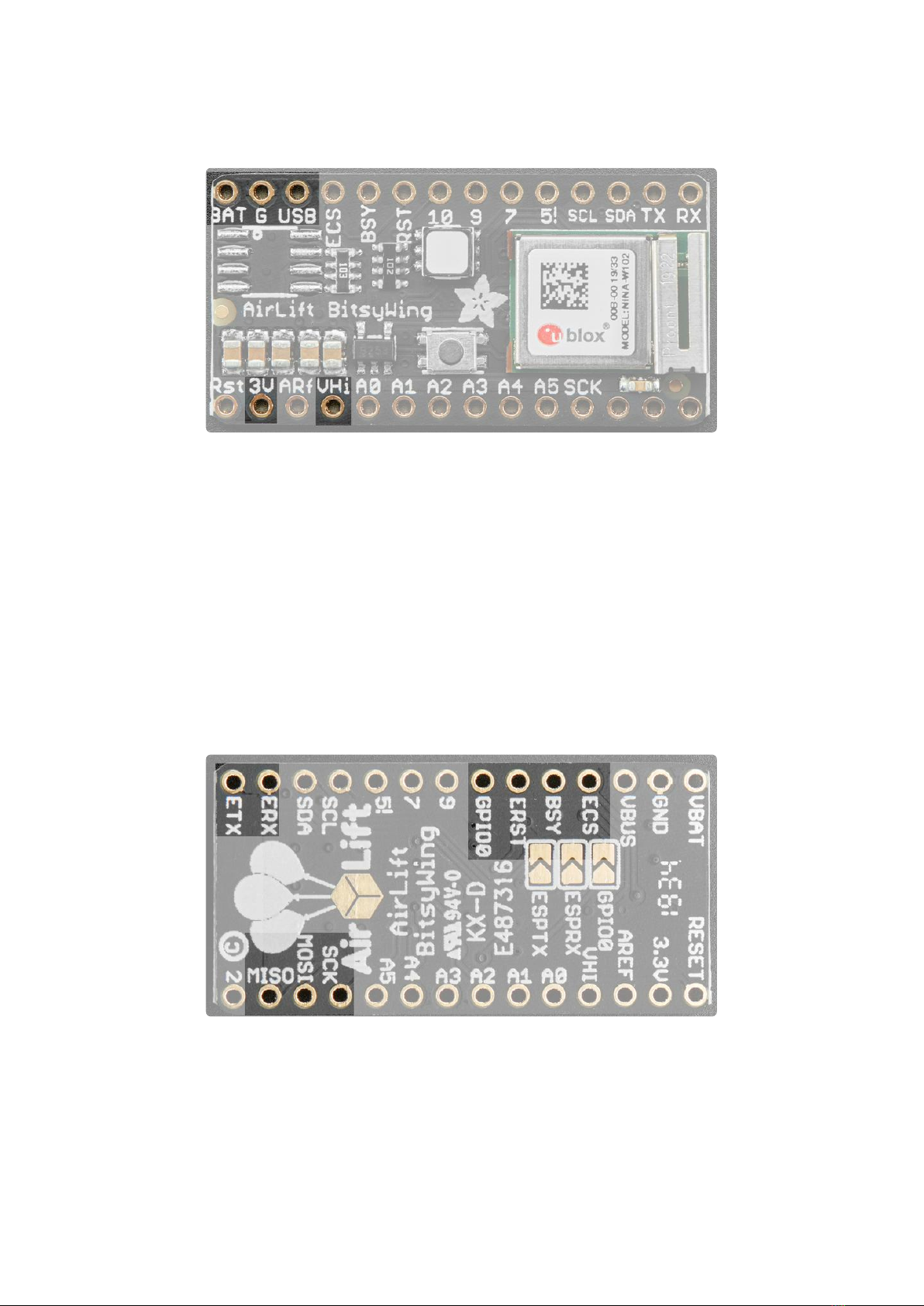
you need is an SPI bus and 2 control pins plus a power supply that can provide up to
250mA during WiFi usage.
The ESP32 also supports BLE (Bluetooth Low Energy), though not simultaneously with
WiFi. Many of our CircuitPython builds include native support for ESP32 BLE. Right
now, we only support the ESP32 acting as a BLE peripheral, but that's sufficient to
communicate with the ESP32 from a phone, tablet, host computer, or another BLE-
capable board. You use a few control pins and the RX and TX pins to talk to the
ESP32 when it's in BLE mode.
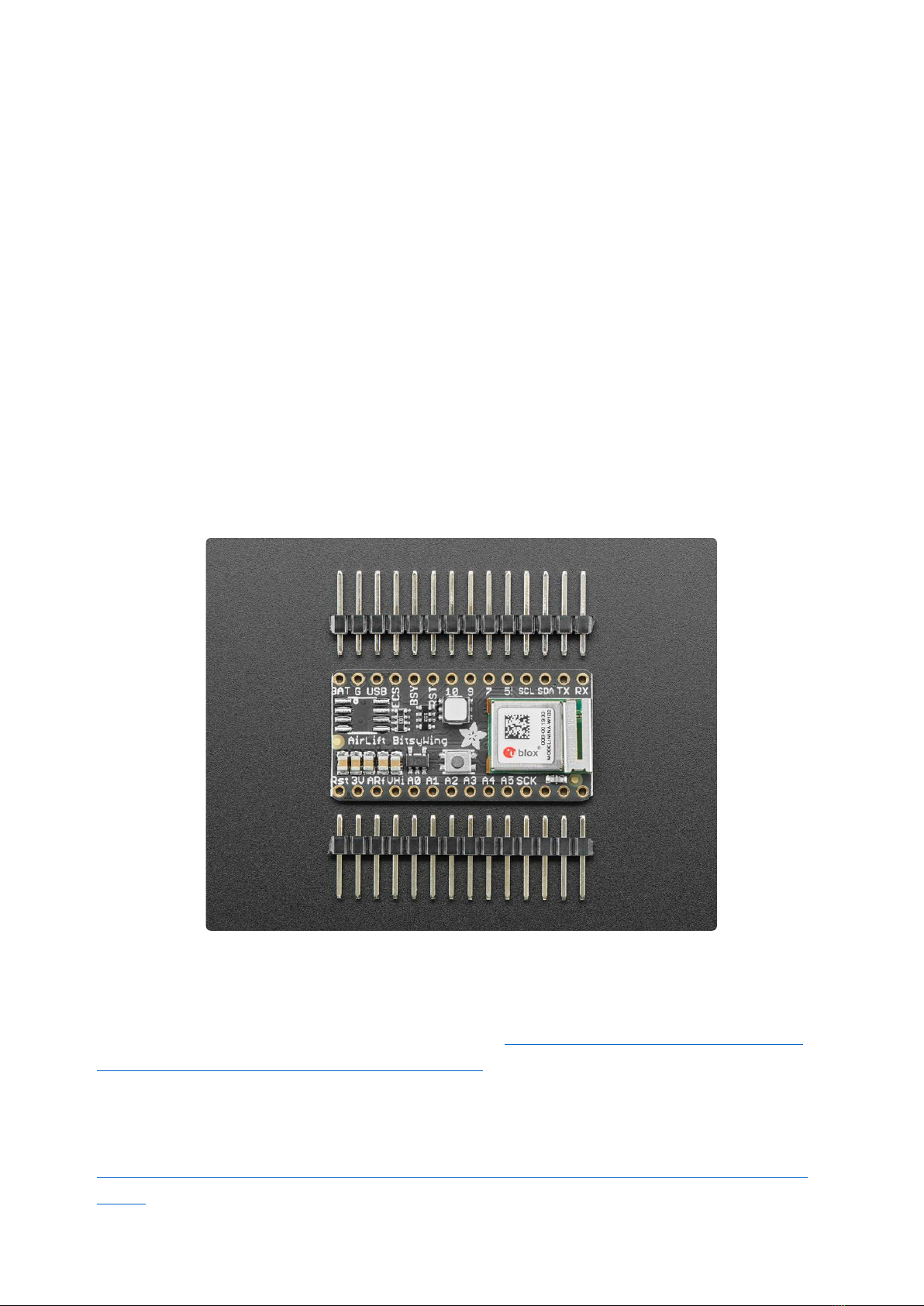
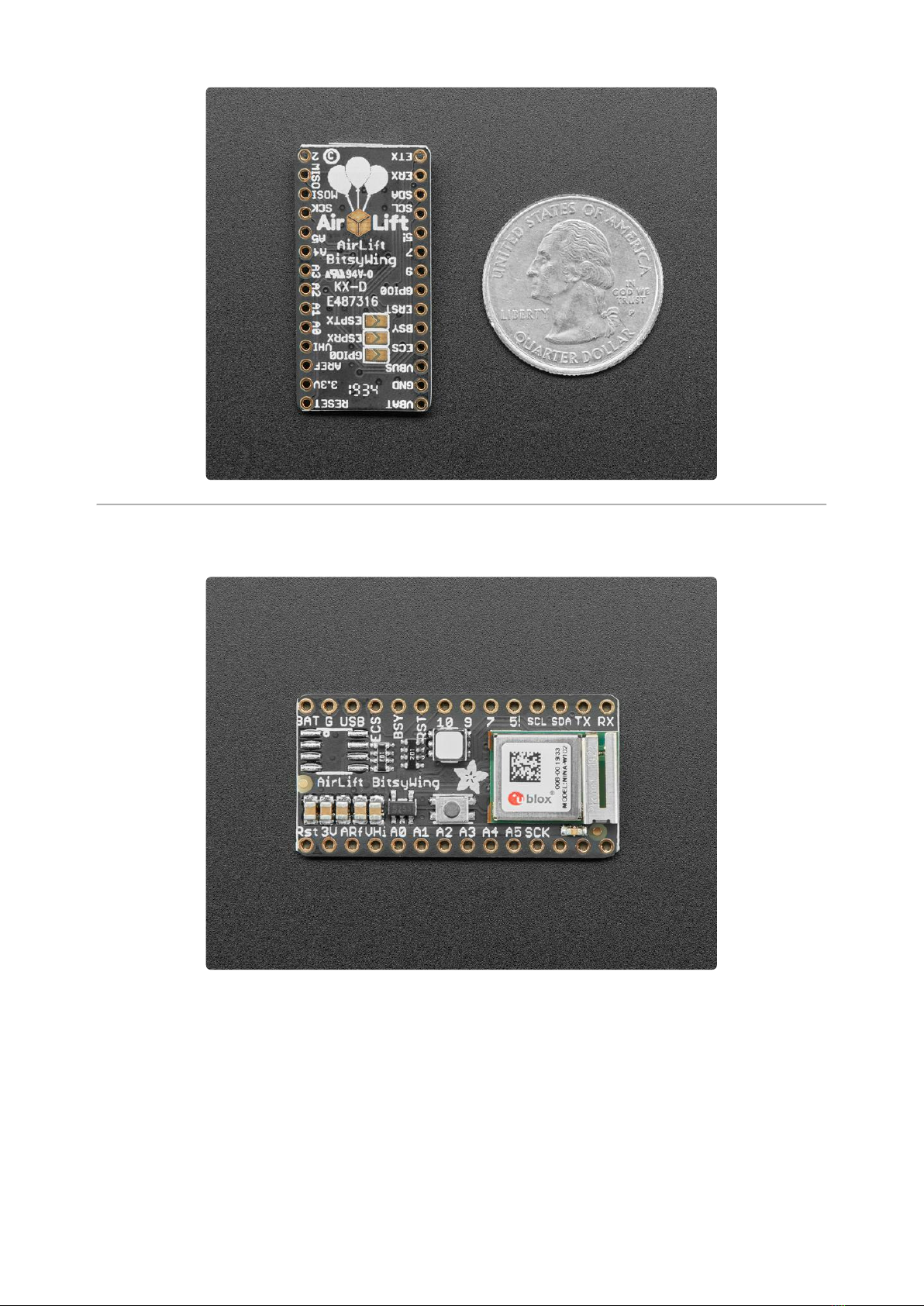
We placed an ESP32 module on a BitsyWing with a tri-state chip for MOSI so you can
share the SPI bus. The add on comes fully assembled and tested, pre-programmed
with ESP32 SPI WiFi co-processor firmware thatyou can use in CircuitPython to use
this into WiFi co-processsor over SPI + 2 pins(https://adafru.it/Evl). We also toss in
some header so you can solder it in thoughyou'll need stacking headers for your
ItsyBitsy to put the add-on on top.
The firmware on board is a slight variant of the Arduino WiFiNINA core, which works
great!(https://adafru.it/E7O)
©Adafruit Industries Page 6 of 54