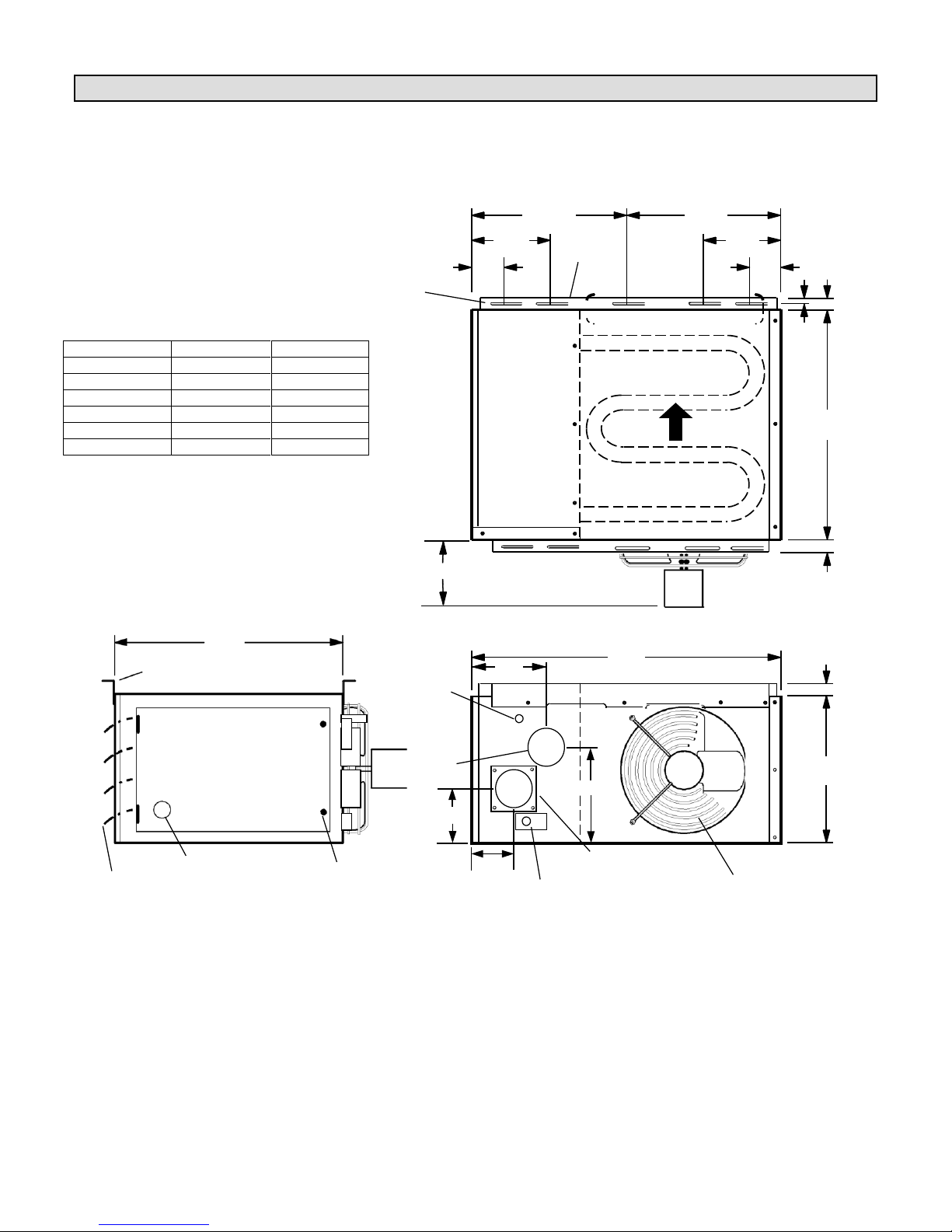
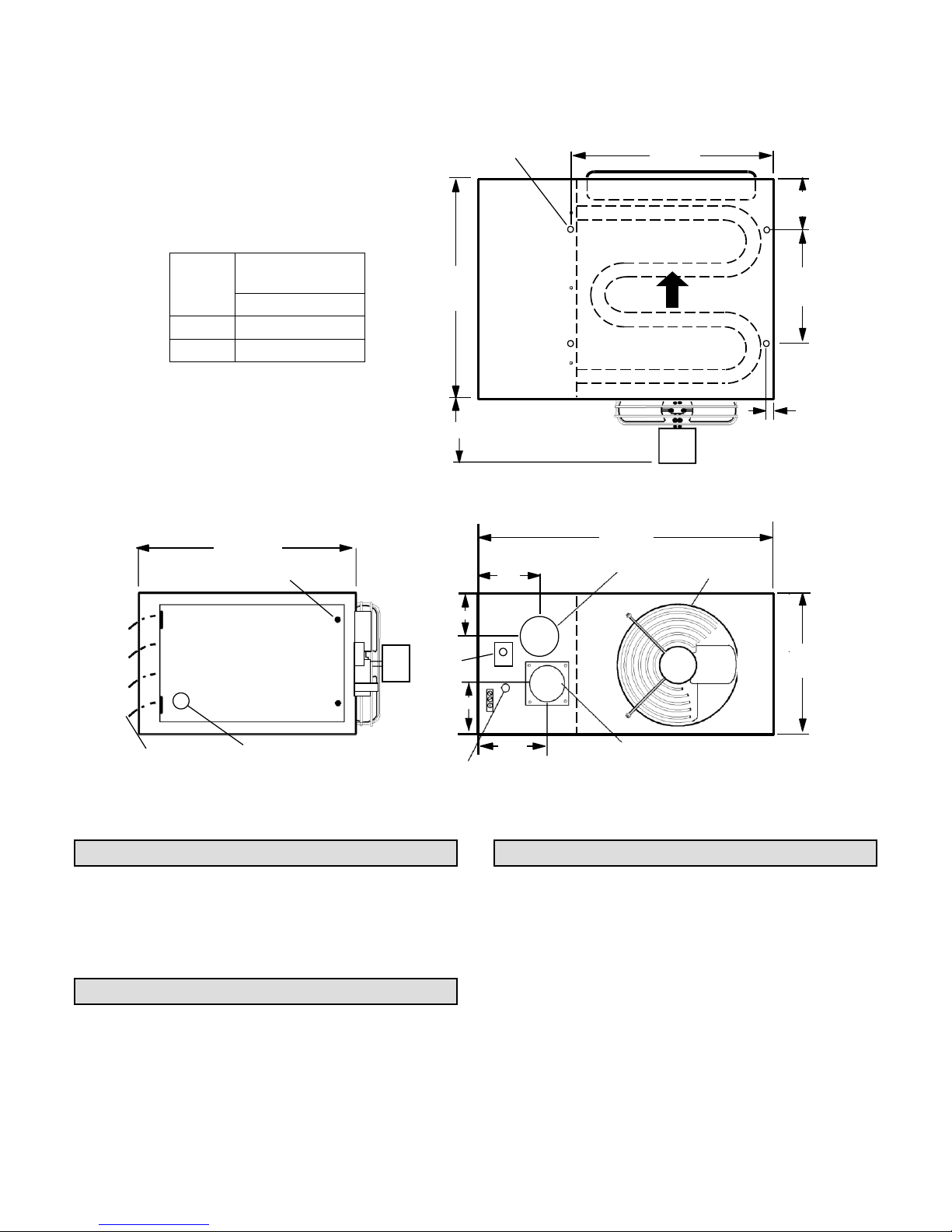
FOA*-100 and −125 units may not be rotated. Threaded
inserts (3/8" X 16) are provided in the top of the cabinet. Two
of the inserts are located along one edge of the cabinet and
two more are located in the divider panel between the heat
exchanger and control compartments.
1) Cut threaded rods to desired length and thread a 3/8" nut
onto the rod.
2) Slide a flat washer on the the threaded rod after the nut
(7/16" I.D. X 1" O.D. X 1/16" THK washer).
3) Screw the four rods into the threaded inserts on the unit.
4) Tighten nuts to secure rods.
Combustion and Ventilation Air
Adequate facilities for supplying air for combustion and
ventilation must be provided in accordance with the current
edition of ANSI Z223.1, section 5.3 and CSA-B149
installation compliance codes, or applicable provisions of
local building codes.
All gas−fired appliances require air to be used for
combustion. In many buildings today, there is a negative
indoor air pressure caused by exhaust fans, etc. If sufficient
quantities of combustion air are not available, the heater or
another appliance will operate in an inefficient manner,
resulting in incomplete combustion which can result in the
production of excessive carbon monoxide.
CAUTION
Insufficient combustion air can cause headaches, nausea,
dizziness, asphyxiation or death.
This unit must be provided with a combustion air pipe that is
connected to the outside atmosphere. Outdoor air used for
combustion must be free of the following substances or the
life of the heat exchanger will be adversely affected: chlorine,
carbon tetrachloride, cleaning solvent, halogen refrigerants,
acids, cements and glues, printing inks, fluorides, paint
removers, varnishes, or any other corrosives.
Exhaust Vent and Combustion Air Inlet
NOTE − The vent is a passageway, vertical or nearly so,
used to convey flue gases from an appliance, or its vent
connector, to the outside atmosphere. The vent connector is
the pipe or duct that connects a fuel−gas−burning appliance
to a vent or chimney. The combustion air inlet is a pipe that
connects the appliance to the outside atmosphere to convey
oxygen from the air to the appliance burner.
NOTE − Local codes may supersede any of these provisions.
GENERAL RECOMMENDATIONS AND
REQUIREMENTS
Unit heaters must be vented in compliance with the latest
edition of the National Fuel Gas Code (NFPA 54 / ANSI
Z223.1) in the USA and with CSA−B149.1 codes in Canada,
as well as applicable provisions of local building codes, and
the following instructions.
An exhaust outlet flange and combustion air inlet flange are
attached to the back of the unit.
A single−wall vent connector may be used between the
furnace and the vertical vent pipe in all applications;
however, single-wall vent material cannot be used for
vertical vent piping in residential applications.
U.L.−approved Category III venting materials must be
used in all residential applications which include
horizontal vent piping.
A single−wall vent pipe used as a vent connector in
residential or commercial applications, or as a vertical vent
in commercial applications, must have all seams and joints
sealed with pressure−sensitive aluminum tape or silicone
rubber sealant. Aluminum tape must meet the provisions of
SMACNA AFTS-100-73 Standards. The aluminum tape
must have a temperature rating of 400°F (204°C). Silicone
rubber sealant must have a temperature rating of 482°F
(250°C), i.e., Dow Corning RTV−736 or equivalent.
All joints must be secured with at least two
corrosion−resistant screws. All joints must be checked for gas
tightness after installation.
Single−wall vent pipe used as vertical vent in commercial
applications must not pass through any attic, interior wall,
concealed space, or floor.
VERTICAL VENTS USING METAL VENT PIPE −
COMMERCIAL AND RESIDENTIAL
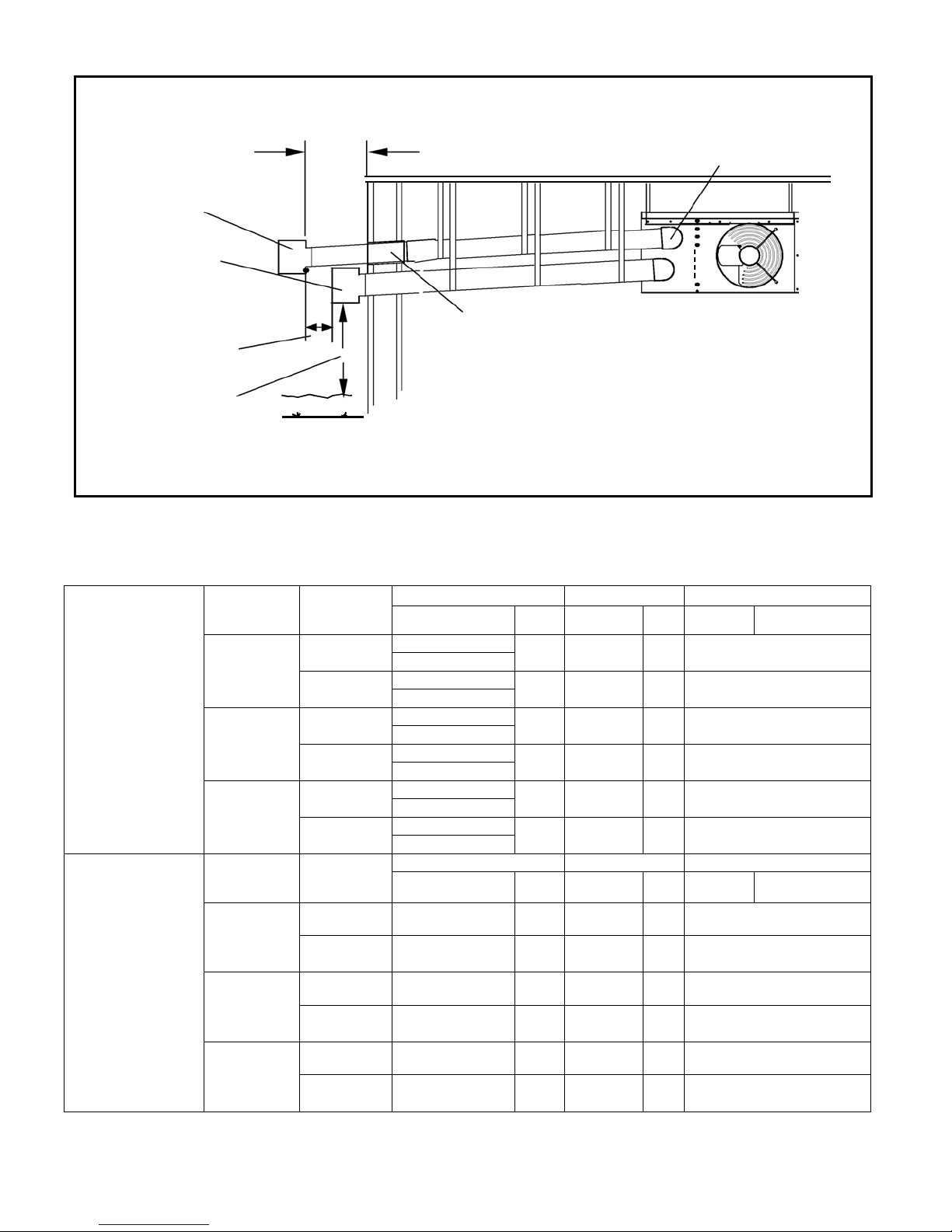
These compact unit heaters are listed as Category 1
appliances for vertical vent installations. See table 3 for
vertical venting requirements.
1) These unit heaters are to be used with NFPA− or
ANSI−approved chimneys or U.L.−listed type B−1 gas
vents, or listed chimney lining systems for gas venting
where applicable, as well as the modifications and
limitations listed in figure 2. Seal single-wall vent
material according to General Recommendations and
Requirements section. Air inlet pipe may be
single−wall metal pipe or U.L.-listed single-wall metal
flex connector.