
Asus U81A Istruzioni per l’uso

Notebook PC
Hardware User’s Manual
E4671/ April 2009

2
Table of Contents
Contents
1. Introducing the Notebook PC
About This User’s Manual �������������������������������������������������������������������������������6
Notes For This Manual������������������������������������������������������������������������������������������� 6
Safety Precautions ������������������������������������������������������������������������������������������7
Preparing your Notebook PC���������������������������������������������������������������������������9
2. Knowing the Parts
Top Side���������������������������������������������������������������������������������������������������������12
Bottom Side���������������������������������������������������������������������������������������������������15
Left Side ��������������������������������������������������������������������������������������������������������18
Right Side������������������������������������������������������������������������������������������������������20
Rear Side�������������������������������������������������������������������������������������������������������21
Front Side������������������������������������������������������������������������������������������������������22
3. Getting Started
Power System �����������������������������������������������������������������������������������������������24
Using AC Power��������������������������������������������������������������������������������������������������� 24
Using Battery Power �������������������������������������������������������������������������������������������� 25
Battery Care��������������������������������������������������������������������������������������������������������� 26
Powering ON the Notebook PC ��������������������������������������������������������������������������� 27
The Power-On Self Test (POST)�������������������������������������������������������������������������� 27
Checking Battery Power �������������������������������������������������������������������������������������� 28
Charging the Battery Pack����������������������������������������������������������������������������������� 28
Power Options ����������������������������������������������������������������������������������������������������� 29
Power Management Modes��������������������������������������������������������������������������������� 30
Sleep and Hibernate �������������������������������������������������������������������������������������������� 30
Thermal Power Control���������������������������������������������������������������������������������������� 30
Special Keyboard Functions��������������������������������������������������������������������������31
Colored Hot Keys������������������������������������������������������������������������������������������������� 31
Microsoft Windows Keys�������������������������������������������������������������������������������������� 33
Multimedia Control Keys (on selected models) ��������������������������������������������������� 34
Switches and Status Indicators ���������������������������������������������������������������������35
Switches��������������������������������������������������������������������������������������������������������������� 35
Status Indicators �������������������������������������������������������������������������������������������������� 36

3
Table of Contents (Cont.)
Contents
4. Using the Notebook PC
Pointing Device����������������������������������������������������������������������������������������������38
Using the Touchpad ��������������������������������������������������������������������������������������������� 38
Touchpad Usage Illustrations������������������������������������������������������������������������������� 39
Dimming the Touchpad ���������������������������������������������������������������������������������������� 41
Caring for the Touchpad��������������������������������������������������������������������������������������� 42
Automatic Touchpad Disabling����������������������������������������������������������������������������� 42
Storage Devices ��������������������������������������������������������������������������������������������43
Expansion Card ��������������������������������������������������������������������������������������������������� 43
Optical Drive �������������������������������������������������������������������������������������������������������� 44
Flash Memory Card Reader �������������������������������������������������������������������������������� 46
Hard Disk Drive���������������������������������������������������������������������������������������������������� 47
Memory (RAM)����������������������������������������������������������������������������������������������������� 48
Connections���������������������������������������������������������������������������������������������������49
Network Connection �������������������������������������������������������������������������������������������� 49
Wireless LAN Connection (on selected models) ������������������������������������������������� 50
Windows Wireless Network Connection �������������������������������������������������������������� 51
Bluetooth Wireless Connection (on selected models) ����������������������������������������� 52
Trusted Platform Module (TPM) (on selected models)����������������������������������53
Appendix
Optional Accessories����������������������������������������������������������������������������������� A-2
Optional Connections ���������������������������������������������������������������������������������������� A-3
Bluetooth Mouse Setup (optional) ��������������������������������������������������������������������� A-4
Operating System and Software������������������������������������������������������������������ A-6
System BIOS Settings ��������������������������������������������������������������������������������������� A-6
Common Problems and Solutions ��������������������������������������������������������������������� A-9
Windows Vista Software Recovery������������������������������������������������������������������ A-16
Glossary ���������������������������������������������������������������������������������������������������� A-18
Declarations and Safety Statements ��������������������������������������������������������� A-22
Notebook PC Information �������������������������������������������������������������������������� A-31

4
Contents

5
1. Introducing the Notebook PC
About This User’s Manual
Notes For This Manual
Safety Precautions
Preparing your Notebook PC
Photos and icons in this manual are used for artistic purposes only and do not
show what is actually used in the product itself.
There may be differences between your Notebook PC and the drawings shown in
this manual. Please accept your Notebook PC as being correct.
6
About This User’s Manual
You are reading the Notebook PC User’s Manual. This User’s Manual provides
information on the various components in the Notebook PC and how to use them. The
following are major sections of this User’s Manuals:
1. Introducing the Notebook PC
Introduces you to the Notebook PC and this User’s Manual.
2. Knowing the Parts
Gives you information on the Notebook PC’s components.
3. Getting Started
Gives you information on getting started with the Notebook PC.
4. Using the Notebook PC
Gives you information on using the Notebook PC’s components.
5. Appendix
Introduces you to optional accessories and gives additional information.
Notes For This Manual
A few notes and warnings in bold are used throughout this guide that you should be aware of in order
to complete certain tasks safely and completely. These notes have different degrees of importance as
described below:
NOTE: Tips and information for special situations.
TIP: Tips and useful information for completing tasks.
IMPORTANT! Vital information that must be followed to prevent damage to data,
components, or persons.
WARNING! Important information that must be followed for safe operation.
Text enclosed in < > or [ ] represents a key on the keyboard; do not actually type the
< > or [ ] and the enclosed letters.
< >
[ ]
1 Introducing the Notebook PC

7
Safety Precautions
The following safety precautions will increase the life of the Notebook PC. Follow all precautions and
instructions. Except as described in this manual, refer all servicing to qualied personnel.
IMPORTANT! Disconnect the AC power and remove the battery pack(s) before
cleaning. Wipe the Notebook PC using a clean cellulose sponge or chamois cloth
dampened with a solution of nonabrasive detergent and a few drops of warm water
and remove any extra moisture with a dry cloth.
DO NOT expose to or use near
liquids, rain, or moisture. DO NOT
use the modem during an electrical
storm.
DO NOT expose to dirty or dusty en-
vironments. DO NOT operate during
a gas leak.
SAFE TEMP: This Notebook PC
should only be used in environments
with ambient temperatures between
10°C (50°F) and 35°C (95°F)
Battery safety warning:
DO NOT throw the battery in re.
DO NOT short circuit the contacts.
DO NOT disassemble the battery.
DO NOT expose to strong magnetic
or electrical elds.
DO NOT place on uneven or unsta-
ble work surfaces. Seek servicing if
the casing has been damaged.
DO NOT place or drop objects on
top and do not shove any foreign
objects into the Notebook PC.
DO NOT press or touch the display
panel. Do not place together with
small items that may scratch or enter
the Notebook PC.
DO NOT leave the Notebook PC on
your lap or any part of the body in
order to prevent discomfort or injury
from heat exposure.
DO NOT carry or cover a Notebook PC that is powered ON with any materials that will
reduce air circulation such as a carrying bag.
INPUT RATING: Refer to the rat-
ing label on the bottom of the Note-
book PC and be sure that your power
adapter complies with the rating.
Introducing the Notebook PC 1
DO NOT use damaged power cords,
accessories, or other peripherals.
DO NOT use strong solvents such
as thinners, benzene, or other chemi-
cals on or near the surface.
8
CAUTION! There are three main types of airport security devices: X-ray machines
(used on items placed on conveyor belts), magnetic detectors (used on people
walking through security checks), and magnetic wands (hand-held devices used on
people or individual items). You can send your Notebook PC and diskettes through
airport X-ray machines. However, it is recommended that you do not send your
Notebook PC or diskettes through airport magnetic detectors or expose them to
magnetic wands.
Charge Your Batteries
If you intend to use battery power, be sure to fully charge your battery pack and any optional battery
packs before going on long trips. Remember that the power adapter charges the battery pack as long as
it is plugged into the computer and an AC power source. Be aware that it takes much longer to charge
the battery pack when the Notebook PC is in use.
Airplane Precautions
Contact your airline if you want to use the Notebook PC on the airplane. Most airlines will have
restrictions for using electronic devices. Most airlines will allow electronic use only between and not
during takeoffs and landings.
Transportation Precautions
To prepare the Notebook PC for transport, you should turn it OFF and disconnect all external pe-
ripherals to prevent damage to the connectors. The hard disk drive’s head retracts when the power
is turned OFF to prevent scratching of the hard disk surface during transport. Therefore, you should
not transport the Notebook PC while the power is still ON. Close the display panel and check that it is
latched securely in the closed position to protect the keyboard and display panel.
CAUTION! The Notebook PC’s surface is easily dulled if not properly cared for. Be
careful not to rub or scrape the Notebook PC surfaces.
Cover Your Notebook PC
Purchase a carrying bag to protect the Notebook PC from dirt, water, shock, and scratches.
1 Introducing the Notebook PC
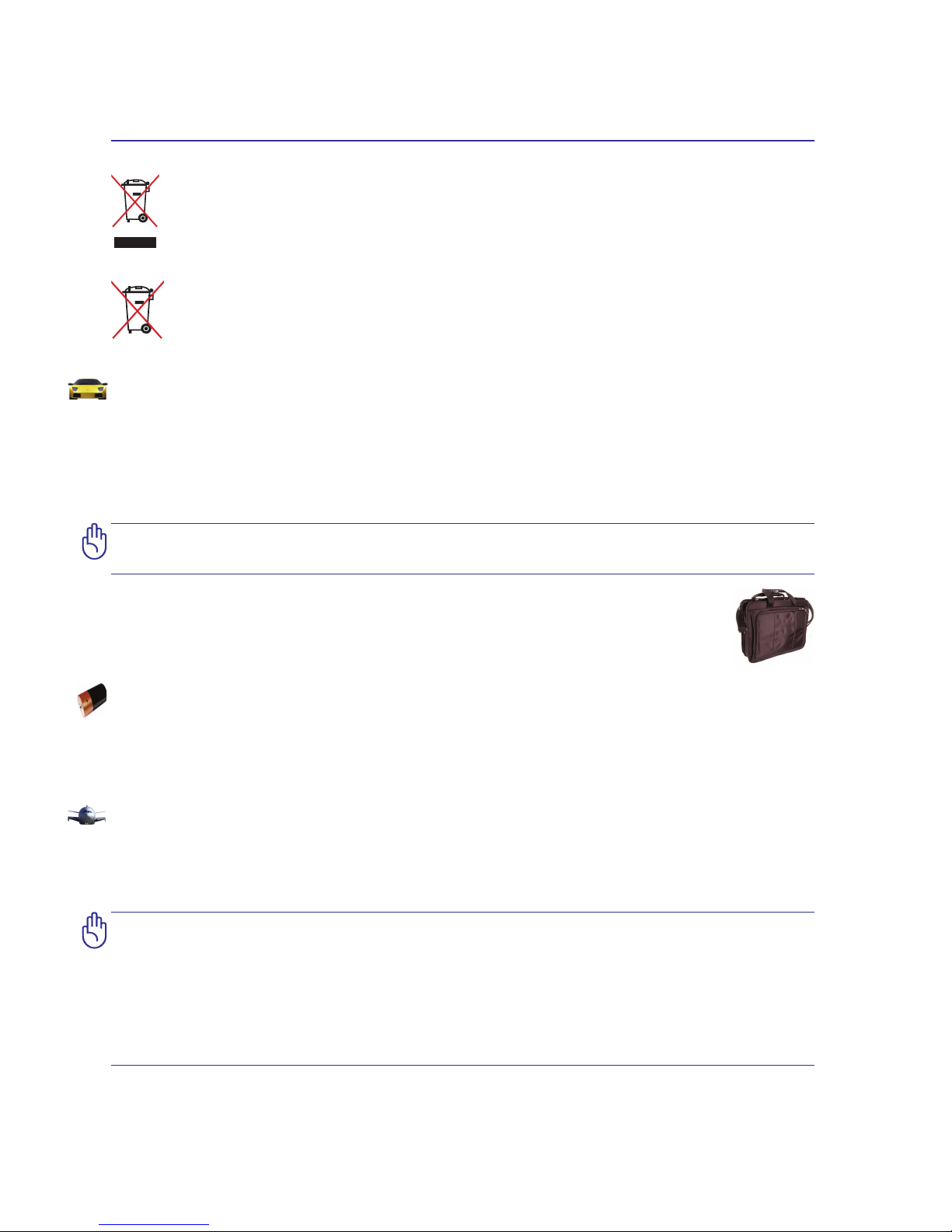
DO NOT throw the Notebook PC in municipal waste. This product has been designed
to enable proper reuse of parts and recycling. The symbol of the crossed out wheeled
bin indicates that the product (electrical, electronic equipment and mercury-containing
button cell battery) should not be placed in municipal waste. Check local regulations for
disposal of electronic products.
DO NOT throw the battery in municipal waste. The symbol of the crossed out wheeled
bin indicates that the battery should not be placed in municipal waste.
9
Preparing your Notebook PC
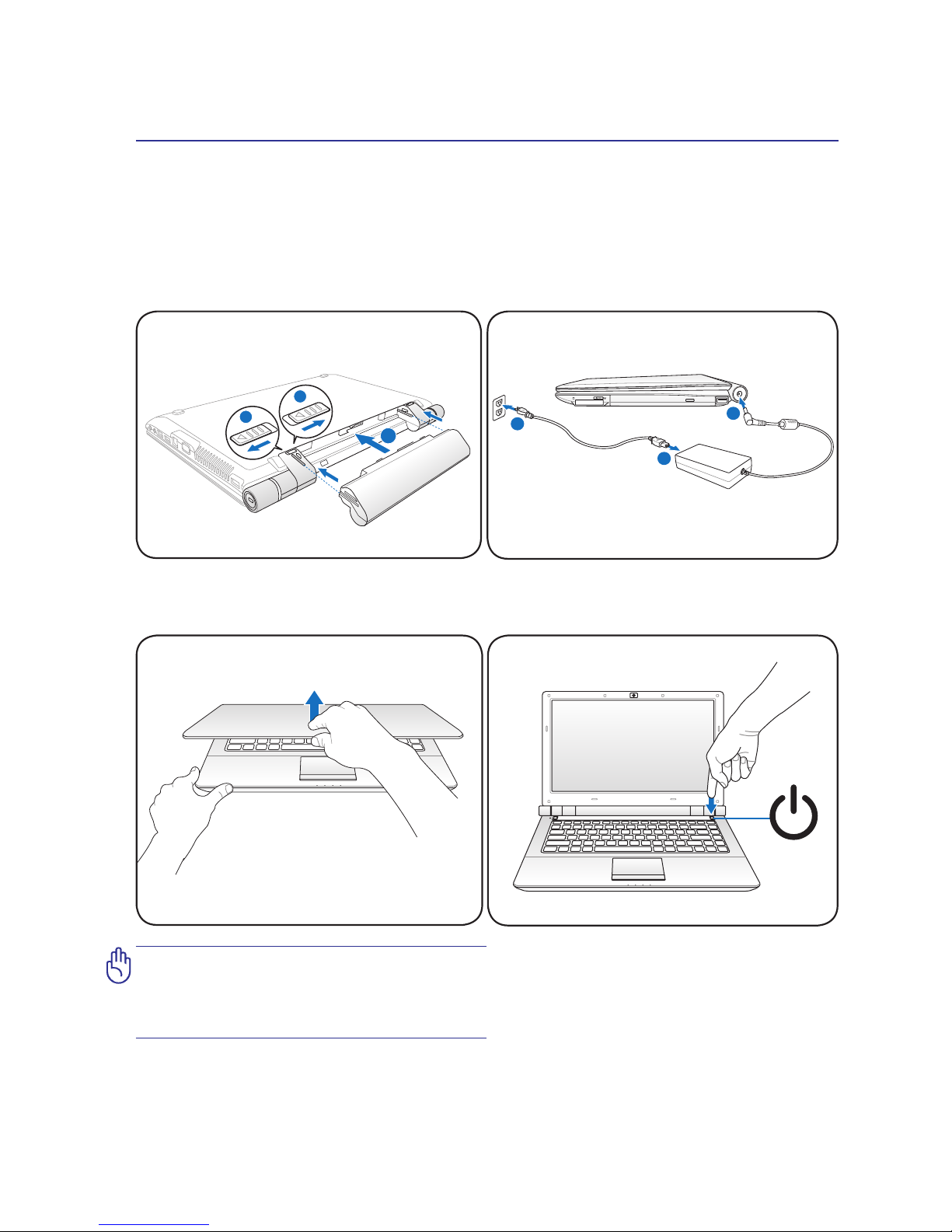
These are only quick instructions for using your Notebook PC. Read the later pages for detailed infor-
mation on using your Notebook PC.
1. Install the battery pack 2. Connect the AC Power Adapter
IMPORTANT! When opening, DO NOT
force the display panel down to the table
or else the hinges may break! Never lift
the Notebook PC by the display panel!
2
1
2
3
1
3
3. Open the Display Panel 4. Turn ON the Notebook PC
The power switch turns ON and OFF the Note-
book PC or putting the Notebook PC into sleep
or hibernation modes. Actual behavior of the
power switch can be customized in Windows
Control Panel > Power Options > System Set-
tings.
EXPRESS
1
2
3
110V-220V
Introducing the Notebook PC 1

10
1 Introducing the Notebook PC
Questo manuale è adatto per i seguenti modelli
2
Indice
Altri manuali Asus Computer portatile

Asus
Asus Eee PC VX6S Manuale utente

Asus
Asus ZenBook Manuale utente

Asus
Asus L4E Istruzioni per il montaggio

Asus
Asus ROG Zephyrus G15 Manuale utente

Asus
Asus M2A Istruzioni per l’uso

Asus
Asus E5462 Manuale utente

Asus
Asus E12461 Guida

Asus
Asus U30JC Manuale utente

Asus
Asus S550CA Guida

Asus
Asus 5535 Series Manuale utente

Asus
Asus C100PA Guida

Asus
Asus E17305 Manuale utente

Asus
Asus Eee PC 901 Manuale utente

Asus
Asus UX51VZ Guida

Asus
Asus U30SD Manuale utente

Asus
Asus E2334 Istruzioni per l’uso

Asus
Asus Z91FR Istruzioni per l’uso

Asus
Asus Chromebook Flip C214MA Manuale utente

Asus
Asus S46CA-XH51 Manuale utente

Asus
Asus Q502L Guida


