SpA MC 2300
9
Control that the air-filter is clean, if the filter is in oil bath control the level every 8-10 hours of work or even more frequently if you are
working in dusty grounds. Use engine oil to restore the oil level; before refilling the oil tank, wash it carefully.
GEAR BOX
Control the oil level every 50 hours of work by taking out the cap on the gearbox case (the machine must be in the horizontal position).
If necessary, add oil SAE 80-90. It is suggested to change oil at least once a year . To empty the oil in the gear box, unscrew the cap of the
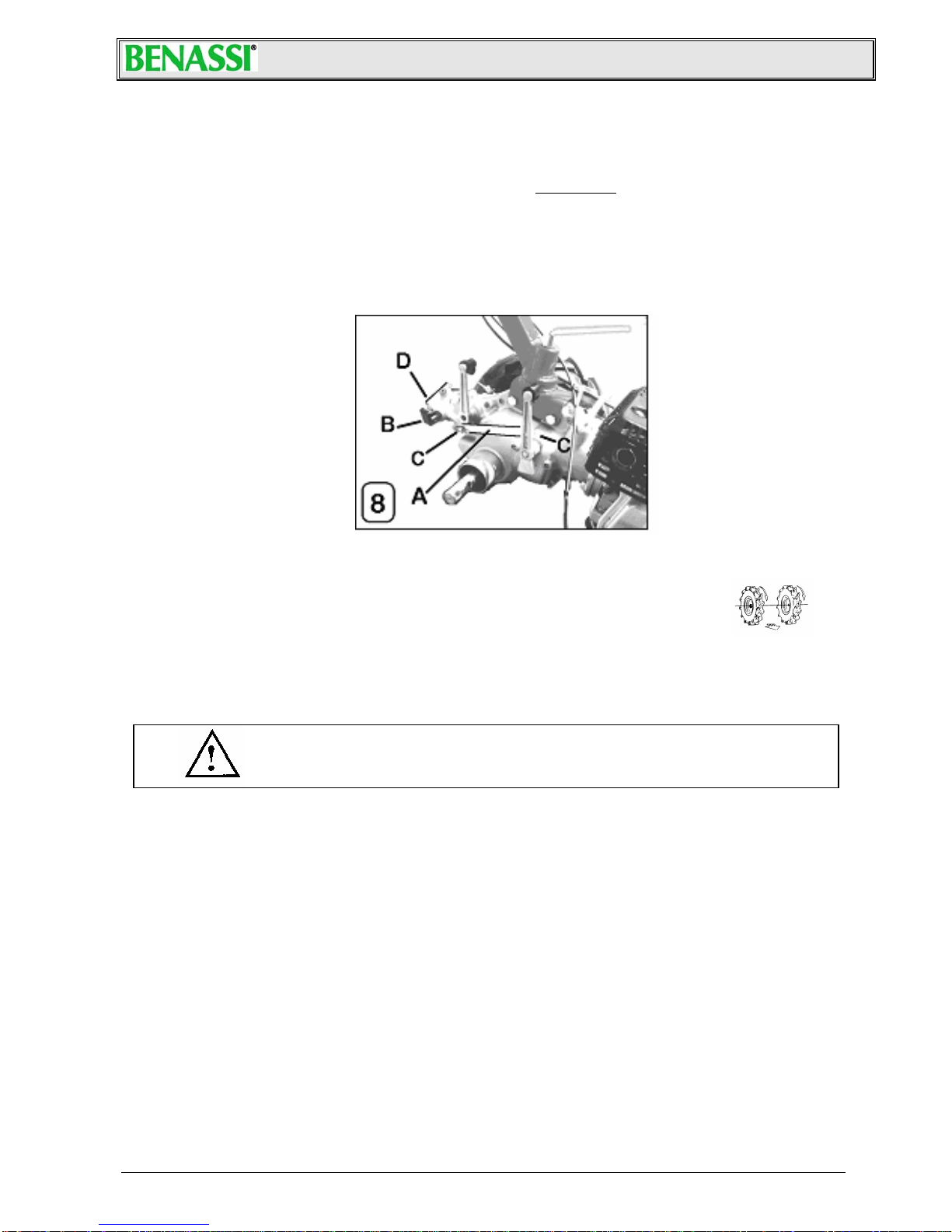
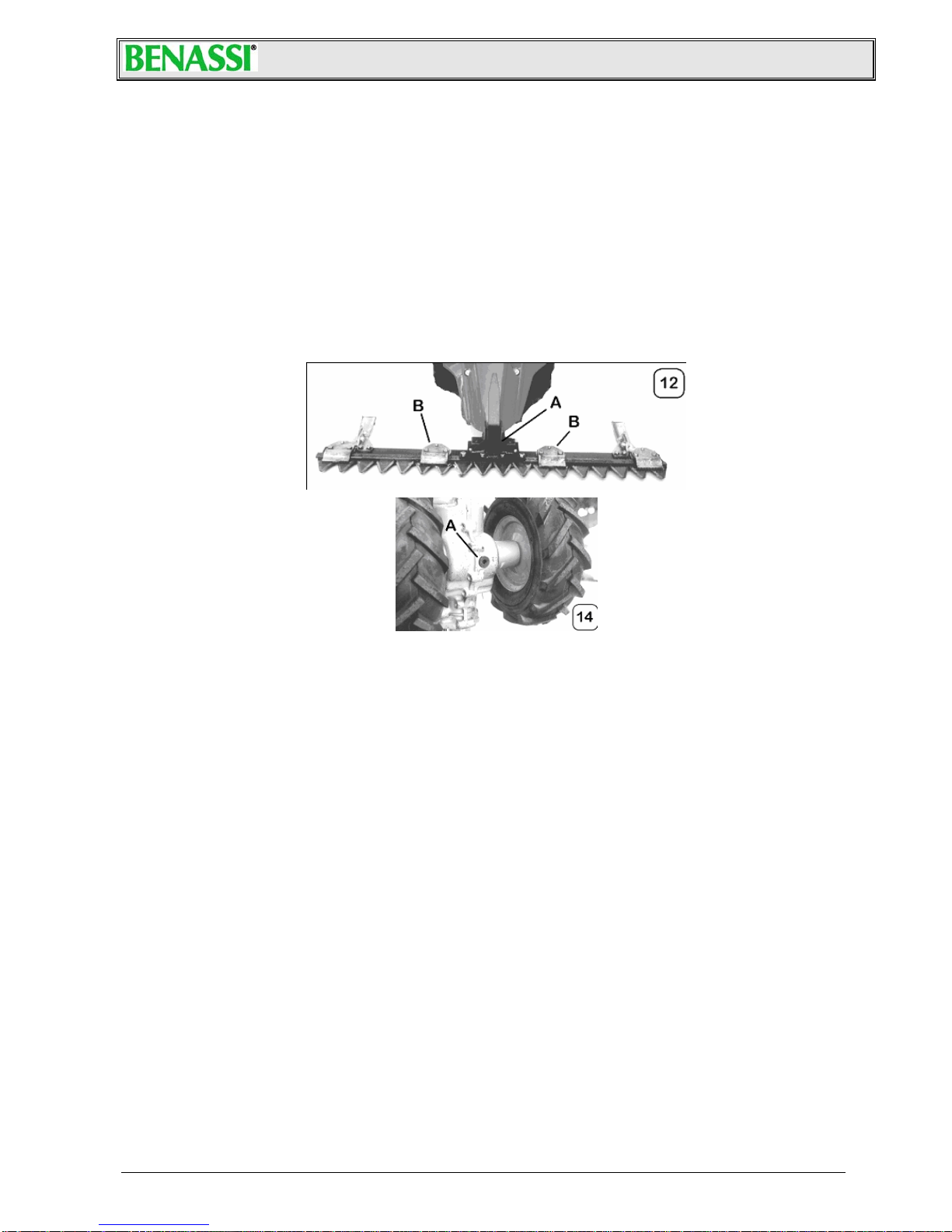
inferior part of the box (Ref. “A” Picture 14), take out the oil cap (Ref. “A” picture 7) to allow the oil flowing out more easily. Put the inferior
cap again and fill with oil though the cap (Ref. ”A” Picture 7) up to the screw level (Ref. “B” Picture 7).
MILLING CUTTER
Before starting to work, control that all screws are well fastened, especially those of the mill hoes.
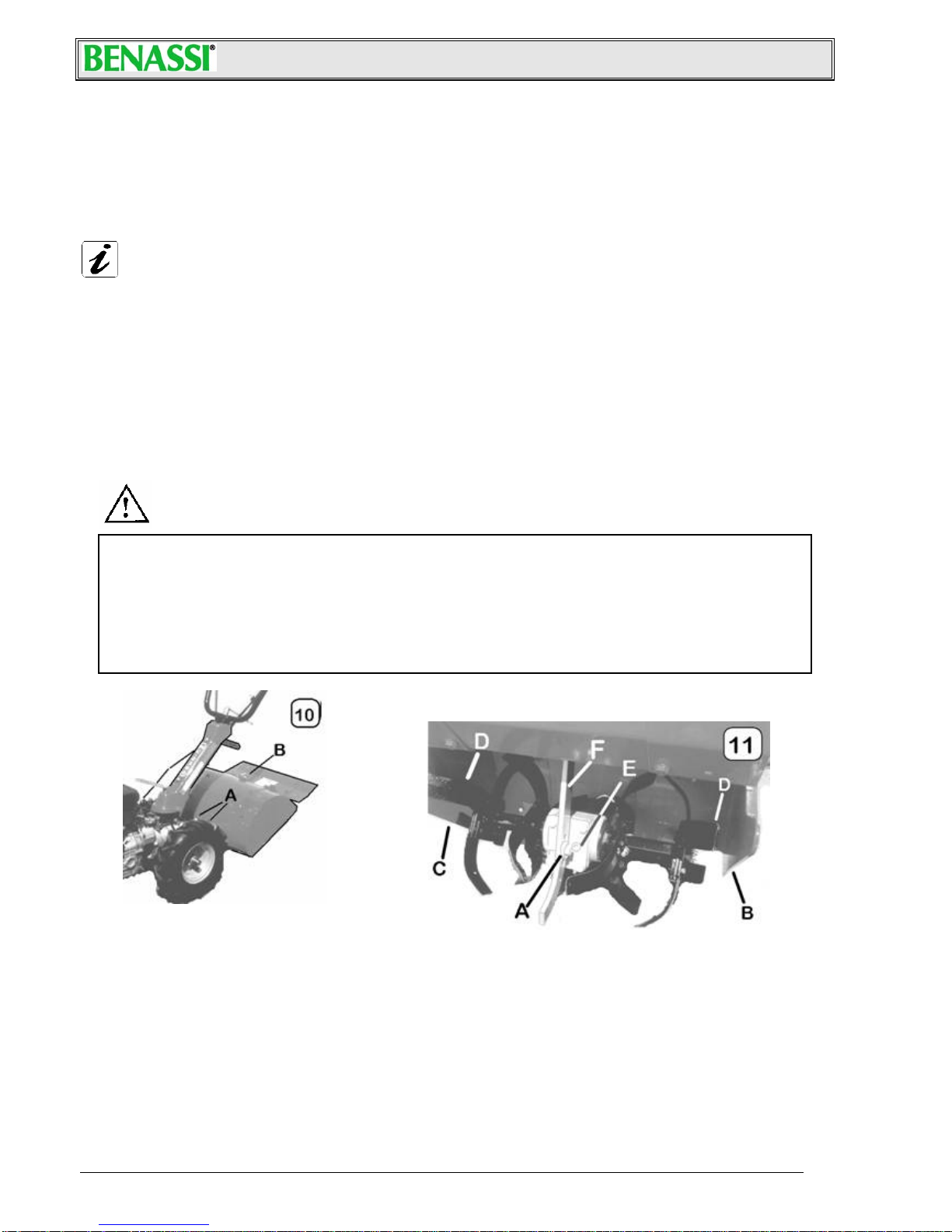
Control the oil level of the milling cutter transmission unit every 100 hours of work , by taking out the cap on the lid (Ref. “E” Picture 11). Oil
must fill almost completely the gearbox case. Use SAE 80-90 oil.
CUTTERBAR
¾Before starting to work, control that all screws are tight fastened.
¾Every 4 hours of work lubricate the inside of the blade head.
¾Every 10 hours of work lubricate the eccentric ferrule - (Ref. “A” Picture 12).
¾Every 20 hours of work lubricate the linkage between the cutterbar and the machine.
¾Periodically is needed to control bladeholders (Ref. “B” Picture 12) so that the blade has not too much freeplay or is fastened too tight. If
the cutting of the grass after the adjustments is not satisfying, the blade needs to be grinded or changed.
17‐GARAGING
Before garaging the machine:
¾Wash it carefully with Diesel fuel, change the engine oil, gear box and milling unit .
¾Empty the fuel tank and wash or change the air-filter.
¾Oil and lubricate every joints and mechanism.
¾Change or repair eventual damaged parts.
¾Park the machine in a dry room, putting its wheels on wooden boards or, even better, lifted from the ground.
18‐TROUBLESHOOTING
Eventual troubles which can be solved by the operator (worker) :
ENGINE :
The engine doesn’t start; control that:
¾Fuel in the tank reaches half of the tank itself .
¾The fuel cock is open.
¾The starter must be engaged if the engine is cold.
¾Fuel arrives to the carburettor.
¾The vent cap on the tank is not clogged.
¾The carburettor castings are open; otherwise clean them with compressed air.
¾The ignition spark works: to test this, unscrew the spark plug, reconnect it to the electric cable, lean the metallic part of the spark plug to
mass (working cylinder) and turn the engine pulley as for the starting . If the ignition spark does not spark among the electrodes, control
the joints of the electric cable. Otherwise change the spark plug with another one . If even this attempt fails, the breakdown has to be
attributed to the lighting set (points, capacitor, coils etc.). In this case we suggest to apply to the nearest service relating the engine
mounted on the machine.
GEARS DO NOT ENGAGE :
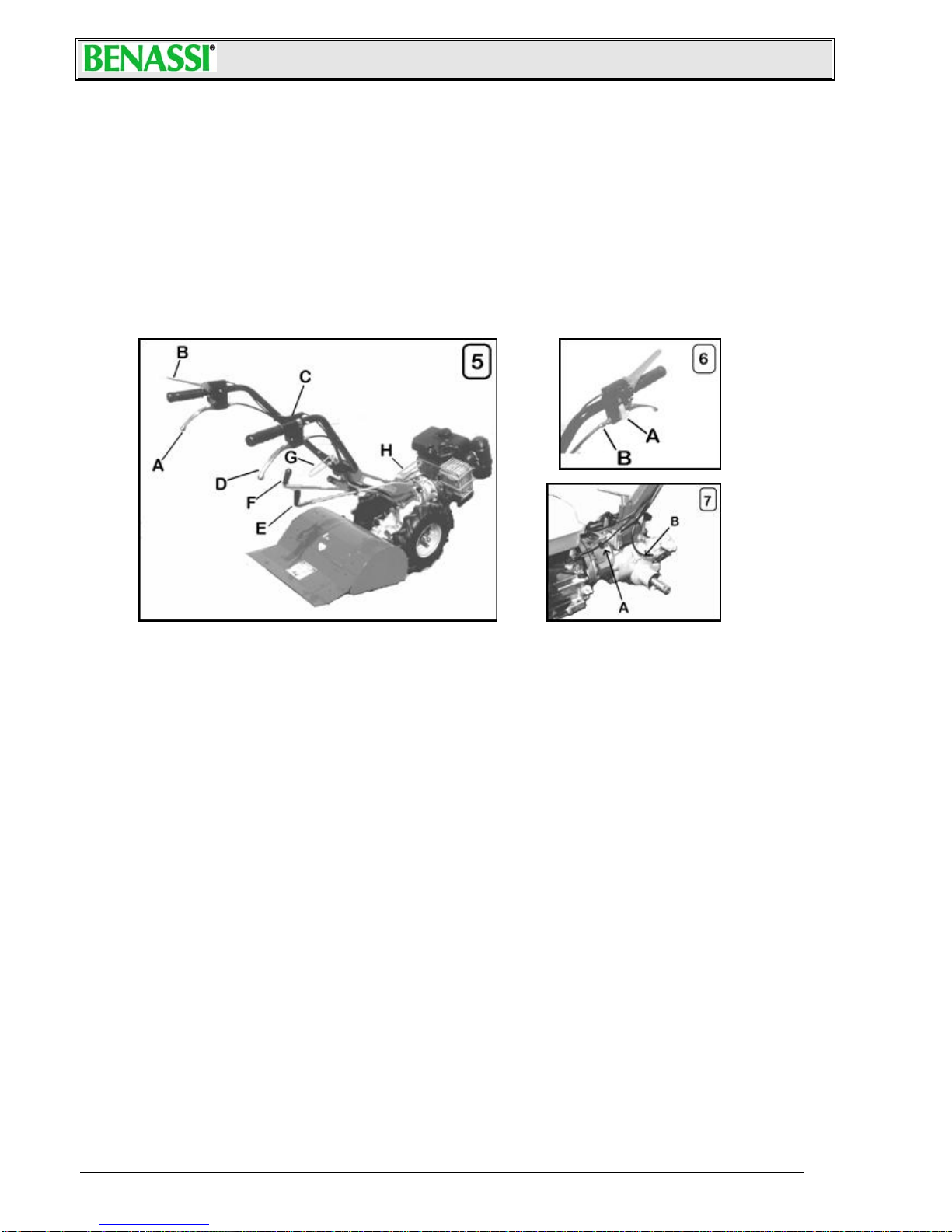
¾Regulate the clutch by unscrewing the register screw (Ref. “B” Picture 6) till you obtain a good clutch disengagement.
¾Pay attention: do not eliminate totally the freeplay.
¾The clutch wire must not be completely engaged.
19–RULESFORACORRECTUSEOFTHEMACHINE
¾Make a good running in period to the engine and the machine (for at least 10 hours do not get over 70 % of the engine capacity ).
¾Always use the clutch before operating any levers.
¾Do not leave the clutch disengaged for a long time.
¾Never force the speed selector levers and PTO, if they do not engage leave gradually the clutch.
¾Keep the steering column joint and the handlebar cleaned and oiled.