9
EN
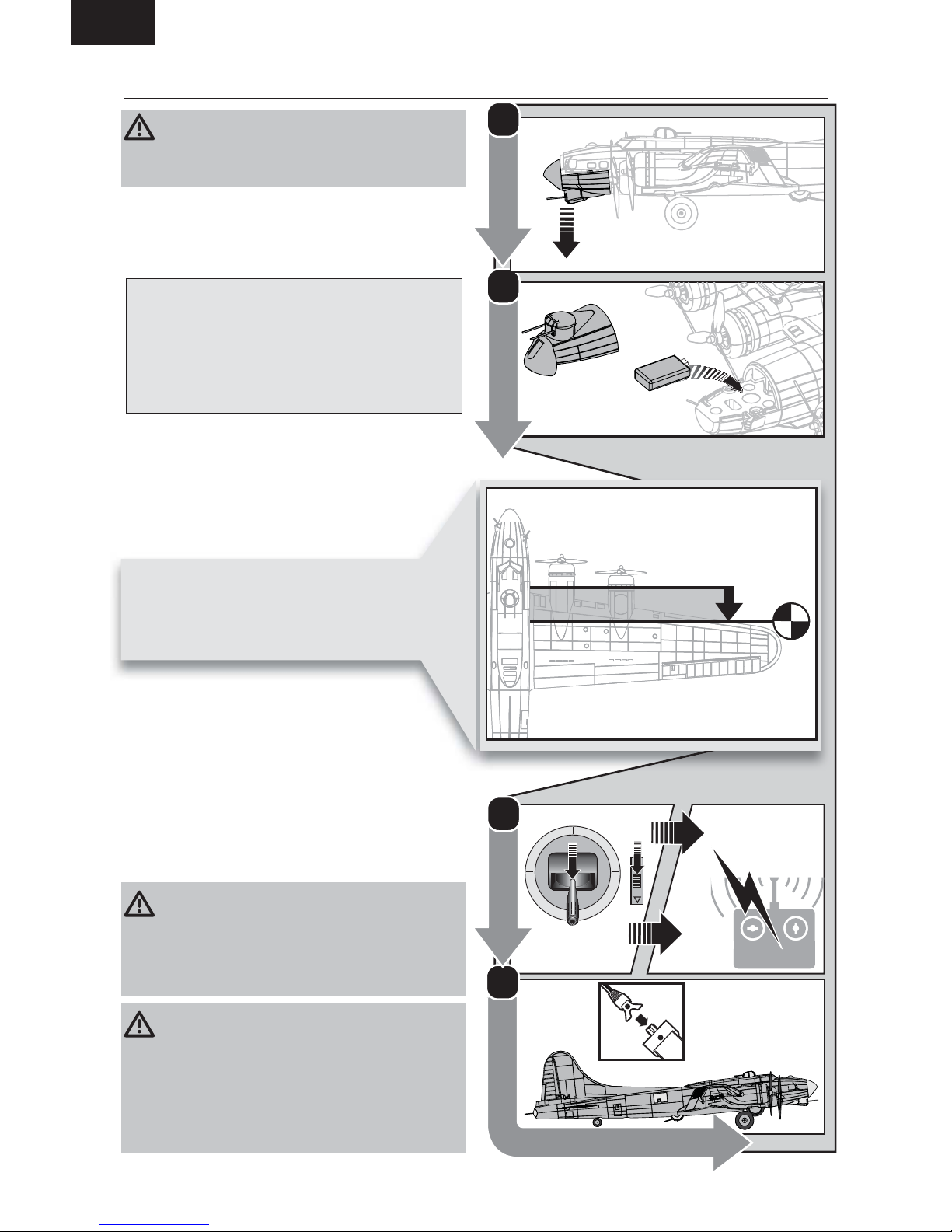
Post Flight Checklist
1. Disconnect the flight battery from the
ESC (Required for safety and battery
life).
2. Power OFF the transmitter.
3. Remove the flight battery from the
aircraft.
4. Recharge the flight battery.
5. Store the flight battery apart from the
aircraft and monitor the battery charge.
6. Make note of the flight conditions and
flight plan results, planning for future
flights.
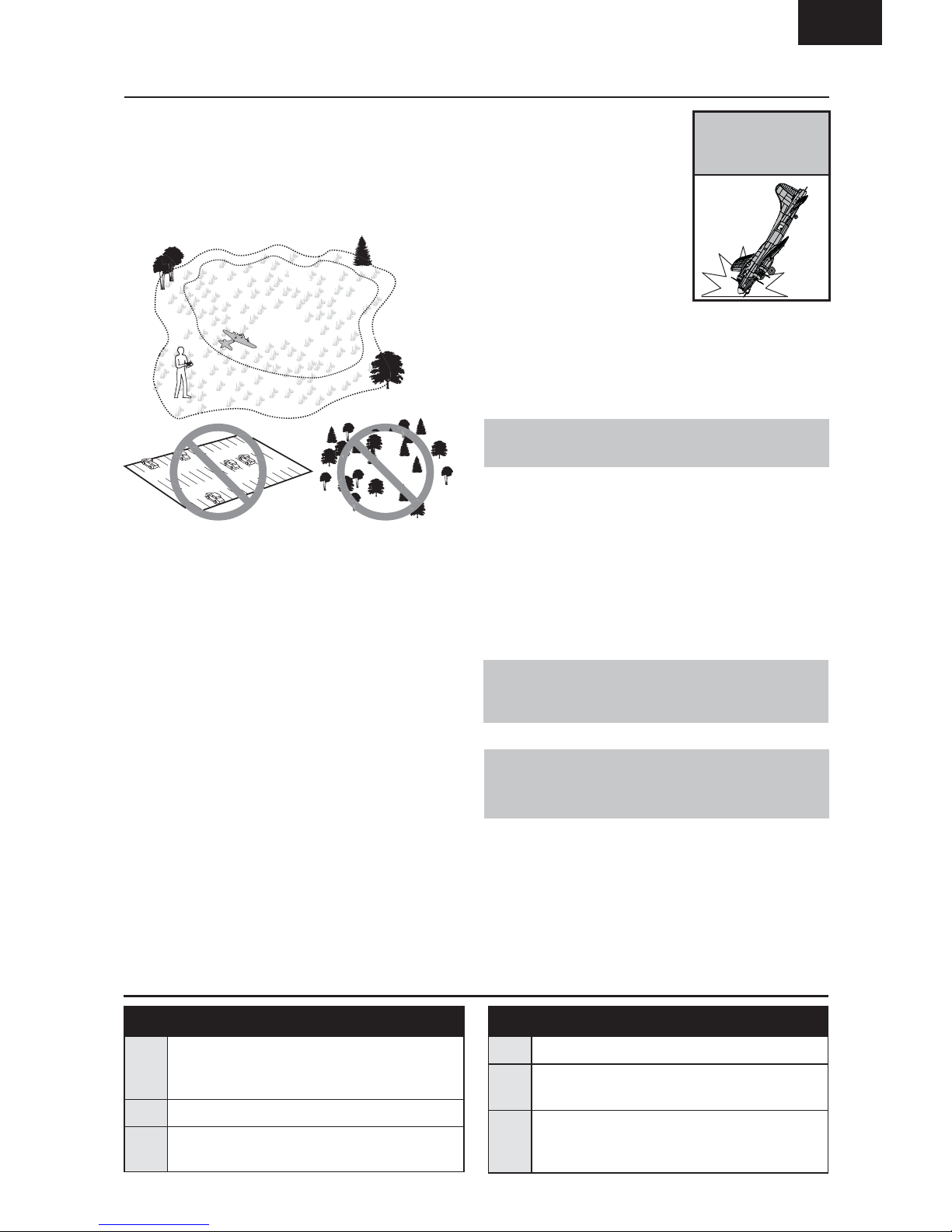
We recommend flying your aircraft outside in calm
conditions. Always avoid flying near houses, trees,
wires and buildings. You should also be careful to
avoid flying in areas where there are many people,
such as busy parks, schoolyards or soccer fields.
Consult local laws and ordinances before choosing
a location to fly your aircraft.
Takeoff
Place the aircraft in position for takeoff (facing into
the wind if flying outdoors). Set dual rates to low
position and gradually increase the throttle to ¾ to
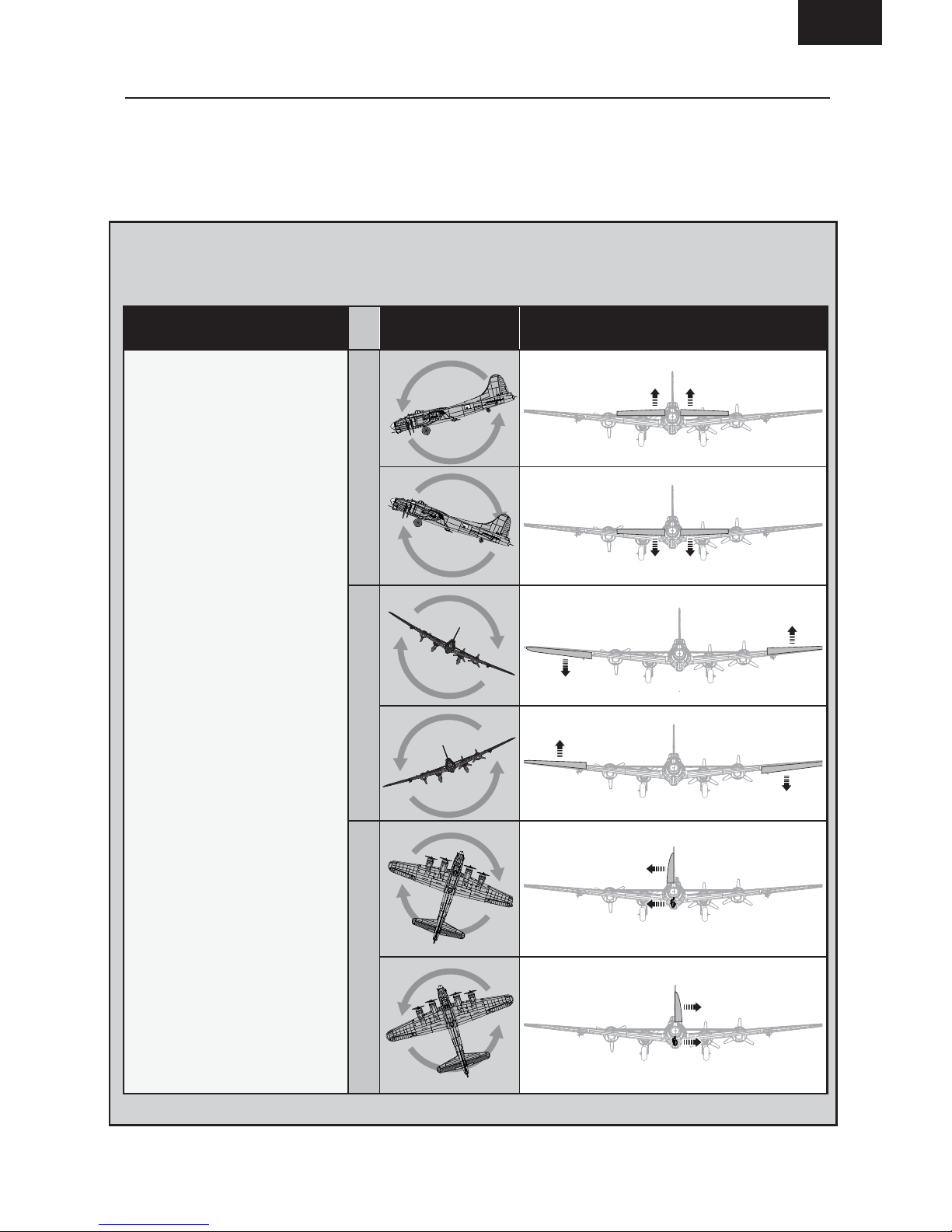
full and steer with the rudder. Pull back gently on
the elevator and climb to check trim. Once the trim
is adjusted, begin exploring the flight envelope of
the aircraft.
Landing
Land into the wind. This is very important for this
model. Fly the aircraft to approximately 6 inches
(15cm) or less above the runway, using a small
amount of throttle for the entire descent. Keep the
throttle on until the aircraft is ready to flare. During
flare, keep the wings level and the airplane pointed
into the wind. Gently lower the throttle while pulling
back on the elevator to bring the aircraft down on
all three wheels.
Avoid power-off landing with fixed landing gear
installed. Propeller drag can reduce airspeed and
flare. For belly landings, power-off before touch
down.
Failure to lower the throttle
stick and trim to the lowest
possible positions during a
crash could result in damage
to the ESC in the receiver
unit, which may require
replacement.
This aircraft is equipped with
Over Current Protection (OCP).
This feature protects the ESC
from overheating. OCP stops
the motor when the transmitter throttle is set too
high and the propeller cannot turn. The OCP will
only activate when the throttle stick is positioned
just above 1/2 throttle. After the ESC stops the
motor, fully lower the throttle to re-arm the ESC.
NOTICE: Crash damage is not covered under the
warranty.
Repairs
Repair the aircraft using foam-compatible CA
(cyanoacrylate adhesive) or clear tape. Only use
foam-compatible CA, as other types of glue can
damage the foam. When parts are not repairable,
see the Replacement Parts List for ordering by
item number.
For a listing of all replacement and optional parts,
refer to the list at the end of this manual.
NOTICE: Use of foam-compatible CA accelerant on
your aircraft can damage paint. DO NOT handle the
aircraft until the accelerant fully dries.
NOTICE: When you are finished flying, never leave
the aircraft in direct sunlight or in a hot, enclosed
area such as a car. Doing so can damage the foam.
Flying Tips and Repairs
NOTICE: Always
decrease throttle
at propeller strike.