4
The Basics
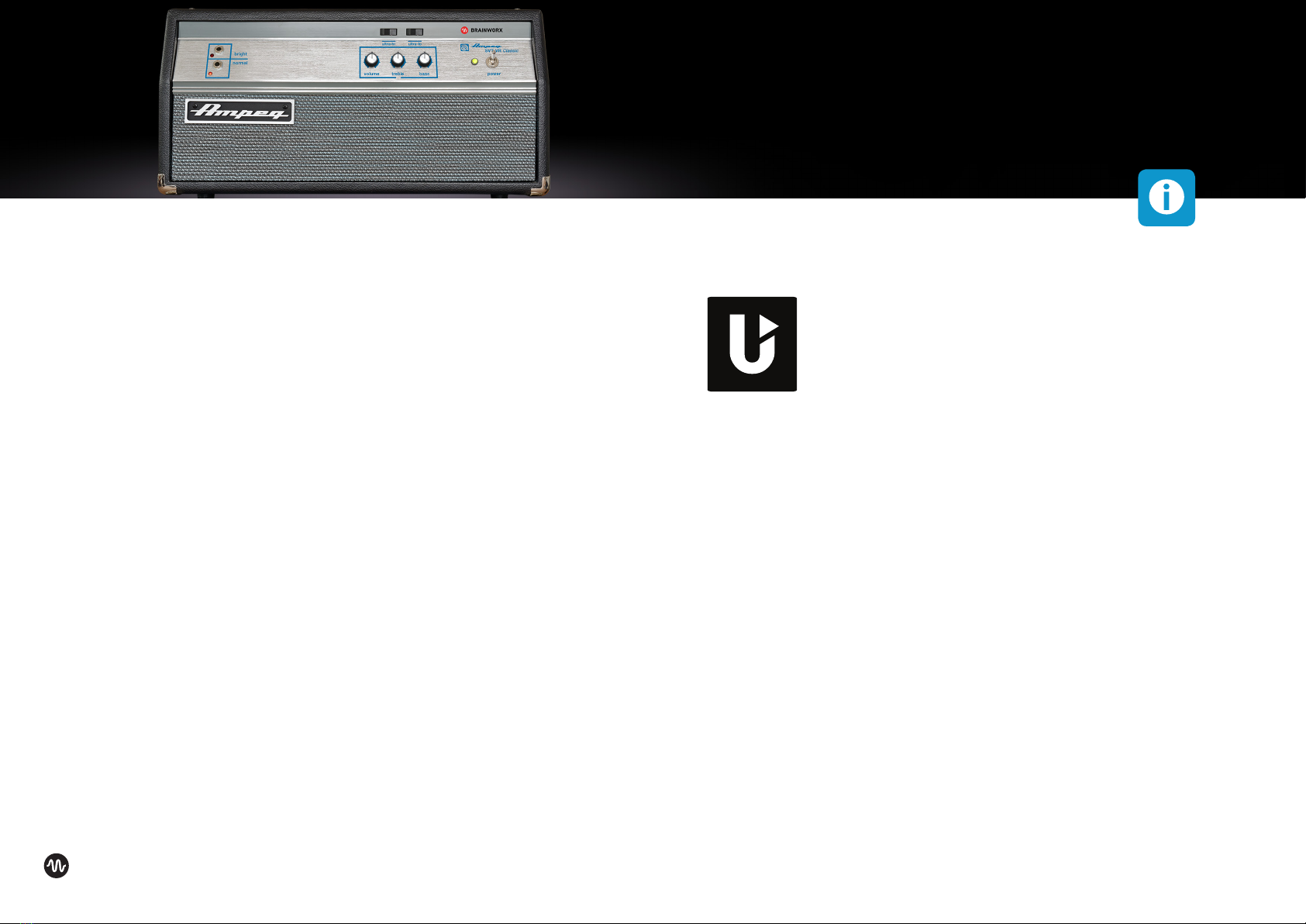
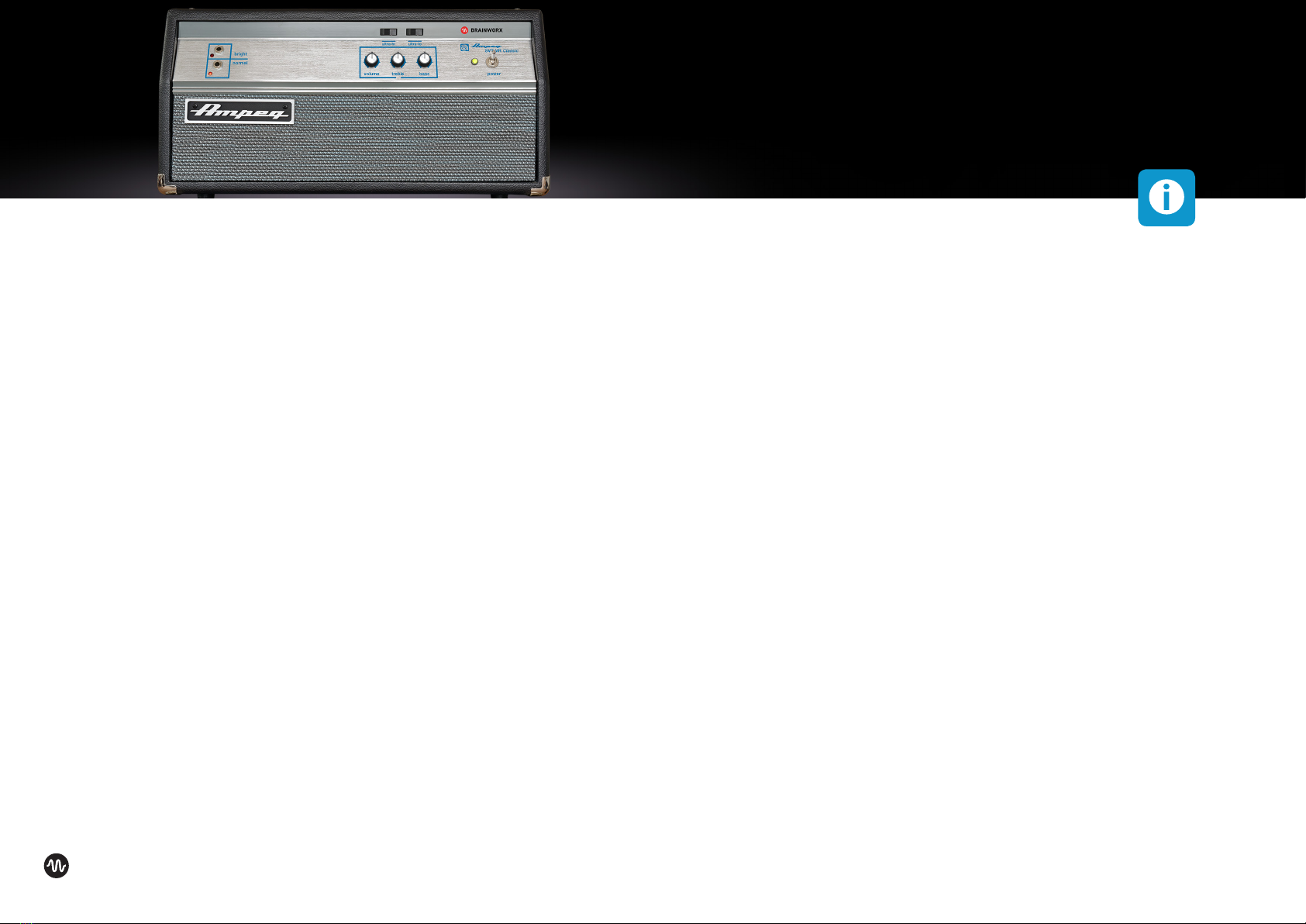
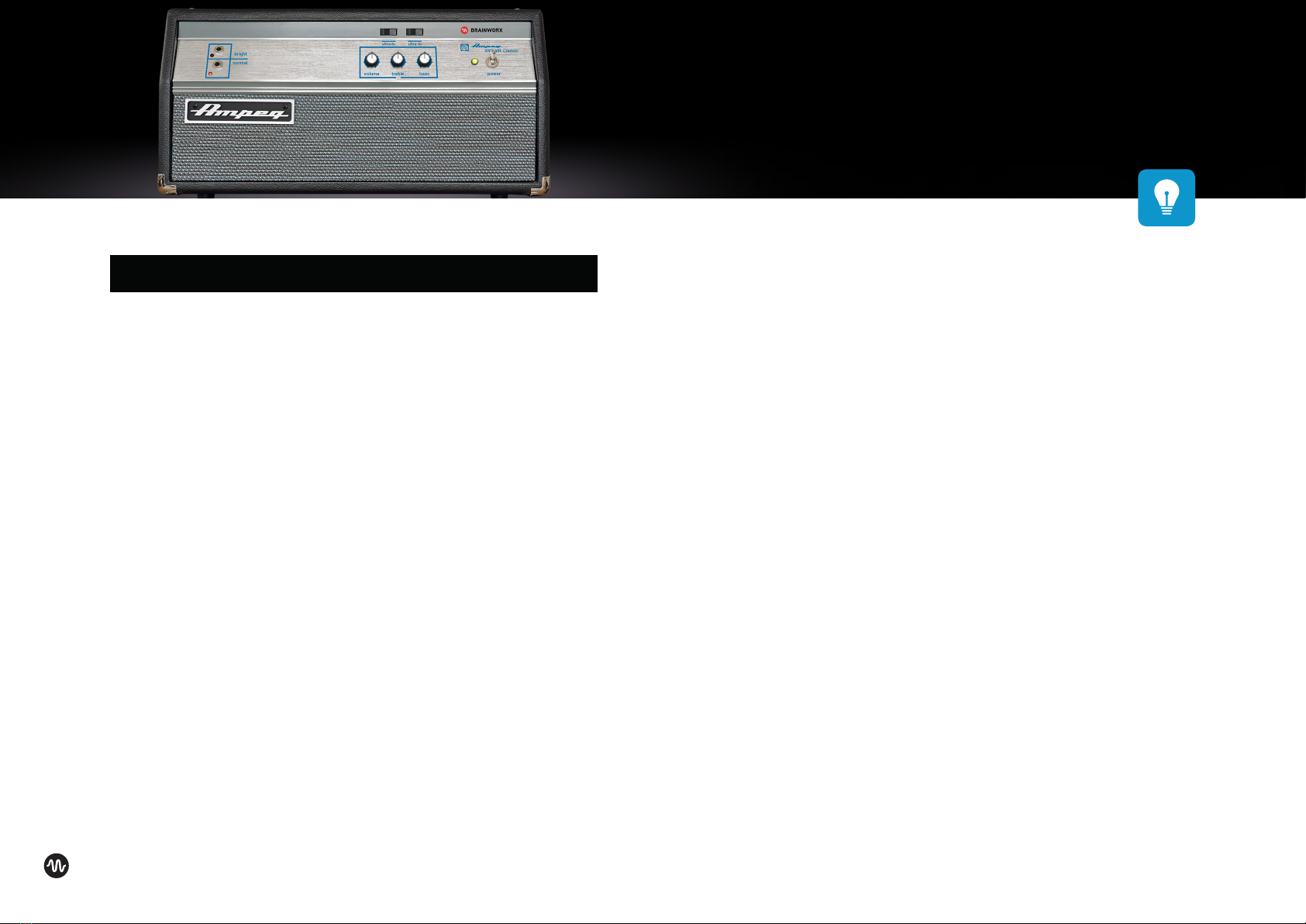
You can use the amp section of this plug-in exactly like you would operate
the real Ampeg SVT-VR Classic tube amplifier. Plug in your bass guitar
(via your computer audio interface in this case), adjust Gain, Tone and
Volume... and Rock’n’Roll!
The Ampeg plug-in was developed with the Apollo series interfaces in
mind. Of course the SVT-VR Classic will work with any UAD-2 device, but
to experience the ultra-low latency (desirable for playing in real-time) you
need an Apollo interface.
A good producer’s trick is to use a real bass amp (a small combo, for
example) for real-time monitoring in the control room during tracking
while recording only the DI bass signal. Then use the Ampeg plug-in when
you play back the recorded tracks together with the rest of your music.
You will need to split the dry bass signal so it can be recorded in the
computer and routed to the real bass guitar amplifier input at the same
time. To play and record dry DI bass tracks with the lowest latency and
the highest quality possible, connect your bass to the Hi-Z Input of the
Apollo interface or connect a quality DI Box and Mic Preamp to a line input
of your Apollo Series interface.
If you insert the SVT-VR Classic plug-in in the Console software mixer
(to use the plug-in with the lowest possible latency) you have to decide
whether you want to record processed bass guitar amp sounds (click the
Insert Effects switch to Rec in the Apollo console) or whether you only
want to record the dry DI bass signal, while monitoring the processed
amp sound during tracking, of course (click the Insert Effects switch to
MON in the Apollo console).
The advantage of only monitoring the processed sound is that you can
alter the settings of your amp and FX completely during mixdown. If you
find out later that less or more Gain would sound better for your song you
can still make that happen.
The advantage of recording pre-processed bass tracks might be that
you will need fewer plug-ins during mixdown, as your bass tracks will be
ready to be mixed. All you can do then is EQ and compress the recorded
bass tracks, or add effects, just like you would with traditional bass guitar
amp recordings. Once you know ‘your sound’ you may even save some
time by recording processed bass tracks and using them without further
tweaking or fiddling around... your band mates or your producer may
even appreciate this. ;-)
Ampeg SVT-VR Classic
Plug-in Manual