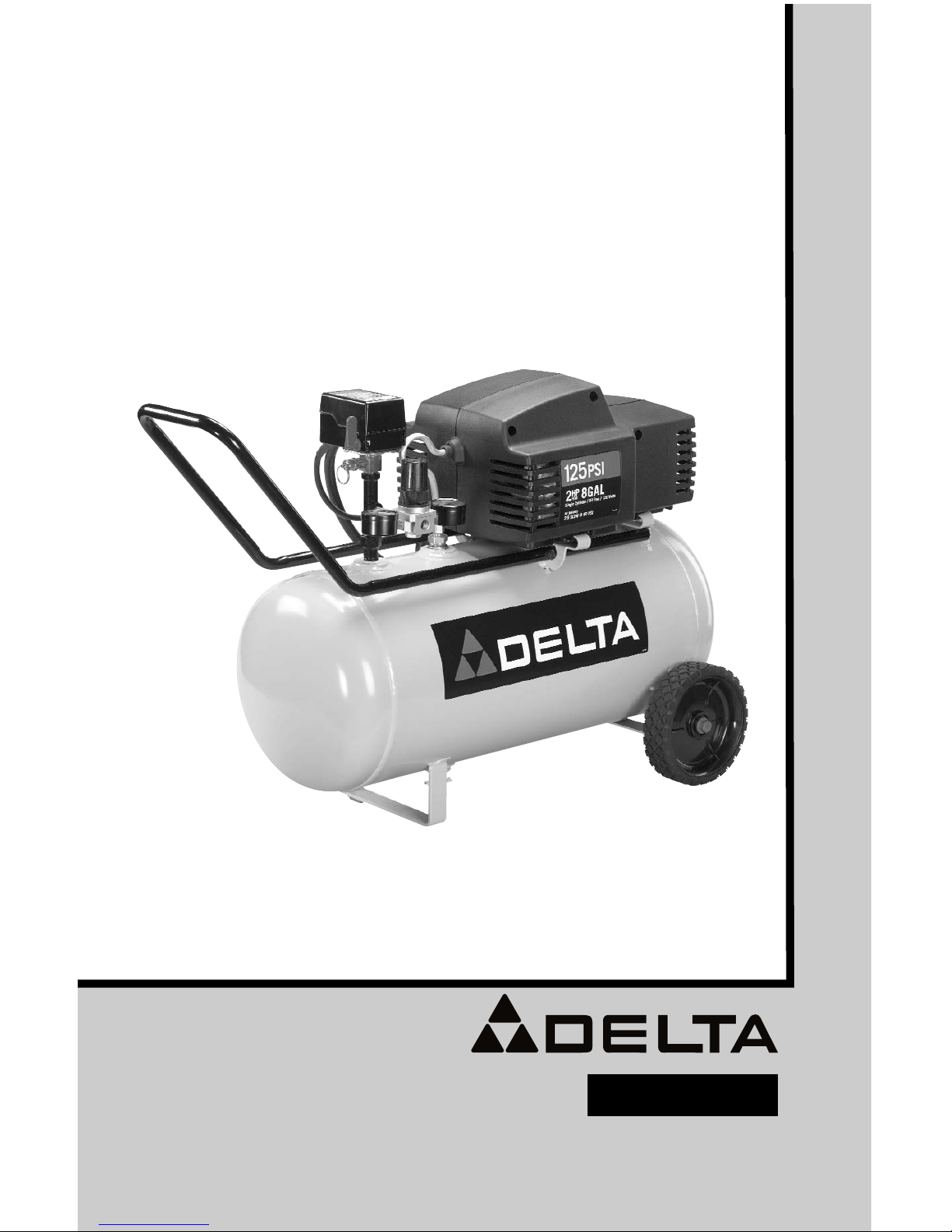
Delta (66-501-1) Manuale utente

INSTRUCTIONMANUAL
PART NO. D29682 Rev. 1 3/04
Copyright © 2004 Delta Machinery
To learn more about DELTA MACHINERY
visit our website at: www.deltamachinery.com.
For Parts, Service, Warranty or other Assistance,
please call 1-866-422-4286.
Oil-Free
Air Compressor
(66-501-1)
ESPAÑOL: PÁGINA 25
FRANÇAIS: PAGE 49

2- ENG
D29682
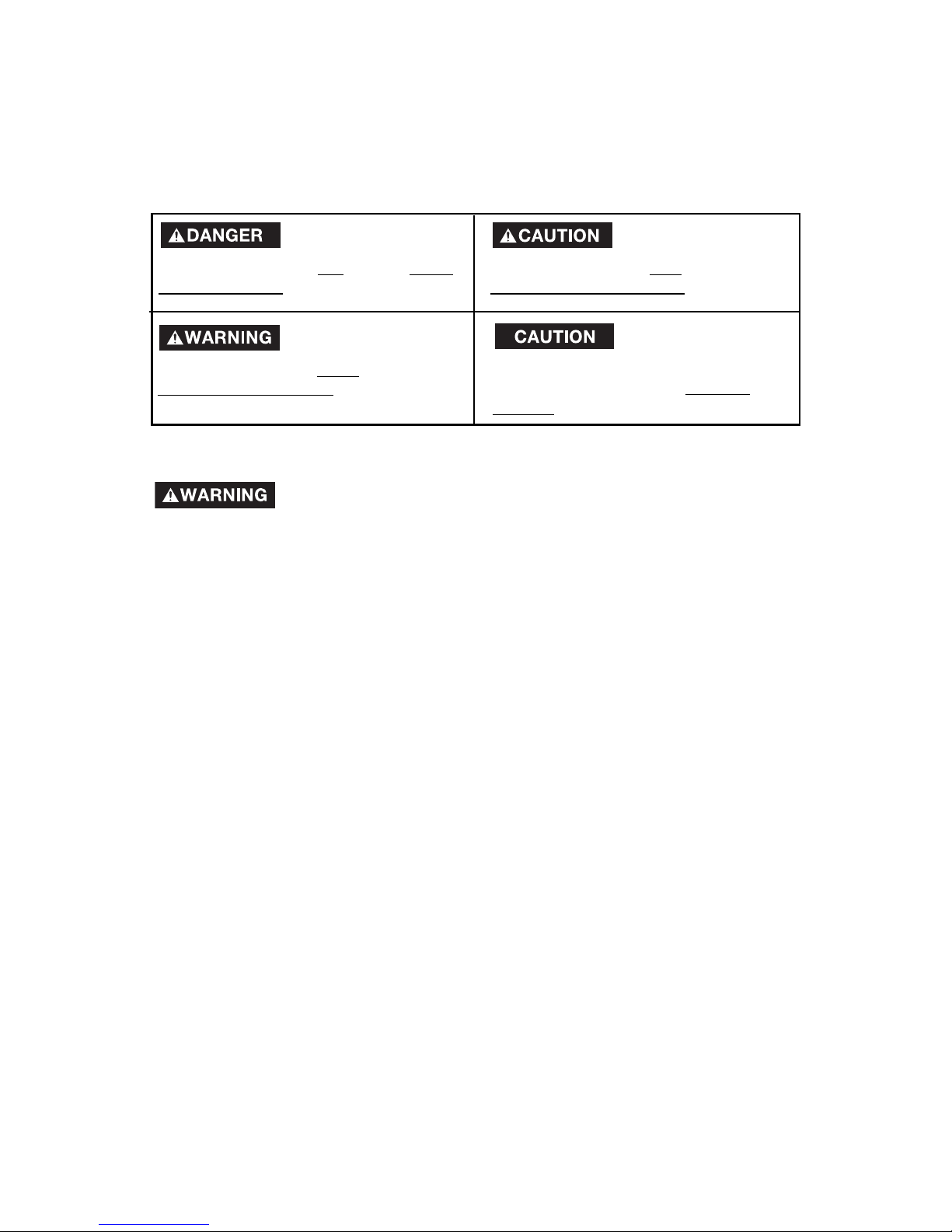
SAFETY GUIDELINES - DEFINITIONS
Indicates an imminently
hazardous situation
which, if not avoided, will result in death
or serious injury.
Indicates a potentially
hazardous situation
which, if not avoided, could result in
death or serious injury.
Indicates a potentially
hazardous situation
which, if not avoided, may result in
minor or moderate injury.
Used without the safety
alert symbol indicates a
potentially hazardous situation which, if
not avoided, may result in property
damage.
This manual contains information that is important for you to know and
understand. This information relates to protecting YOUR SAFETY and
PREVENTING EQUIPMENT PROBLEMS. To help you recognize this
information, we use the symbols below. Please read the manual and pay
attention to these symbols.
IMPORTANT SAFETY INSTRUCTIONS
Some dust created by power sanding, sawing, grinding,
drilling, and other construction activities contains chemicals
known (to the State of California) to cause cancer, birth defects or other
reproductive harm. Some example of these chemicals are:
●lead from lead-based paints
●crystalline silica from bricks and cement and other masonry products
●arsenic and chromium from chemically-treated lumber
Your risk from these exposures varies, depending on how often you do this
type of work. To reduce your exposure to these chemicals: work in a well
ventilated area, and work with approved safety equipment, always wear
MSHA/NIOSH approved, properly fitting face mask or respirator when using
such tools.
When using air tools, basic safety precautions should always be followed to
reduce the risk of of personal injury.

3- ENG D29682
IMPORTANT SAFETY INSTRUCTIONS
Save these instructions
Improper operation or maintenance of this product could result in serious injury and
property damage. Read and understand all warnings and operation instructions before
using this equipment.
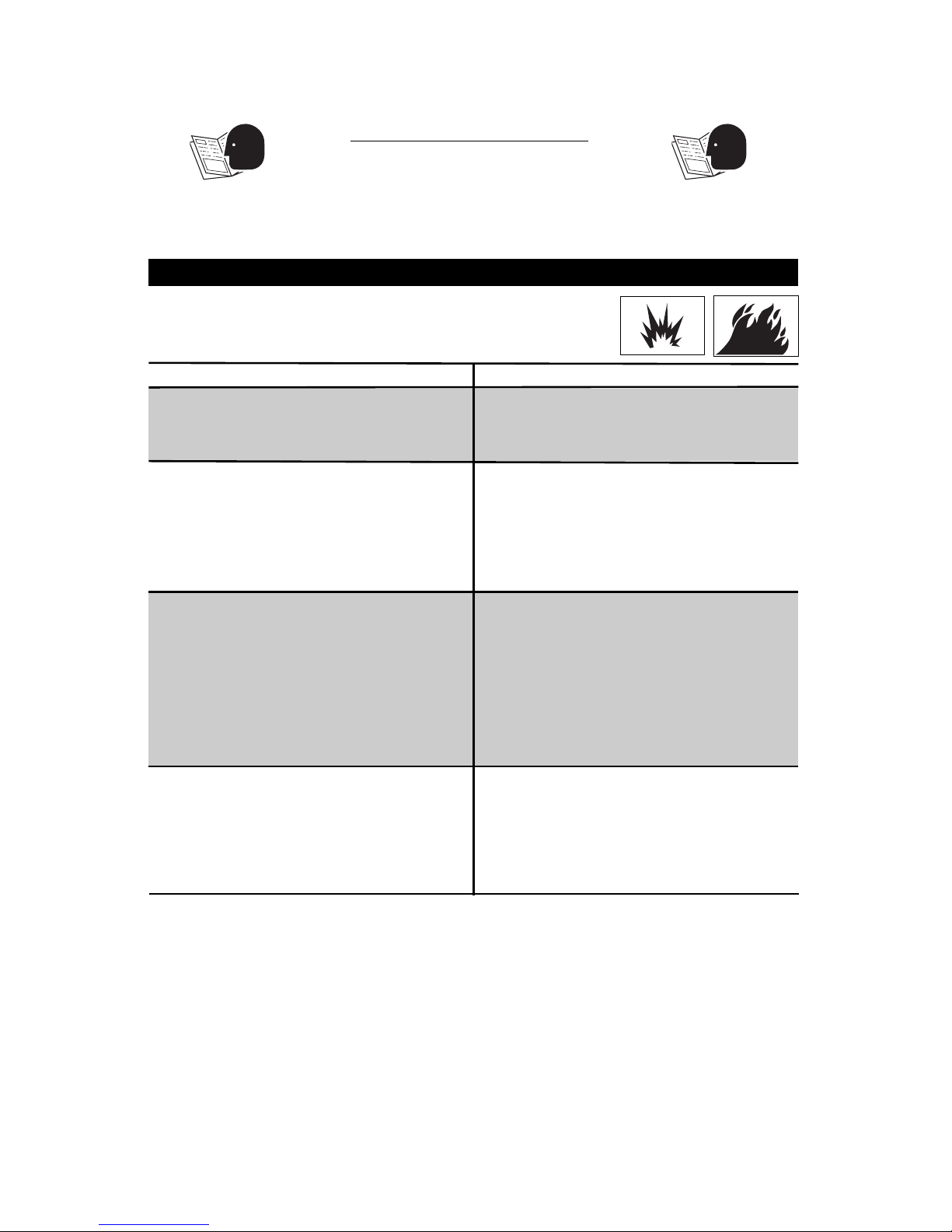
HAZARD
WARNING: Risk of explosion or fire
How To Prevent It
What Could Happen
It is normal for electrical contacts
within the motor and pressure switch to
spark.
If electrical sparks from compressor
come into contact with flammable
vapors, they may ignite, causing fire or
explosion.
Restricting any of the compressor
ventilation openings will cause serious
overheating and could cause fire.
Unattended operation of this product
could result in personal injury or
property damage. To reduce the risk of
fire, do not allow the compressor to
operate unattended.
Always operate the compressor in a well
ventilated area free of combustible
materials, gasoline, or solvent vapors.
If spraying flammable materials, locate
compressor at least 20 feet away from
spray area. An additional length of hose
may be required.
Store flammable materials in a secure
location away from compressor.
Never place objects against or on top
of compressor. Operate compressor in
an open area at least 12 inches away
from any wall or obstruction that would
restrict the flow of fresh air to the
ventilation openings.
Operate compressor in a clean, dry well
ventilated area. Do not operate unit
indoors or in any confined area.
Always remain in attendance with the
product when it is operating.
Always disconnect electrical power by
moving pressure switch lever to the off
position and drain tank daily or after
each use.

4- ENG
D29682
WARNING: Risk of Bursting
Air Tank: The following conditions could lead to a weakening of the tank, and result
in a violent tank explosion and could cause property damage or serious injury.
How To Prevent It
What Could Happen
WARNING: Risk from Flying Objects
The compressed air stream can cause
soft tissue damage to exposed skin
and can propel dirt, chips, loose
particles, and small objects at high
speed, resulting in property damage or
personal injury.
Always wear ANSI Z87.1 approved safety
glasses with side shields when using the
compressor.
Never point any nozzle or sprayer
toward any part of the body or at other
people or animals.
Always turn the compressor off and
bleed pressure from the air hose and tank
before attempting maintenance, attaching
tools or accessories.
HAZARD
HAZARD
Drain tank daily or after each use. If
tank develops a leak, replace it
immediately with a new tank or replace
the entire compressor.
Failure to properly drain condensed
water from tank, causing rust and
thinning of the steel tank.
Modifications or attempted repairs to
the tank.
Unauthorized modifications to the
unloader valve, safety valve, or any
other components which control tank
pressure.
Never drill into, weld, or make any
modifications to the tank or its
attachments.
Excessive vibration can weaken the
air tank and cause rupture or
explosion
The tank is designed to withstand specific
operating pressures. Never make
adjustments or parts substitutions to
alter the factory set operating
pressures.
For essential control of air pressure, you
must install a pressure regulator and
pressure gauge to the air outlet (if not
equipped) of your compressor. Follow the
equipment manufacturers
recommendation and never exceed the
maximum allowable pressure rating of
attachments. Never use compressor to
inflate small low pressure objects such
as children’s toys, footballs,
basketballs, etc.
ATTACHMENTS & ACCESSORIES:
Exceeding the pressure rating of air
tools, spray guns, air operated
accessories, tires, and other inflatables
can cause them to explode or fly apart,
and could result in serious injury.
How To Prevent It
What Could Happen

5- ENG D29682
WARNING: Risk to Breathing
WARNING: Risk of Electrical Shock
HAZARD
HAZARD
Your air compressor is powered by
electricity. Like any other electrically
powered device, If it is not used
properly it may cause electric shock.
Repairs attempted by unqualified
personnel can result in serious injury
or death by electrocution.
Electrical Grounding: Failure to provide
adequate grounding to this product
could result in serious injury or death
from electrocution.
See grounding instructions.
Never operate the compressor outdoors
when it is raining or in wet conditions.
Never operate compressor with
protective covers removed or damaged.
Any electrical wiring or repairs required
on this product should be performed by
authorized service center personnel in
accordance with national and local
electrical codes.
Make certain that the electrical circuit to
which the compressor is connected
provides proper electrical grounding,
correct voltage and adequate fuse
protection.
The compressed air directly from your
compressor is not safe for breathing.
The air stream may contain carbon
monoxide, toxic vapors, or solid
particles from the tank. Breathing these
contaminants can cause serious injury
or death.
Sprayed materials such as paint, paint
solvents, paint remover, insecticides,
weed killers, may contain harmful
vapors and poisons.
Air obtained directly from the compressor
should never be used to supply air for
human consumption. In order to use air
produced by this compressor for
breathing, suitable filters and in-line
safety equipment must be properly
installed. In-line filters and safety
equipment used in conjunction with the
compressor must be capable of treating
air to all applicable local and federal
codes prior to human consumption.
Work in an area with good cross
ventilation. Read and follow the safety
instructions provided on the label or
safety data sheets for the materials you
are spraying. Use a NIOSH/ MSHA
approved respirator designed for use with
your specific application.
How To Prevent It
What Could Happen
How To Prevent It
What Could Happen

6- ENG
D29682
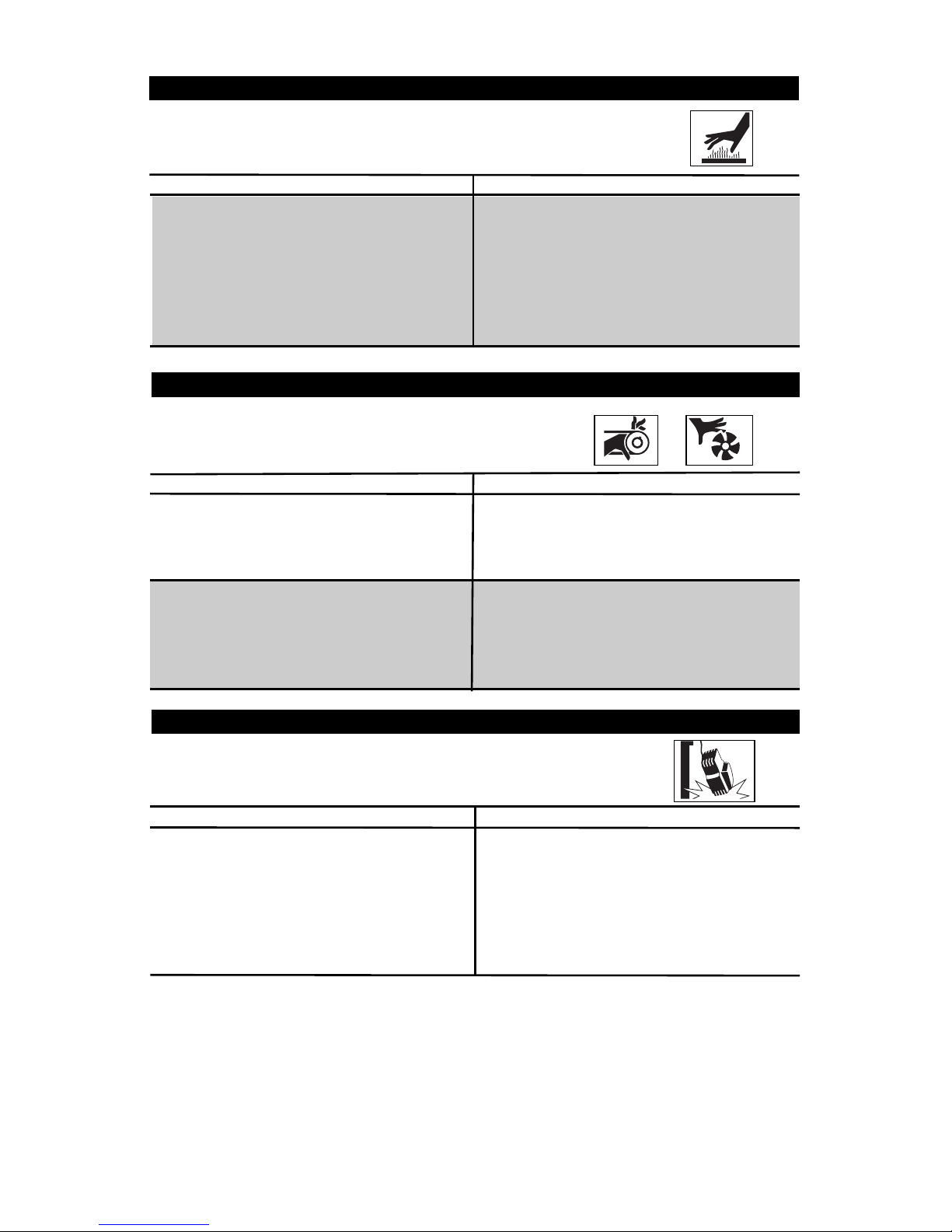
WARNING: Risk of Burns
Touching exposed metal such as the
compressor head or outlet tubes, can
result in serious burns.
Never touch any exposed metal parts
on compressor during or immediately
after operation. Compressor will remain
hot for several minutes after operation.
Do not reach around protective shrouds
or attempt maintenance until unit has
been allowed to cool.
WARNING: Risk from Moving Parts
Never operate the compressor with
guards or covers which are damaged or
removed.
Moving parts such as the pulley, flywheel,
and belt can cause serious injury if they
come into contact with you or your
clothing.
WARNING: Risk of Falling
A portable compressor can fall from a
table, workbench, or roof causing
damage to the compressor and could
result in serious injury or death to the
operator.
Always operate compressor in a stable
secure position to prevent accidental
movement of the unit. Never operate
compressor on a roof or other elevated
position. Use additional air hose to
reach high locations.
HAZARD
HAZARD
HAZARD
Any repairs required on this product
should be performed by authorized
service center personnel.
Attempting to operate compressor with
damaged or missing parts or attempting
to repair compressor with protective
shrouds removed can expose you to
moving parts and can result in serious
injury.
How To Prevent It
What Could Happen
How To Prevent It
What Could Happen
How To Prevent It
What Could Happen

7- ENG D29682
Review and understand all instructions
and warnings in this manual.
Become familiar with the operation and
controls of the air compressor.
Keep operating area clear of all persons,
pets, and obstacles.
Keep children away from the air
compressor at all times.
Do not operate the product when
fatigued or under the influence of
alcohol or drugs. Stay alert at all times.
Never defeat the safety features of this
product.
Equip area of operation with a fire
extinguisher.
Do not operate machine with missing,
broken, or unauthorized parts.
WARNING: Risk of Unsafe Operation
Unsafe operation of your air compressor
could lead to serious injury or death to
you or others.
HAZARD
WARNING: Risk of Serious Injury or Property Damage When
Transporting Compressor
Oil can leak or spill and could result in
fire or breathing hazard; serious injury or
death can result. oil leaks will damage
carpet, paint or other surfaces in
vehicles or trailers.
Always place COMPRESSOR on a
protective mat when transporting to
protect against damage to vehicle from
leaks. Remove COMPRESSOR from
vehicle immediately upon arrival at your
destination.
(Fire, Inhalation, Damage to Vehicle Surfaces)
HAZARD
SAVE THESE INSTRUCTIONS
How To Prevent It
What Could Happen
How To Prevent It
What Could Happen

8- ENG
D29682
GLOSSARY
Become familiar with these terms before operating the unit.
CFM: Cubic feet per minute.
SCFM: Standard cubic feet per minute; a unit of measure of air delivery.
PSIG: Pounds per square inch gauge; a unit of measure of pressure.
Code Certification: Products that bear one or more of the following marks:
UL, CUL, ETL, CETL, have been evaluated by OSHA certified independent
safety laboratories and meet the applicable Underwriters Laboratories
Standards for Safety.
Cut-In Pressure: While the motor is off, air tank pressure drops as you
continue to use your accessory. When the tank pressure drops to a certain low
level the motor will restart automatically. The low pressure at which the motor
automatically restarts is called “cut-in” pressure.
Cut-Out Pressure: When an air compressor is turned on and begins to run,
air pressure in the air tank begins to build. It builds to a certain high pressure
before the motor automatically shuts off - protecting your air tank from
pressure higher than its capacity. The high pressure at which the motor shuts
off is called “cut-out” pressure.
Branch Circuit: Circuit carrying electricity from electrical panel to outlet.
DUTY CYCLE
Air compressors should be operated on not more than a 50% duty cycle. This
means an air compressor that pumps air more than 50% of one hour is
considered misuse, because the air compressor is undersized for the required
air demand. Maximum compressor pumping time per hour is 30 minutes.
Accessories for this unit are available at the store the unit was purchased.
ACCESSORIES
SPECIFICATIONS
Model No. 66-501-1
Horsepower Peak 2
Bore 1.875"
Stroke 1.250"
Voltage/Hertz/ Phase 120V/60Hz/1Ph
Minimum Branch Circuit Requirement 15 amps
*Fuse Type Time Delay
Air Tank Capacity 8 gallons
Approximate Cut-in Pressure 100
Approximate Cut-out Pressure 125
SCFM @ 40 PSIG 3.7
SCFM @ 90 PSIG 2.6
A circuit breaker is preferred. Use only a fuse or circuit breaker that is the same
rating as the branch circuit the air compressor is operated on. If compressor is
connected to a circuit protected by fuses, use only time delay fuses. Time delay
fuses should be marked "D" in Canada and "T" in the US.

INSTALLATION
Location of the Air Compressor
Locate the air compressor in a clean, dry and well ventilated area. The air
compressor should be located at least 12" away from the wall or other
obstructions that will interfere with the flow of air. The air compressor pump
and shroud are designed to allow for proper cooling. The ventilation openings
on the compressor are necessary to maintain proper operating temperature. Do
not place rags or other containers on or near these openings.
HOW TO SET UP YOUR UNIT
9- ENG D29682
ASSEMBLY
The wheels and handle do not provide adequate
clearance, stability or support for pulling the unit up and
down stairs or steps. The unit must be lifted, or pushed up a ramp.
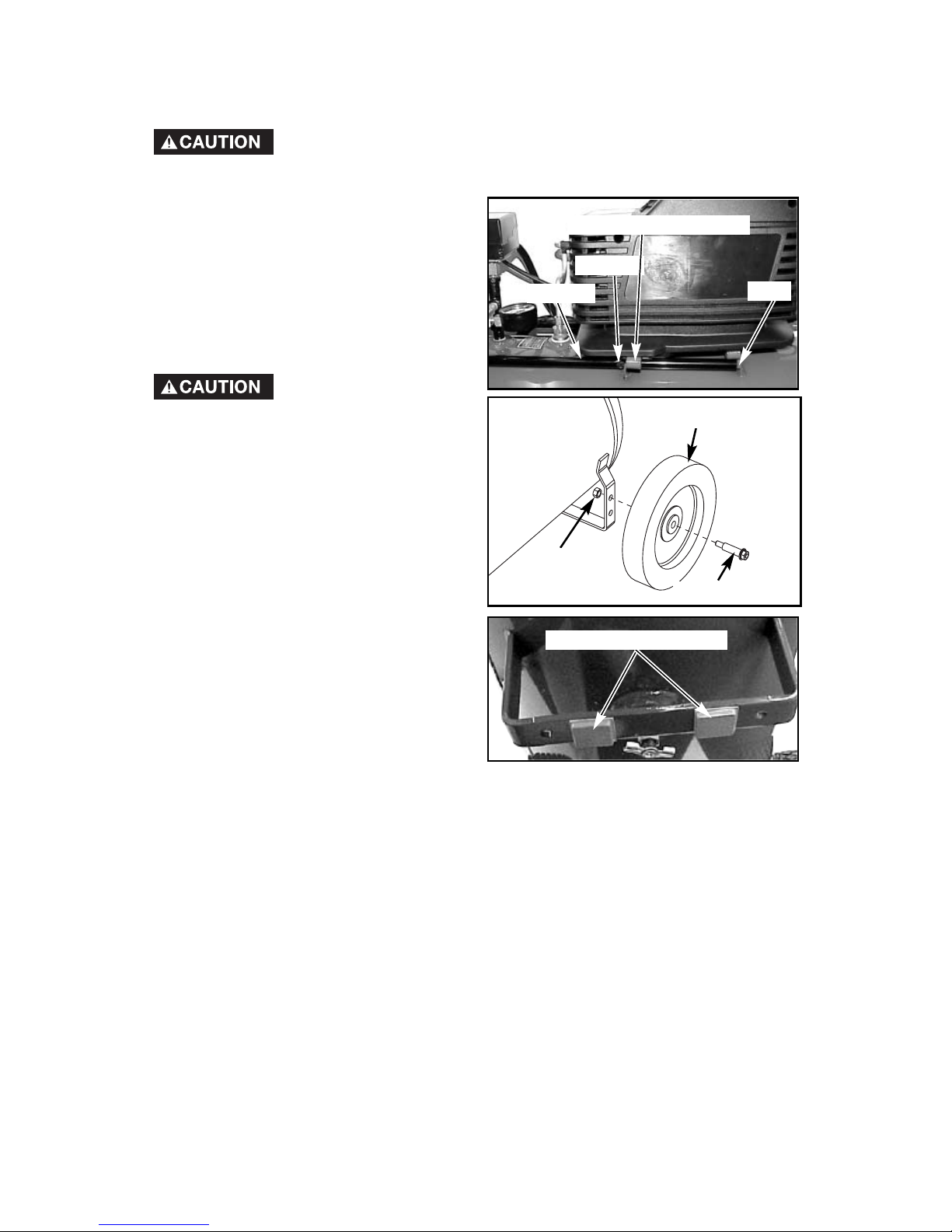
1. Submerge handle grip into warm
soapy water to make installation
easier. Remove handle grip from
soapy water and slide onto handle.
2. Slide handle through holes in
compressor saddle onto tabs.
Secure with screws, one on each
side.
It will be necessary to
brace or support one
side of the outfit when installing the
wheels because the compressor will
have a tendency to tip over.
3. Install one shoulder bolt and one nut
for each wheel. Tighten securely.
The outfit will sit level if the wheels
are properly installed.
4. Clean and dry underside of air tank
leg opposite wheels. Remove the
protective strip from the adhesive
backed molded foot bumpers.
Attach the foot bumpers to the
bottom of leg on each end.
Press firmly into place.
Wheel
Shoulder Bolt
Nut
Handle
Screw
Compressor Saddle
Tab
Molded Foot Bumpers

10- ENG
D29682
GROUNDING INSTRUCTIONS
RISK OF ELECTRICAL SHOCK. In the event of a short
circuit, grounding reduces the risk of shock by providing
an escape wire for the electric current. This air compressor must be
properly grounded.
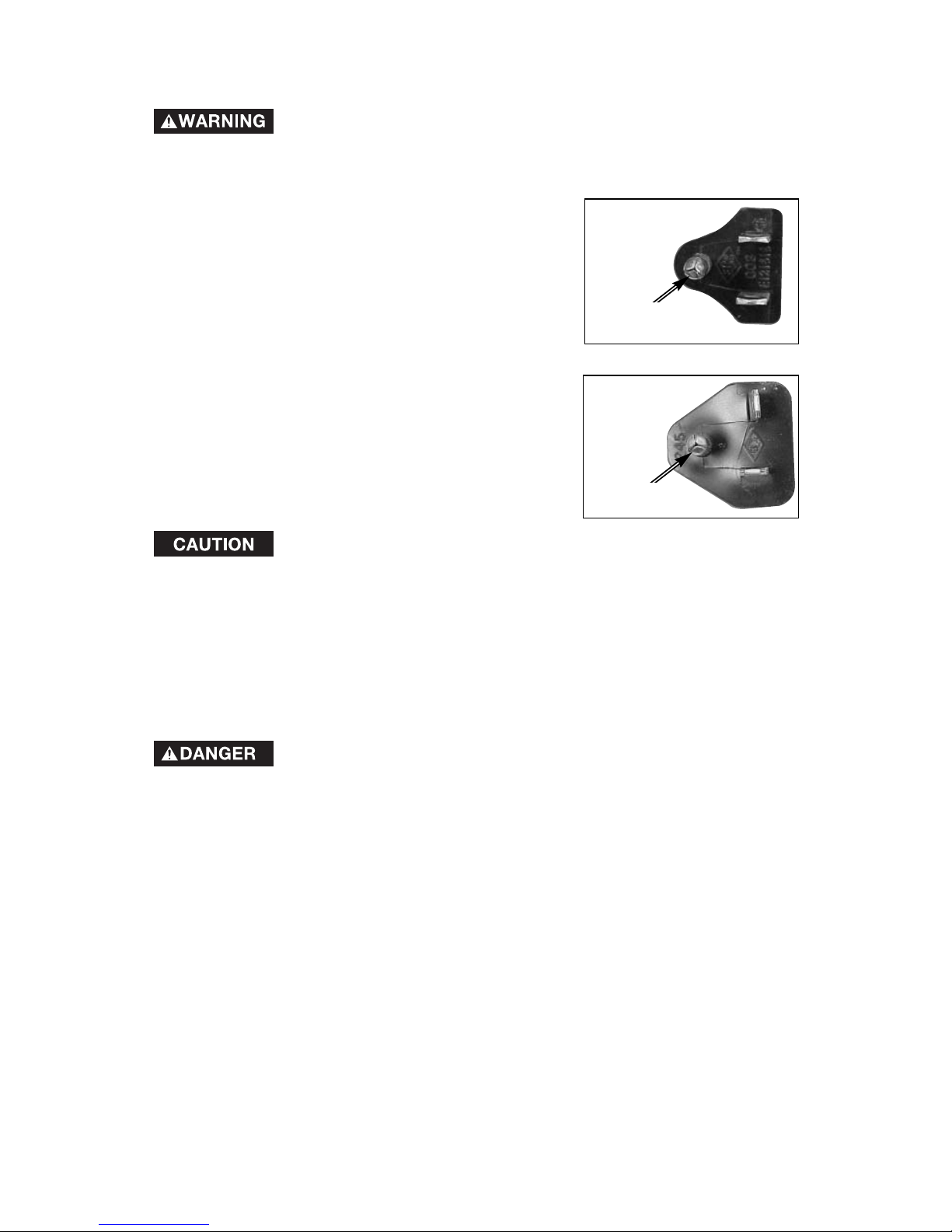
The portable air compressor is equipped with a cord
having a grounding wire with an appropriate
grounding plug (see illustrations). The plug must be
used with an outlet that has been installed and
grounded in accordance with all local codes and
ordinances.
1. The cord set and plug with this unit contains a
grounding pin. This plug MUST be used with a
grounded outlet.
IMPORTANT: The outlet being used must be
installed and grounded in accordance with all local
codes and ordinances.
2. Make sure the outlet being used has the same
configuration as the grounded plug. DO NOT
USE AN ADAPTER.
When used outside of the United
States of America a conversion kit may be required for
local use.
3. Inspect the plug and cord before each use. Do not use if there are signs
of damage.
4. If these grounding instructions are not completely understood, or if in
doubt as to whether the compressor is properly grounded, have the
installation checked by a qualified electrician.
IMPROPER GROUNDING CAN RESULT IN ELECTRICAL
SHOCK.
Do not modify the plug provided. If it does not fit the available outlet, a
correct outlet should be installed by a qualified electrician.
Repairs to the cord set or plug MUST be made by a qualified electrician.
120 Volt U.S.A. Plug
240 Volt U.S.A. Plug
Grounding
Pin
Grounding
Pin
Extension Cords
Using extension cords is not recommended. The use of extension cords will
cause voltage to drop resulting in power loss to the motor and overheating.
Instead of using an extension cord, increase the working reach of the air hose
by attaching another length of hose to its end. Attach additional lengths of
hose as needed.
If an extension cord must be used, be sure it is:
• a 3-wire extension cord that has a 3-blade grounding plug, and a 3-slot
receptacle that will accept the plug on the product
• in good condition
• no longer than 50 feet
• 14 gauge (AWG) or larger. (Wire size increases as gauge number
decreases. 12 AWG, 10 AWG, and 8 AWG may also be used. DO NOT
USE 16 OR 18 AWG.)
Altri manuali per (66-501-1)
1
Indice
Altri manuali Delta compressore d'aria

Delta
Delta 66-500-1 Manuale utente

Delta
Delta ShopMaster CP200 Manuale utente

Delta
Delta 66-202-1 Manuale utente

Delta
Delta 66-202-1 Manuale utente

Delta
Delta A08590 Manuale utente

Delta
Delta 66-750 Manuale utente

Delta
Delta ShopMaster A05581 Manuale utente

Delta
Delta 66-202 Manuale utente

Delta
Delta Oil-Free 66-651 Manuale utente

Delta
Delta D25886 Manuale utente