4
GB
INSTALLATION
1. General
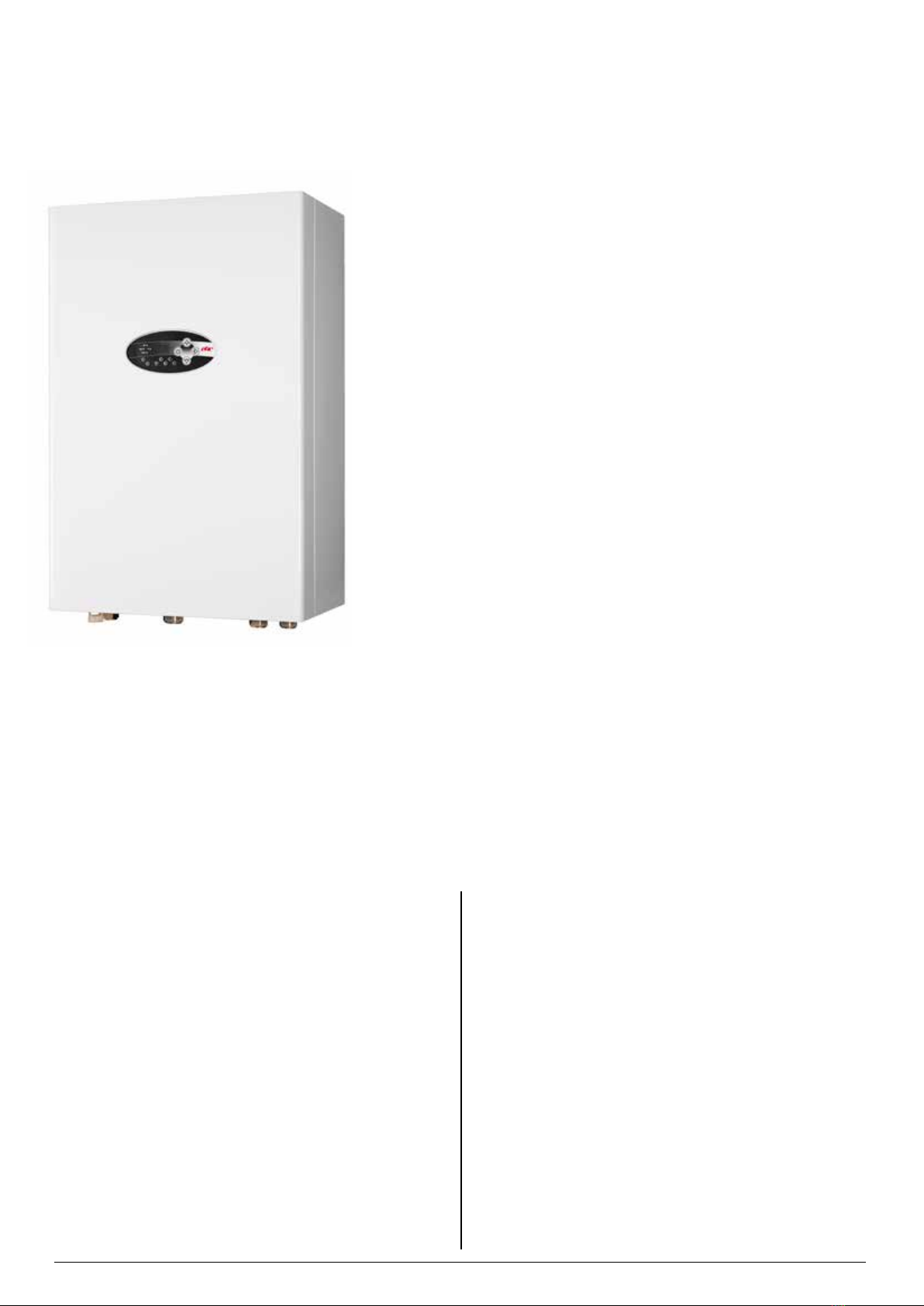
Mercury boilers must be installed by a professional plumber or
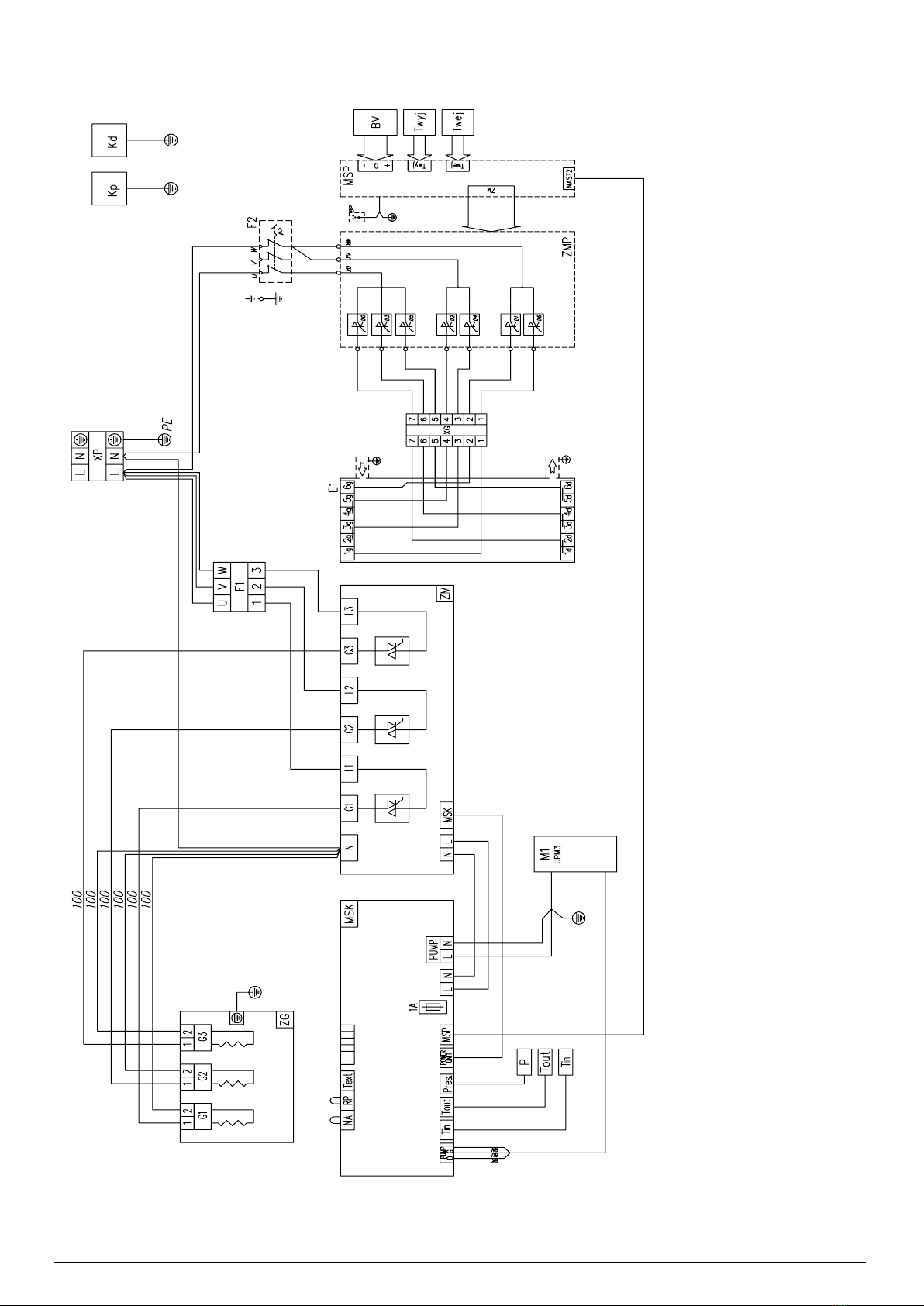
heating engineer. All Electrical works must be carried out by
a fully qualified electrician in accordance with the current
revision of BS7671 wiring Regulations.
The Electric heating Company Ltd will not be held responsible
for faulty installations which are performed by unqualified
tradespeople.
2. Pipe Connections
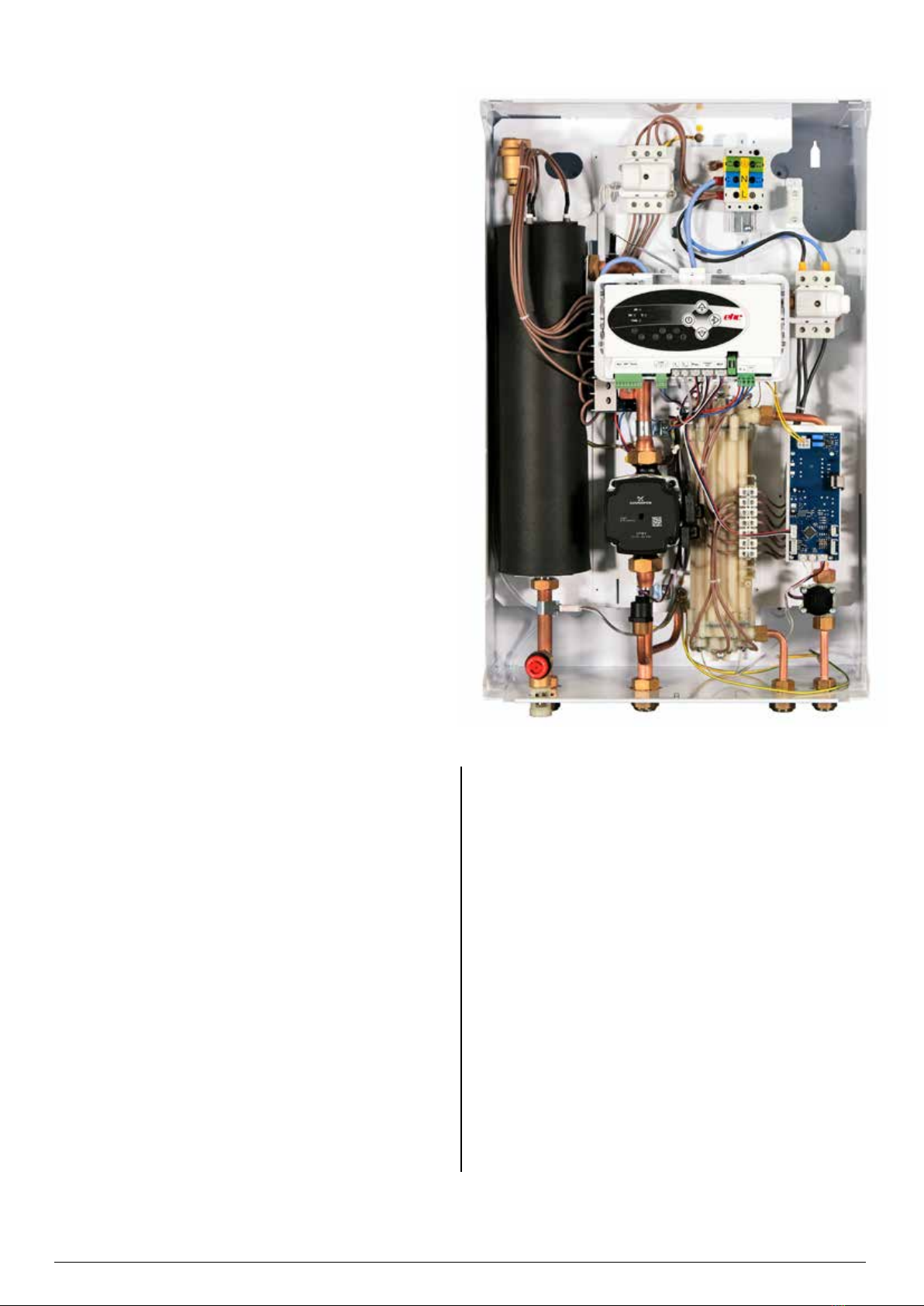
Mercury boilers Plumbing connections are of the compression
type. (22mm for Flow & Return & 15mm for Hot & Cold).
3. Case Removal
Remove outer screw at the bottom of the boiler and pull the front
cover outwards and upwards taking care to remove internal earth
connection. Earth connections must be re-connected before the
boiler case is re-installed.
4. Isolation Valves
We recommend that lever isolation valves are fitted on the
flow and return pipework. Such valves must be „full bore” and
not „ball valves”. The installation of “ball valves” will reduce
the recommended flow through the boiler that could promote
premature boiler shut-down.
5. Mains Water inlet
We recommend that a lockshield stopcock is fitted on the mains
inlet of the boiler to allow you set the recommended flow rate.
(Flow rates can be found in the technical table within this manual)
When the boiler is fitted in hard water areas, a water softener
must be used. Note: Salt softeners must not be used to fill the
heating system.
6. Auto air vents
An auto air vent is integral within the boiler however an additional
auto air vent must be fitted at the cylinder coil if the boiler is being
used for central heating and domestic hot water.
7. Boiler Sizing
Calculate the „space heating” requirements in accordance with BS
EN 12831 and BS EN 14336. If the boiler is to heat the domestic
hot water, an additional allowance of 3kW (10,239 Btu’s) should
be made to the ‘space heating’ calculation.
8. Insulation
Where practical, and if at all possible, we recommend that all
pipe-work be insulated, in particular the pipe-work within a boiler
cupboard. This is to reduce heat loss and reduce high cupboard
temperatures from exposed pipe-work. (BS 6700).
9. System Design
Allowance should be made for a radiator to be installed within
the heating circuit and locked open. This will be located in the
room that has the room thermostat installed.
To comply with building regulations, Part L and Part J (in Scotland),
room and cylinder stats must be fitted.
Water Connections, Provisions must be made for the replacement
of water lost from the heating system (sealed systems).
Reference should be made to BS EN 14336 for the method of
filling and make up of water. There must be no direct connection
between the boilers central heating system and the main water
supply. When mains water is required to fill the system directly,
all local water bylaws must be observed, and any connection
made must be disconnected after use.
10. Flushing
The system must be flushed to within 10% of mains water PPM to
ensure that no debris is trapped in the system as this may result in
boiler failure. Where existing radiators and pipe-work are utilized
a power flush must be carried out .For further guidance please
see - Commissioning section on page 6.
11. System pressures
All boilers are tested to 4.0 bar. The normal working pressure
of the boiler should be set to approx 1.0 / 1.5 bar. All sealed
systems should comply with the relevant building regulations and
standards, including BS EN 13831 Specification for Expansion
Vessels.
12. System types
The Fusion Mercury Combi Boilers can be used in various heating
designs including underfloor systems. When the boiler is used
with an underfloor manifold, the manifold must be of the type that
has a thermostatic mixing valve fitted to protect the floor surface.
For standard radiator systems we recommend the use of
thermostatic radiator valves on all radiators except in the room
that has the wall thermostat fitted. This radiator should be fitted
with lock-shield valves and left in the fully open position.
Systems should be designed to meet the current building
regulations in force at the current time.
13. Hanging the Boiler
Hang the boiler in a vertical position using the mounting bracket
and fixing screws provided. Make sure the boiler has the minimum
recommended clearances as mentioned within this manual.
Connect the boiler to a heating system that is equipped with full
bore isolation valves and external magnetic filter.