Ei Electronics Ei 261DEN Manuale utente

Model Ei 261EN
Model Ei 261DEN
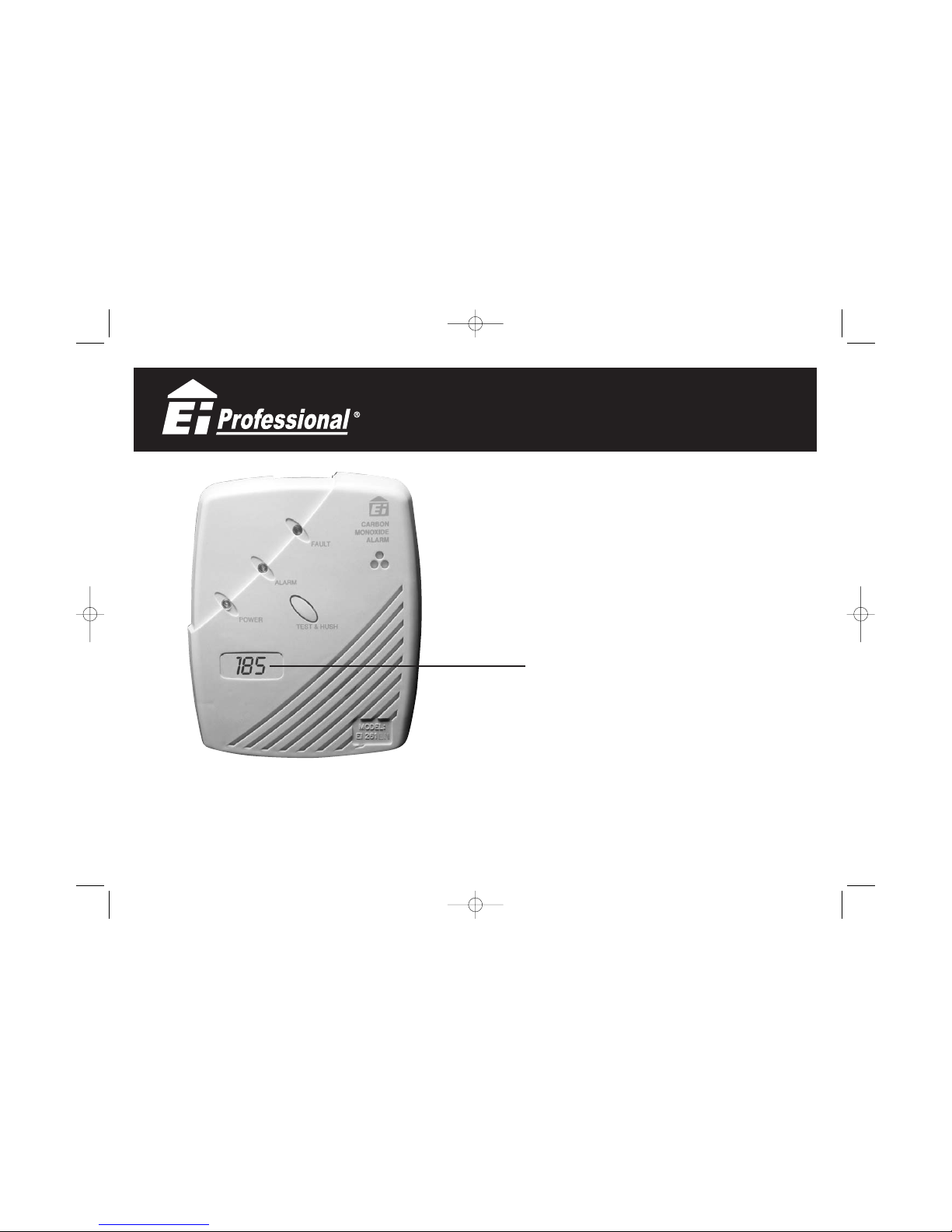
WITH DIGITAL DISPLAY
DIGITAL DISPLAY
Ei261DEN ONLY
Read and retain carefully for as long as the product is being used. It contains vital information on the
operation and installation. The leaflet should be regarded as part of the product.
If you are just installing the unit, the leaflet must be given to the householder. The leaflet is to be given to
any subsequent user.
MAINS POWERED
CARBON MONOXIDE ALARMS
WITH RECHARGEABLE LITHIUM CELL BACK-UP
B15404-R0-261EN-UC-ENG 31/5/07 2:01 PM Page 1

1
3
8
13
18
20
21
23
24
27
27
28
1
2
3
4
5
6
7
8
9
10
11
12
READ THIS FIRST
CARBON MONOXIDE - THE SILENT KILLER!
WHERE TO PLACE CARBON MONOXIDE ALARMS
INSTALLING YOUR CARBON MONOXIDE ALARMS
TESTING YOUR CARBON MONOXIDE ALARMS
MAINTAINING CARBON MONOXIDE ALARMS
LIMITATIONS OF CARBON MONOXIDE ALARMS
HOW TO PROTECT YOUR FAMILY
TECHNICAL SPECIFICATIONS
GETTING YOUR CARBON MONOXIDE ALARMS SERVICED
FIVE YEAR GUARANTEE
TROUBLESHOOTING
Page
CONTENTS
B15404-R0-261EN-UC-ENG 31/5/07 2:01 PM Page 2

1. READ THIS FIRST
WARNING
The Alarm should be permanently wired to the mains by a qualified electrician in accordance with IEE
wiring regulations (BS7671).
Install the Carbon Monoxide Alarm (CO Alarm) in every room that contains a fuel burning
appliance, particularly rooms where people spend a lot of time e.g. bedrooms, kitchens and sitting
rooms.
In rooms with an appliance install (perferably) on the ceiling (300mm from walls) and between 1m
to 3m horizontally from appliance. In rooms remote from the appliance install at breath level, where
the light indicators can be seen.
Regularly check that the green power light is on, so that standby rechargeable cells will fully
charge. Important: The CO Alarm will not work if the mains supply is off and the rechargeable cells
are depleted.
Test the unit weekly by pressing the test/hush button-the horn will sound.
Replace sensor module after 5 years operation (see page 20).
1
B15404-R0-261EN-UC-ENG 31/5/07 2:01 PM Page 3

What to do when the alarm sounds:
(1) Open the doors and windows to ventilate the area.
(2) Turn off all fuel appliances where possible and stop them. (The alarm can be silenced
immediately by pushing the test/hush button).
(3) Evacuate the property leaving the doors and windows open.
(4) Get medical help immediately for anyone suffering the effects of Carbon Monoxide poi-
soning (headache, nausea), and advise that Carbon Monoxide poisoning is suspected.
(5) Ring your gas or other fuel supplier on their emergency number. Keep the number in a
prominent place.
(6) Do not re-enter the property until the alarm has stopped. (If the alarm has been silenced
by pressing the test/hush button, wait at least 5 minutes so the alarm can check that the CO
has cleared).
(7) Do not use the fuel appliances again until they have been checked by an expert. In the
case of gas appliances this must be a CORGI registered installer.
When the CO Alarm detects abnormal levels of CO (above 50ppm CO) the red light starts to flash
and the horn will sound within 90 minutes. At higher levels of CO the alarm will turn on sooner (see
table B - page 6).
?
?
2
B15404-R0-261EN-UC-ENG 31/5/07 2:01 PM Page 4

The CO Alarm will automatically reset
once the CO has cleared. Pressing the
test/hush button resets the CO Alarm
immediately (below 300ppm CO). If CO
is still present the red light and horn will
turn on again after about 4 minutes.
The CO Alarm is no substitute for keep-
ing chimneys and flues clear and in
good condition, and all of your appli-
ances serviced regularly according to
the manufacturer’s instructions.
Do not fit alarm until all building work
is completed to avoid contamination.
2. CARBON MONOXIDE
- THE SILENT KILLER!
2.1 What is Carbon Monoxide ?
Congratulations on becoming the owner of
an Ei Carbon Monoxide Alarm. This will help
protect you and your household from the
dangerous effects of Carbon Monoxide - the
silent killer. (CO is the chemical symbol, indi-
cating the module has one carbon atom and
one oxygen atom).
?
?
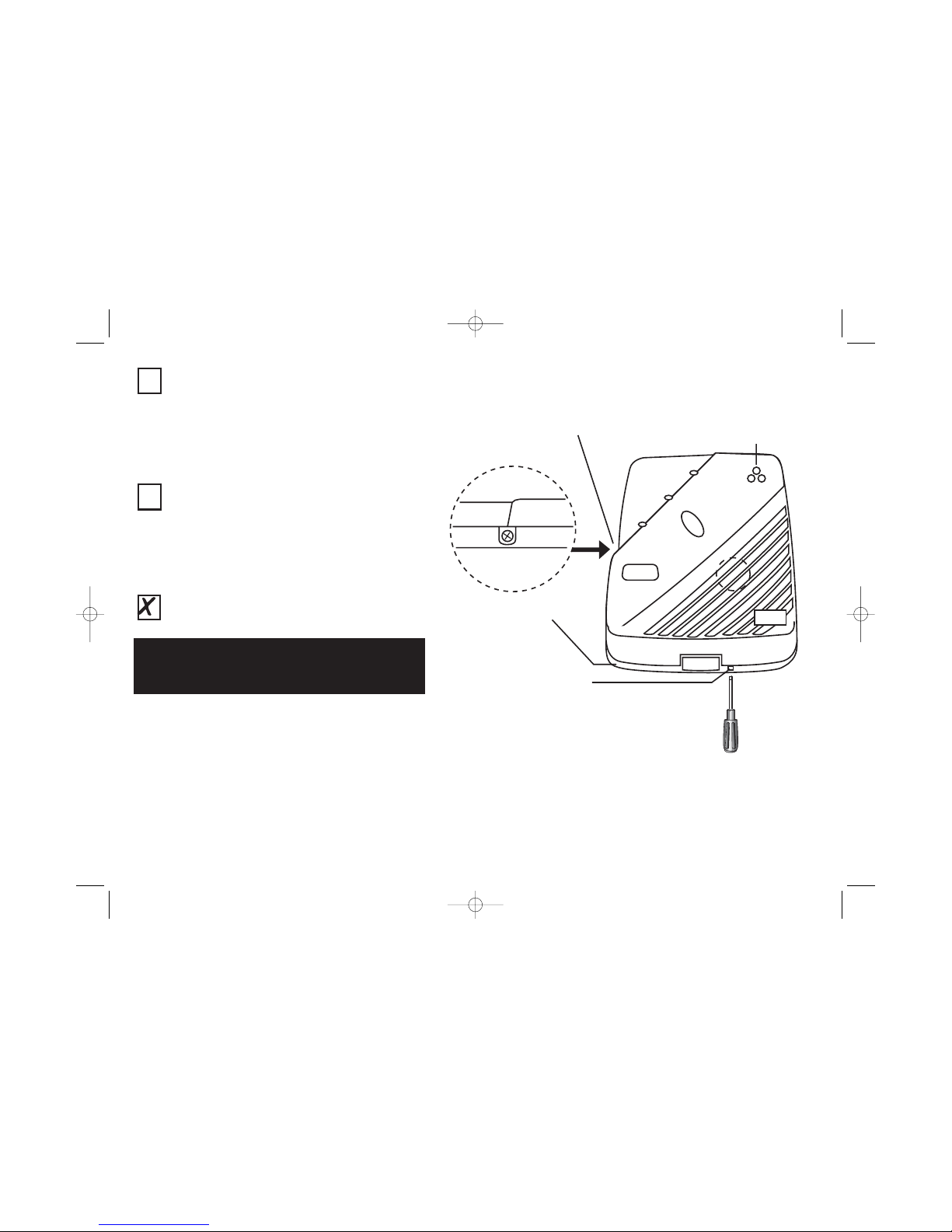
LOCATION FOR
TAMPERPROOF SCREW
(see page 16)
PUSH SMALL
SCREWDRIVER
STRAIGHT IN
TO RELEASE.
PUSH COVER
BACK
WARNING: DISCONNECT MAINS BEFORE REMOVING ALARM FROM
CEILING OR WALL
TAMPERPROOF CATCH
MOUNTING PLATE
SIDE VIEW
GAS ENTRY HOLES
Figure 1 - Alarm Installation
3
B15404-R0-261EN-UC-ENG 31/5/07 2:01 PM Page 5

Many are killed each year, and many more suffer ill health from Carbon Monoxide (CO) poisoning. CO is
an invisible, odourless, tasteless and extremely toxic gas. It is produced by appliances and vehicles burn-
ing fuels, such as coal, oil, natural/bottled gas, paraffin, wood, petrol, diesel, charcoal etc. CO is absorbed
by red blood cells in the lungs in preference to oxygen - this results in rapid damage to the heart and
brain from oxygen starvation.
High levels of CO in a house can be caused by:
•Incorrectly or poorly installed fuel-burning appliances.
•Blocked or cracked chimneys/flues.
•Blocked vents or draught-proofing which makes areas with fuel burning appliances or fireplaces airtight.
•Engines of cars, lawnmowers etc. left running in confined spaces.
•Portable paraffin or gas heaters in badly ventilated rooms.
2.2 Symptoms of Carbon Monoxide Poisoning
Most people know that high levels of CO are harmful, however the period of exposure is also important.
The following symptoms are related to Carbon Monoxide poisoning and should be discussed with all
members of the household.
Mild Exposure: Slight headache, nausea, vomiting, fatigue (often described as “flu-like” symptoms).
Medium Exposure: Severe throbbing headache, drowsiness, confusion, fast heart rate.
Extreme Exposure: Unconsciousness, convulsions, cardiorespiratory failure, death.
4
B15404-R0-261EN-UC-ENG 31/5/07 2:01 PM Page 6

A high level of CO for a short period (e.g. 350 ppm CO for 30 minutes) will cause the same symptoms,
a slight headache, as a lower level for a longer time (e.g. 150 ppm for 90 minutes). Table A shows how
exposure to different concentrations of CO generally affects people.
Many cases of reported Carbon Monoxide poisoning indicate that while victims are aware they are not
well, they become so disorientated they are unable to save themselves by either leaving the building or
calling for assistance. Young children and household pets may be the first affected.
Table A: Effects of Carbon Monoxide Poisoning
35 The maximum allowable concentration for continuous exposure in any 8 hour period according to OSHA *.
150 Slight headache after 1.5 hours.
200 Slight headache, fatigue, dizziness, nausea after 2-3 hours.
400 Frontal headaches within 1-2 hours, life threatening after 3 hours, also maximum parts per million in flue gas (on an
air free basis) according to US Environmental Protection Agency.
800 Dizziness, nausea and convulsions within 45 minutes. Unconsciousness within 2 hours. Death within 2-3 hours.
1,600 Headache, dizziness and nausea within 20 minutes. Death within 1 hour.
3,200 Headache, dizziness and nausea within 5-10 minutes. Death within 25-30 minutes.
6,400 Headache, dizziness and nausea within 1-2 minutes. Death within 10-15 minutes.
12,800 Death within 1-3 minutes.
ppm
Concentration
of CO in Air Inhalation Time (approx) and Symptoms Developed
ppm = parts per million
*OSHA Occupational Safety & Health Association
5
B15404-R0-261EN-UC-ENG 31/5/07 2:01 PM Page 7

2.3 What happens when your CO Alarm detects Carbon Monoxide ?
When the Alarm detects potentally dangerous levels of CO, it flashes the red alarm light and then sounds
a loud alarm if the CO persists. The digital display indicates the CO level in parts per million, ppm CO,
(Model Ei261DEN only).
Table B below shows how the CO Alarm reacts to different levels of CO gas and exposure time. At higher
levels of CO the alarm turns on sooner. The rate of flashing of the red light indicates the level of CO.
Table B: CO Alarm Response
* unless it has been in alarm (see CO Alarm Memory below)
If your CO Alarm sounds follow the instructions on page 2.
When ventilation is provided by leaving the window and doors open, the CO build up may have
dissipated by the time help arrives and the alarm may have stopped sounding. Although your problem
may appear temporarily solved it is crucial that the source of the CO is determined and appropriate
repairs made.
CO Level
ppm
Horn On
within
Red
Alarm Light
0 ppm
50ppm
100 ppm
300 ppm
Off
60 to 90 minutes
10 to 40 minutes
3 minutes
Off *
1 Flash / 2 Seconds
2 Flashes / Second
4 Flashes / Second
6
B15404-R0-261EN-UC-ENG 31/5/07 2:01 PM Page 8

NEVER IGNORE THE ALARM.
Pre-Alarm: When the alarm detects over 50ppm CO the red light flashes every 2 seconds. This helps
locate CO leaks as the unit gives an indication straight away. (Without this feature the CO level would
need to be at 50ppm CO for 90 minutes for an indication to be given). Note the Pre-Alarm signal may be
triggered by CO coming for example, from cooking with gas, from car engines or from nearby barbecues.
This is usually not a concern unless the Pre-Alarm signal persists until the alarm sounds and the CO
source is unknown.
NOTE: The CO Alarm may sound if cigarette smoke is blown into it, or aerosols are released nearby.
CO ALARM MEMORY.
When the test button is pressed the horn will sound, and the red light will only flash if the unit has
previously detected CO and been in alarm. The flash rate indicates the level of CO detected as below:-
- Red light is Off – No CO detected since reset or power up.
- Red light flashes 2 times (in 2 seconds) every 40 seconds, 50 ppm CO detected for about 90 minutes
since reset or power-up.
- Red light flashes 4 times (in 2 seconds) every 40 seconds, 100 ppm CO detected for about 40
minutes since reset or power-up.
- Red light flashes 8 times (in 2 seconds) every 40 seconds, 300 ppm CO detected for about 3 minutes.
Reset Memory by holding down the test button for over 20 seconds until the red light stops flashing.
Cover the horn with a cloth to muffle the alarm during this time.
Ei261-DEN Only
When the test button is held the display shows the previous peak reading. This tells you if the unit has
detected CO in your absence and helps to detect and locate leaks, monitor premises etc.
7
B15404-R0-261EN-UC-ENG 31/5/07 2:01 PM Page 9

When the test button is held for 20 seconds the peak reading resets to zero. (Cover the horn with a cloth
to muffle the loud alarm).
Please note that the memory will also be reset when the unit is removed from the mounting plate.
3. WHERE TO PLACE CO ALARMS
3.1 Ideally a Carbon Monoxide Alarm should be installed in:
- Every room containing a fuel burning appliance, and
- Remote rooms where occupants spend a considerable amount of time
- Every bedroom.
However if the number of Carbon Monoxide Alarms is limited the following points should be considered
when deciding where best to fit the alarm(s)
- If there is an appliance in a room where people sleep, place a CO Alarm in this room and
- Locate a CO alarm in a room containing a flueless or open-flued appliance, and
- Locate an alarm in a room where the occupant(s) spend most of their time (e.g. sitting room) and
- In a bedsit, the CO alarm should be placed as far away from the cooking appliance as possible, but near
to where the person sleeps and
- If the appliance is in a room not normally used, such as a boiler room, the CO alarm should be placed
just outside the room so that the alarm will be heard more easily.
8
B15404-R0-261EN-UC-ENG 31/5/07 2:01 PM Page 10
Questo manuale è adatto per i seguenti modelli
1
Indice
Altri manuali Ei Electronics Allarme monossido di carbonio

Ei Electronics
Ei Electronics Carbon Monoxide Alarm Ei206D Manuale utente

Ei Electronics
Ei Electronics Ei204 Manuale utente

Ei Electronics
Ei Electronics RadioLINK Ei262 Manuale utente

Ei Electronics
Ei Electronics Ei 225E Manuale utente

Ei Electronics
Ei Electronics Ei207/208 Series Manuale utente

Ei Electronics
Ei Electronics Ei261ENRC Manuale utente

Ei Electronics
Ei Electronics Carbon Monoxide Alarm Ei206D Manuale utente

Ei Electronics
Ei Electronics Ei207 Series Manuale utente

Ei Electronics
Ei Electronics Ei 220E Manuale utente

Ei Electronics
Ei Electronics Carbon Monoxide Alarm Ei220EN Manuale utente