UM-780-400-SBS Manual –V2.00 6 | P a g e
2. Introduction
The SBS is EML’s recommended solution for Hydrological or meteorological professionals such as
National Met. Services, weather stations and flood warning systems. There are 3 funnel sizes available
which are recommended based on the environment in which they are installed. The SBS314 is ideal
for heavy rainfall regions, the SBS500 is favoured in a mixed climate such as Europe and the SBS1000
is particularly good in low, light rain areas. Aside from the funnel diameter all gauges are identical,
providing a robust and versatile instrument which is ideal for applications where data precision and
accuracy are of critical importance.
The SBS is available in White or Green. The internal tipping bucket mechanism has been designed to
maximise water flow and therefore to assure maximum performance repeatability.
Traditional cylinder-shaped rain gauges are inaccurate due to the effect of wind blowing over the
orifice. The physical presence of the gauge causes air to accelerate, carrying rainfall away from the
collecting vessel. The effect of this can be up to a 20% reduction in rainfall catch. The unique
aerodynamic shape of the EML range of scientific standard rain gauges reduces this effect, ensuring a
high level of confidence in the accuracy of our measurements.
3. Site and Installation Requirements
Choosing a site
A rain gauge site is often a compromise between exposure requirements and operational constraints.
The ideal site is level ground with a uniform scattering of objects in the surrounding area thus reducing
overall wind speeds. However, these objects should not be too large to cause eddying or high gusts to
occur near to the gauge, or so close to prevent rain from entering the gauge. The gauge should ideally
be no closer than at least twice the height of the obstruction. Although the SBS rain gauge is designed
to operate in higher wind speeds, care must still be taken to avoid over-exposing the gauge where
possible. Large expanses of open flat land should be avoided where possible. If the application is very
specific, such as monitoring a building site, then the siting of the rain gauge is largely prescribed by
use. Those users who wish to enquire more fully into rain gauge exposure are referred to the EML
website for more technical information and papers (www.emltd.net).
NOTES: No two rain gauge designs are ever likely to produce identical results, and even two identical
rain gauges can give slightly different catches even when sited close to each other.
If the gauge is to be operated in the area of livestock then a fence will almost always be required to
prevent damage from and to the animals.
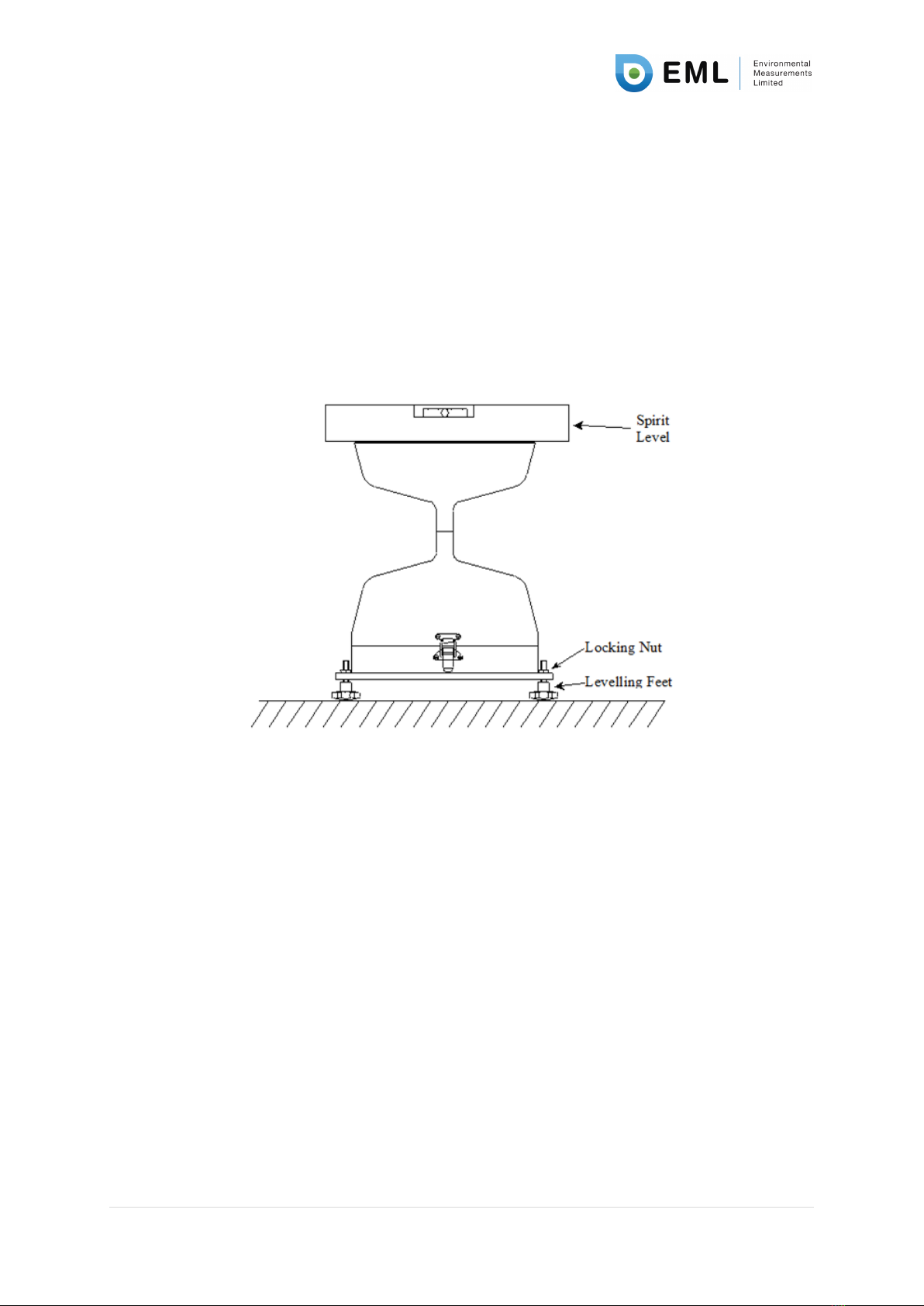
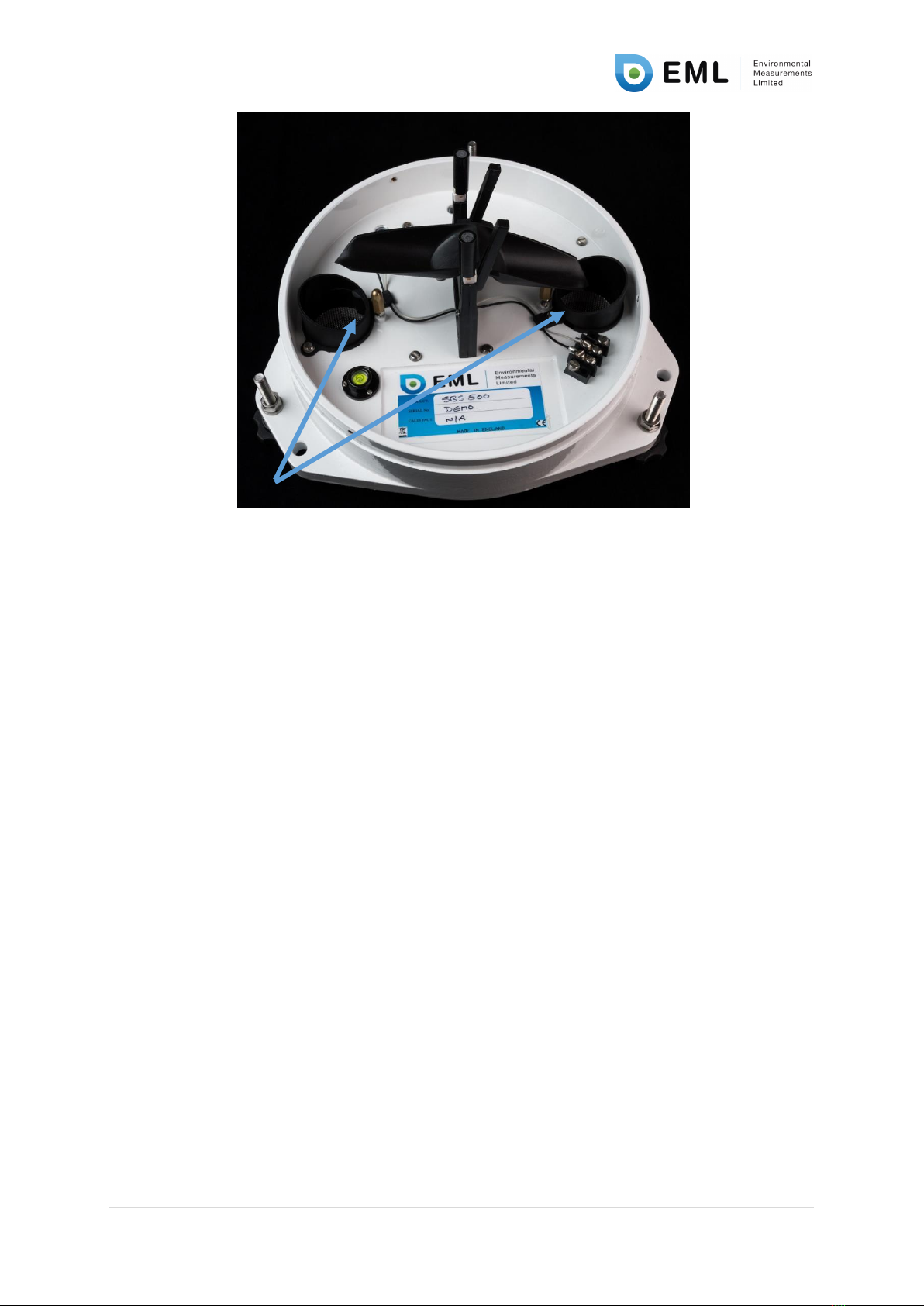
WARNING! Remove packing piece! The tipping-bucket mechanism is immobilised before shipping to
prevent damage in transit. To release the mechanism for use, remove the funnel assembly from its
base by loosening the three screws and then lifting the funnel. Remove the piece of foam from under
the bucket mechanism. This foam may be saved and used whenever the rain gauge is transported.