
Ferm VCM1007 Manuale utente

POWERED BY
WWW.FERM.COM
VCM1007
20V CORDLESS
VACUUM CLEANER
EN
NL
FR
DE
Original instructions 07
Vertaling van de oorspronkelijke gebruiksaanwijzing
11
Traduction de la notice originale 16
Übersetzung der Originalbetriebsanleitung 21

2
Fig. A
6
7
17
13
11
10
3
1
2
154
12
8
8
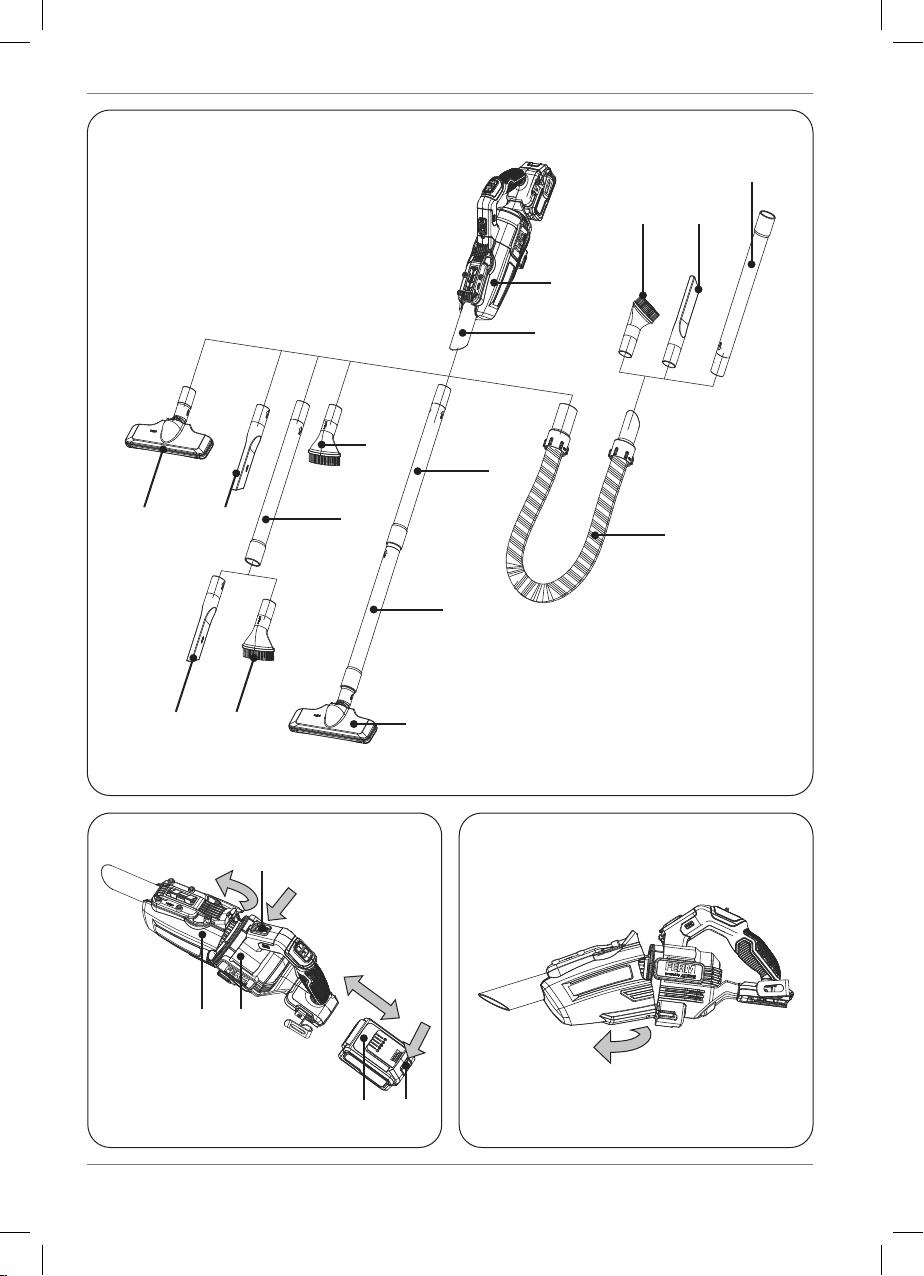
3
Fig. B
7
8
12
8
8
9
11
17
10
1210
11
8
1012
Fig. C2Fig. C1
7 6
54
3

4
Fig. D3
Fig. C4
Fig. C3
Fig. D1
16 6
Fig. D2
Fig. D4

5
Fig. E
1413
10
12
8

6
Fig. F
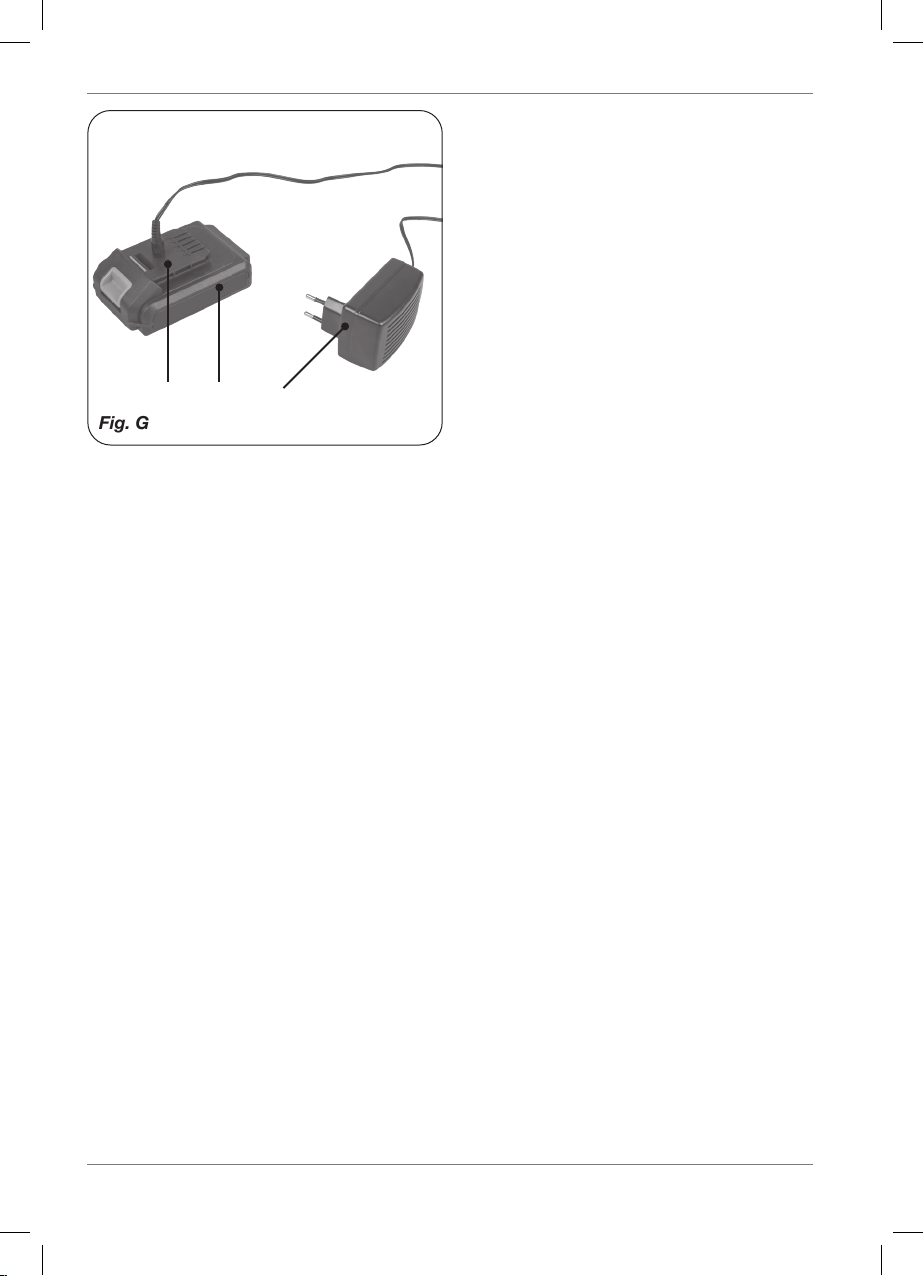
Fig. G
19418
7

8
EN
VACUUM CLEANER
VCM1007
Thank you for buying this FERM product. By
doing so you now have an excellent product,
delivered by one of Europe’sleading suppliers.
All products delivered to you by Ferm are
manufactured according to the highest standards
of performance and safety. As part of our
philosophy we also provide an excellent customer
service, backed by our comprehensive warranty.
We hope you will enjoy using this product for
many years to come.
1. SAFETY INSTRUCTIONS
Read the enclosed safety warnings,
the additional safety warnings and
the instructions. Failure to follow the
safety warnings and the instructions may result in
electric shock, fire and/or serious injury. Save the
safety warnings and the instructions for future
reference.
The following symbols are used in the user
manual or on the product:
Read the user manual.
Denotes risk of personal injury, loss of life
or damage to the tool in case of non-
observance of the instructions in this
manual.
Risk of electric shock.
Do not use in rain.
Class II machine - Double insulation -
You don’t need any earthed plug.
Switched-mode power supply.
In case of failure, the transformer is not
dangerous.
Do not throw the battery into fire.
Do not throw the battery into water.
Separate collection for Li-ion battery.
Do not dispose of the product in
unsuitable containers.
The product is in accordance with the
applicable safety standards in the
European directives.
SAFETY NOTES
THIS APPLIANCE CAN BE USED BY CHILDREN
AGED FROM 8 YEARS AND ABOVE AND
PERSONS WITH REDUCED PHYSICAL,
SENSORY OR MENTAL CAPABILITIES OR
LACK OF EXPERIENCE AND KNOWLEDGE IF
THEY HAVE BEEN GIVEN SUPERVISION OR
INSTRUCTION CONCERNING USE OF THE
APPLIANCE IN A SAFE WAY AND UNDERSTAND
THE HAZARDS INVOLVED. CHILDREN SHALL
NOT PLAY WITH THE APPLIANCE. CLEANING
AND USER MAINTENANCE SHALL NOT BE
MADE BY CHILDREN WITHOUT SUPERVISION.
GENERAL POWER TOOL SAFETY
WARNINGS
WARNING!
Read all safety warnings and all
instructions. Failure to follow the
warnings and instructions may result in electric
shock, fire and/or serious injury.
Save all warnings and instructions for future
reference. The term “power tool” in the warnings
refers to your mains-operated (corded) power tool
or battery-operated (cordless) power tool.
1) Product use and safety
a)
Do not vacuum materials that are harmful
to one’shealth, e. g. dust from beech or
oak wood, masonry dust, asbestos. These
materials are considered carcinogenic. Inform
yourself about the valid regulations/laws
for your country concerning the handling of
materials that are hazardous to one’shealth.

9
EN
b) Use the vacuum cleaner only when you fully
understand and can perform all functions
without limitation, or have received
appropriate instructions. Athorough
introduction reduces operating errors and
injuries.
c) The vacuum cleaner is suitable only for
vacuuming dry materials. The penetration of
liquids increases the risk of an electric shock.
d) The vacuum cleaner may only be used and
stored indoors. The penetration of rain or
moisture into the vacuum cleaner lid increases
the risk of an electric shock.
e) Do not vacuum hot or burning dusts, and in
rooms with an explosion hazard. Dusts can
ignite or explode.
f) Remove the battery pack from the vacuum
cleaner before maintaining or cleaning,
making any adjustments, changing
accessories or placing the vacuum cleaner
aside. This safety measure prevents accidental
starting of the vacuum cleaner.
g) Provide for good ventilation at the working
place.
h) Have the vacuum cleaner repaired only
through qualified specialists and only using
original spare parts. This ensures that the
safety of your vacuum cleaner is maintained.
i) Do not clean the vacuum cleaner with
awater jet pointed directly at it. The
penetration of water into the vacuum cleaner
lid increases the risk of an electric shock.
j) When the vacuum cleaner is not in use,
store it securely.
k) The storage place must be dry and
lockable. This prevents the vacuum cleaner
being damaged when it is stored or being used
by inexperienced people.
l) The device is not suitable for commercial or
industrial use.
• Do not use for vacuuming up damp
substances or liquids.
• Do not use for vacuuming up ash or soot.
• Do not use for vacuuming up building rubble.
2) Battery tool use and care
a) Recharge only with the charger specified by
the manufacturer. Acharger that is suitable
for one type of battery pack may create arisk
of fire when used with another battery pack.
b) Use power tools only with specifically
designated battery packs. Use of any other
battery packs may create arisk of injury and fire.
c) When battery pack is not in use, keep
it away from other metal objects, like
paper clips, coins, keys, nails, screws or
other small metal objects that can make
aconnection from one terminal to another.
Shorting the battery terminals together may
cause burns or afire.
d) Under abusive conditions, liquid may be
ejected from the battery; avoid contact.
If contact accidentally occurs, flush with
water. If liquid contacts eyes, additionally
seek medical help. Liquid ejected from the
battery may cause irritation or burns.
e) Do not use abattery pack or tool that is
damaged or modified. Damaged or modified
batteries may exhibit unpredictable behaviour
resulting in fire, explosion or risk of injury.
f) Do not expose abattery pack or tool to
fire or excessive temperature. Exposure to
fire or temperature above 130 °C may cause
explosion. NOTE The temperature „130 °C“
can be replaced by the temperature „265 °F“.
g) Follow all charging instructions and do not
charge the battery pack or tool outside
the temperature range specified in the
instructions. Charging improperly or at
temperatures outside the specified range may
damage the battery and increase the risk of fire.
3) Service
a) Have your power tool serviced by
aqualified repair person using only
identical replacement parts. This will ensure
that the safety of the power tool is maintained.
b) Never service damaged battery packs.
Service of battery packs should only be
performed by the manufacturer or authorized
service providers.
SAFETY WARNINGS FOR BATTERY
a) Do not open the battery. Danger of short-
circuiting.
b) Protect the battery against heat, e. g.,
against continuous intense sunlight, fire,
water, and moisture. Danger of explosion.
c) In case of damage and improper use of the
battery, vapours may be emitted. Ventilate
the area and seek medical help in case

10
EN
of complaints. The vapours can irritate the
respiratory system.
d) Use the battery only in conjunction with your
FERM AX-POWER product. This measure
alone protects the battery against dangerous
overload.
e) The battery can be damaged by pointed
objects such as nails or screwdrivers or by
force applied externally. An internal short
circuit can occur and the battery can burn,
smoke, explode or overheat.
SAFETY WARNINGS FOR CHARGER
Intended use
Only charge the recommended 20V Li-ion
rechargeable battery packs. Other types of
batteries may burst causing personal injury and
damage.
a) The appliance is not to be used by persons
(including children) with reduced physical,
sensory or mental capabilities, or lack of
experience and knowledge, unless they
have been given supervision or instruction.
b) Children being supervised not to play with
the appliance.
c) Do not recharging non-rechargeable batteries!
d) During charging, batteries must be placed in
the well ventilated area!
Electrical safety
Always check that the voltage of the
power supply corresponds to the voltage
on the rating plate.
• Do not use the machine if the mains cable or
the mains plug is damaged.
• Only use extension cables that are suitable
for the power rating of the machine with a
minimum thickness of 1.5 mm2. If you use an
extension cable reel, always fully unroll the
cable.
2. MACHINE INFORMATION
Intended use
Your handheld vacuum cleaner is suitable for dry
vacuuming with the aid of the accompanying
HEPA filter. The vacuum is not intended for the
vacuum of flammable, explosive or hazardous
dusts. The vacuum cleaner may only be used
and stored indoors, in private households and in
enclosed spaces in adomestic environment at
room temperature. The device is not suitable for
commercial or industrial use.
Technical specifications
Model No. VCM1007
Voltage 20 V
Suction force ≥7 kPA, 4 m³/min
Container capacity 600 ml
Tube diameter Ø 32 mm
Weight 2.3 kg
Model No. CDA1154
Battery type Lithium-Ion
Voltage 20V
Capacity 2.0 Ah
Recommended charger CDA1156, CDA1157,
CDA1175
Weight 0.3 kg
Model No. CDA1156
Charger input 100-200V~ 50/60Hz
Max 1A
Charger output 21.5V 1.7A
Rechargeable battery pack 20V Li-Ion 1.5Ah
Charging time 1.5Ah battery 60 minutes
Charging time 2.0Ah battery 90 minutes
Charging time 4.0Ah battery 120 minutes
Recommended batteries CDA1158, CDA1154,
CDA1155
Weight 0,15 kg
Only use the following batteries of the AX-POWER
20V battery platform. Using any other batteries
could cause serious injury or damage the tool.
CDA1158 20V, 1.5Ah Lithium-Ion
CDA1154 20V, 2Ah Lithium-Ion
CDA1155 20V, 4Ah Lithium-Ion
The following charger can be used to charge
these batteries.
CDA1156 Charger adapter
CDA1157 Quick charger
CDA1175 Quick charger
The batteries of the AX-POWER 20V battery
platform are interchangeable with all the FERM
AX-POWER battery platform tools.
Indice
Lingue:
Altri manuali Ferm Aspirapolvere


