GE 25865GE3 Manuale utente

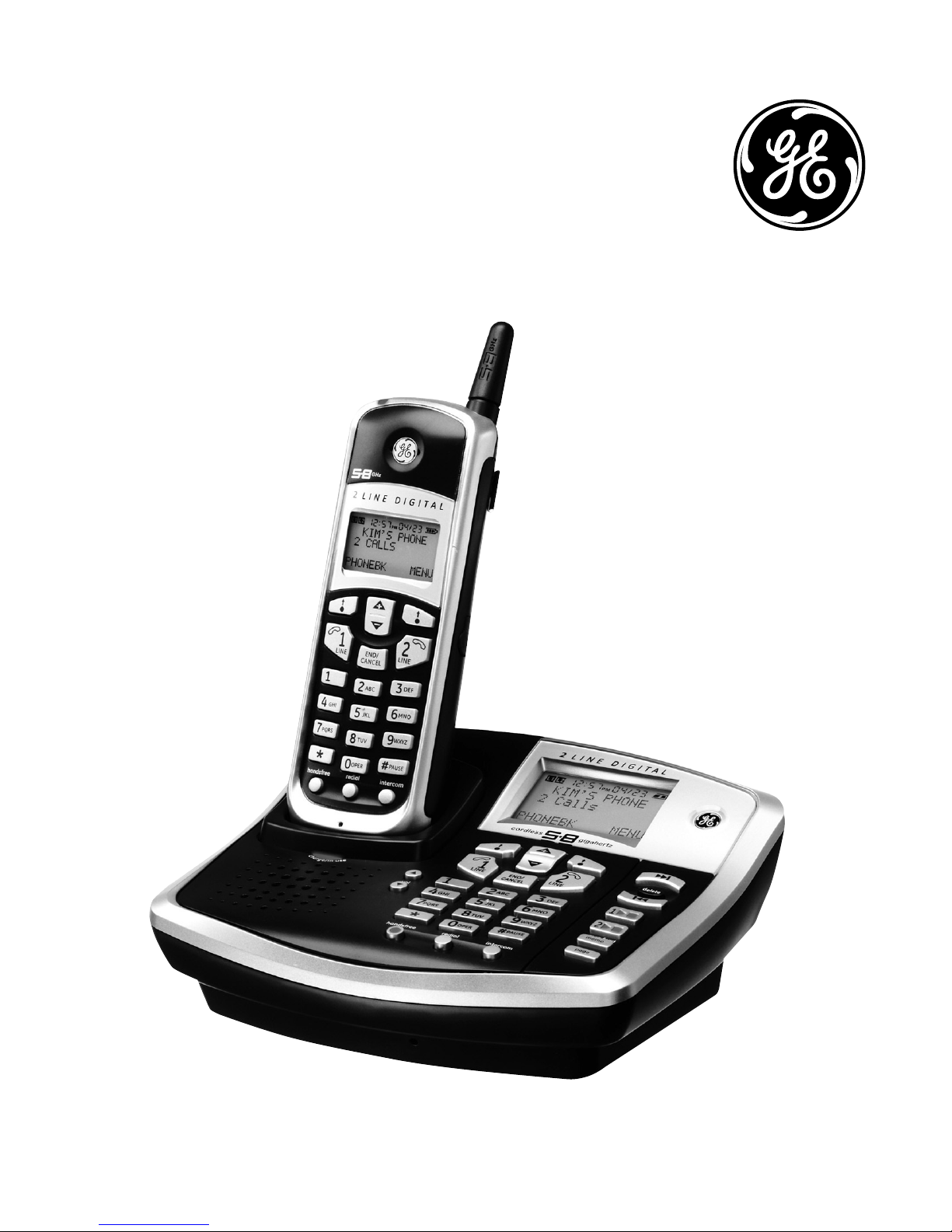
Model 25865
5.8GHz 2-Line,
Cordless Handset
Speakerphone/Answering System
User’s Guide

Equipment Approval Information
Your telephone equipment is approved for connection to the Public Switched Telephone Network and
is in compliance with parts 15 and 68, FCC Rules and Regulations and the Technical Requirements for
Telephone Terminal Equipment published by ACTA.
1 Notification to the Local Telephone Company
On the bottom of this equipment is a label indicating, among other information, the US number and
Ringer Equivalence Number (REN) for the equipment. You must, upon request, provide this information
to your telephone company.
The REN is useful in determining the number of devices you may connect to your telephone line and
still have all of these devices ring when your telephone number is called. In most (but not all) areas, the
sum of the RENs of all devices connected to one line should not exceed 5. To be certain of the number
of devices you may connect to your line as determined by the REN, you should contact your local
telephone company.
A plug and jack used to connect this equipment to the premises wiring and telephone network must
comply with the applicable FCC Part 68 rules and requirements adopted by the ACTA. A compliant
telephone cord and modular plug is provided with this product. It is designed to be connected to a
compatible modular jack that is also compliant. See installation instructions for details.
Notes
• This equipment may not be used on coin service provided by the telephone company.
• Party lines are subject to state tariffs, and therefore, you may not be able to use your own telephone
equipment if you are on a party line. Check with your local telephone company.
• Notice must be given to the telephone company upon permanent disconnection of your telephone
from your line.
• If your home has specially wired alarm equipment connected to the telephone line, ensure the
installation of this product does not disable your alarm equipment. If you have questions about what
will disable alarm equipment, consult your telephone company or a qualied installer.
US Number is located on the cabinet bottom.
REN Number is located on the cabinet bottom.
2 Rights of the Telephone Company
Should your equipment cause trouble on your line which may harm the telephone network, the
telephone company shall, where practicable, notify you that temporary discontinuance of service
may be required. Where prior notice is not practicable and the circumstances warrant such
action, the telephone company may temporarily discontinue service immediately. In case of such
temporary discontinuance, the telephone company must: (1) promptly notify you of such temporary
discontinuance; () afford you the opportunity to correct the situation; and (3) inform you of your right to
bring a complaint to the Commission pursuant to procedures set forth in Subpart E of Part 68, FCC Rules
and Regulations.
The telephone company may make changes in its communications facilities, equipment, operations
or procedures where such action is required in the operation of its business and not inconsistent with
FCC Rules and Regulations. If these changes are expected to affect the use or performance of your
telephone equipment, the telephone company must give you adequate notice, in writing, to allow you to
maintain uninterrupted service.

3
Interference Information
This device complies with Part 15 of the FCC Rules. Operation is subject to the following two conditions: (1)
This device may not cause harmful interference; and () This device must accept any interference received,
including interference that may cause undesired operation.
This equipment has been tested and found to comply with the limits for a Class B digital device, pursuant
to Part 15 of the FCC Rules. These limits are designed to provide reasonable protection against harmful
interference in a residential installation.
This equipment generates, uses, and can radiate radio frequency energy and, if not installed and used in
accordance with the instructions, may cause harmful interference to radio communications. However, there is
no guarantee that interference will not occur in a particular installation.
Privacy of Communications may not be ensured when using this product.
If this equipment does cause harmful interference to radio or television reception, which can be determined by
turning the equipment off and on, the user is encouraged to try to correct the interference by one or more of
the following measures:
• Reorient or relocate the receiving antenna (that is, the antenna for radio or television that is “receiving”
the interference).
• Reorient or relocate and increase the separation between the telecommunications equipment and
receiving antenna.
• Connect the telecommunications equipment into an outlet on a circuit different from that to which the
receiving antenna is connected.
If these measures do not eliminate the interference, please consult your dealer or an experienced radio/
television technician for additional suggestions. Also, the Federal Communications Commission has prepared
a helpful booklet, “How To Identify and Resolve Radio/TV Interference Problems.” This booklet is available from
the U.S. Government Printing Ofce, Washington, D.C. 040. Please specify stock number 004-000-00345-4
when ordering copies.
Notice: The changes or modications not expressly approved by the party responsible for compliance could
void the user's authority to operate the equipment
.
Hearing Aid Compatibility (HAC)
This telephone system meets FCC standards for Hearing Aid Compatibility.
Licensing
Licensed under US Patent 6,47,009.
FCC RF Radiation Exposure Statement
This equipment complies with FCC RF radiation exposure limits set forth for an uncontrolled environment.
This equipment should be installed and operated with a minimum distance of 0 centimeters between the
radiator and your body. This transmitter must not be co-located or operated in conjunction with any other
antenna or transmitter.”
For body worn operation, this phone has been tested and meets the FCC RF exposure guidelines when
used with the belt clip supplied with this product. Use of other accessories may not ensure compliance
with FCC RF exposure guidelines.

4
Table of Contents
EquipmEnt ApprovAl informAtion ........................2
intErfErEncE informAtion ......................................3
HEAring Aid compAtibility (HAc) ........................3
licEnsing ..................................................................3
fcc rf rAdiAtion ExposurE stAtEmEnt .............3
introduction ...........................................................6
bEforE you bEgin ..................................................6
pArts cHEcklist .................................................6
tElEpHonE JAck rEquirEmEnts.........................6
instAllAtion .............................................................7
digitAl sEcurity systEm ...................................7
importAnt instAllAtion guidElinEs .................7
HAndsEt lAyout ......................................................8
bAsE lAyout .............................................................9
instAlling tHE pHonE ..........................................10
instAlling tHE HAndsEt bAttEry ...................10
instAlling tHE bAsE stAtion ..........................11
instAlling tHE bAckup bAttEriEs
on bAsE unit .........................................11
connEcting tHE bAsE stAtion ..................11
WAll mounting tHE bAsE ........................11
bAsE spEAkErpHonE sEt up ................................12
spEAkErpHonE volumE ..............................12
using tHE soft kEys .................................12
turning tHE AnsWErEr(s) on or off .....12
bAsE voicE/displAy prompt lAnguAgE .......13
bAsE nAmE .......................................................13
bAsE dAtE/timE ...............................................13
sEt timE .................................................14
timE formAt ..........................................14
dAtE formAt..........................................14
sEt dAtE ................................................14
sEt yEAr ................................................14
tonE/pulsE ......................................................14
bAsE - sEt locAl ArEA codEs ......................15
bAsE ringErs ...................................................15
bAsE ringEr volumE .................................15
bAsE ringEr tonE ......................................16
bAsE vip mElody tonE ............................16
bAsE kEy tonE ...........................................16
AnsWErEr sEtup .............................................17
outgoing AnnouncEmEnt ........................17
rEviEWing tHE
outgoing AnnouncEmEnt ..............17
rEcording tHE
outgoing AnnouncEmEnt ..............17
cHAnging tHE
outgoing AnnouncEmEnt ..............18
bAsE ring to AnsWEr...............................18
sEtting tHE sEcurity codE ......................18
forWArding mEssAgEs ..............................19
sEt forWArding mEssAgEs ................. 19
forWArding mEssAgEs on/off ......19
viEW unit id.........................................20
numbEr of rEtriEs ...............................20
rEcording quAlity ....................................20
HAndsEt tElEpHonE sEt up ...............................20
using tHE soft kEys .................................20
HAndsEt displAy prompt lAnguAgE ............21
HAndsEt ringErs ............................................21
HAndsEt ringEr volumE ..........................21
HAndsEt ringEr tonE ...............................22
HAndsEt vip mElody ................................22
HAndsEt kEy tonE ....................................22
HAndsEt rEgistrAtion ....................................23
HAndsEt nAmE ................................................23
HAndsEt dAtE/timE ........................................23
sEt timE .................................................24
timE formAt ..........................................24
dAtE formAt..........................................24
sEt dAtE ................................................24
sEt yEAr ................................................24
HAndsEt - sEtting locAl ArEA codEs ........24
bAsic opErAtion ...................................................25
cHArgE/in usE indicAtor ..............................25
AnsWEring A cAll ..........................................25
mAking A cAll.................................................25
flAsH ................................................................26
numbEr rEdiAl ................................................26

5
volumE .............................................................26
bAsE spEAkErpHonE .............................26
cordlEss HAndsEt ...............................26
mutE .................................................................26
Hold .................................................................27
globAl dE-rEgistrAtion ................................27
room monitor ................................................27
cAll trAnsfEr .................................................28
intErcom opErAtion .......................................29
mAking An intErcom cAll ......................29
rEcEiving An intErcom cAll ....................29
AdvAncEd intErcom fEAturEs ..................30
rEcEiving An incoming cAll
during An intErcom cAll .............30
using intErcom WitH ExtErnAl
tElEpHonE cAlls .................................30
cAllEr id (cid) ...................................................32
cAll WAiting cAllEr id ................................32
rEcEiving cid rEcords .................................32
storing cid rEcords (in cid mEmory) .....33
rEviEWing cAll rEcords ...............................33
diAling A cAllEr id numbEr ........................33
storing cid rEcords in intErnAl mEmory 34
dElEting cid rEcords ..................................35
mEmory .................................................................36
storing A nAmE And numbEr in mEmory ...36
storing tHE lAst numbEr diAlEd ................36
insErting A pAusE in tHE diAling sEquEncE 37
rEviEWing A storEd numbEr ........................37
cHAnging A storEd numbEr .........................37
dElEting rEcords storEd in mEmory .........38
diAling A numbEr from mEmory .................38
trAnsfErring mEmory ........................................39
AnsWEring systEm opErAtion ..........................40
HAndsEt mEssAgEs indicAtor .......................40
scrEEning cAlls from tHE bAsE ...................40
mEssAgE plAybAck ..........................................40
bAsE unit ..............................................40
HAndsEt .................................................41
mEmory full ...................................................41
ErAsing mEssAgEs .....................................41
lEAving A mEmo ..............................................42
bAsE unit ..............................................42
cordlEss HAndsEt ...............................42
rEmotE AccEss .....................................................43
bElt clip And optionAl HEAdsEt ...................... 43
connEcting tHE bElt clip .............................43
connEcting An optionAl
HEAdsEt to tHE HAndsEt .......................43
cHAnging tHE bAttEry ........................................44
bAttEry sAfEty prEcAutions ..............................44
displAy mEssAgEs ................................................45
HAndsEt sound signAls .....................................46
troublEsHooting guidE......................................46
cAllEr id solutions .................................46
tElEpHonE solutions ................................46
bAttEry solutions .....................................47
gEnErAl product cArE ......................................48
cAusEs of poor rEcEption .................................48
AccEssory informAtion .......................................48
sErvicE ...................................................................49
limitEd WArrAnty................................................49
indEx .....................................................................51
Table of Contents
SEE MARKING ON BOTTOM / BACK OF PRODUCT
RISKOFELECTRICSHOCK
DONOT OPEN
WARNING: TO
PREVENT FIRE OR
ELECTRICAL SHOCK
HAZARD, DO NOT
EXPOSETHIS
PRODUCT TO RAIN
OR MOISTURE.
THE LIGHTNING
FLASH AND ARROW
HEAD WITHIN THE
TRIANGLE IS A
WARNING SIGN
ALERTING YOU OF
“DANGEROUS
VOLTAGE” INSIDE
THE PRODUCT.
CAUTION: TO REDUCE THE
RISK OF ELECTRIC SHOCK, DO
NOT REMOVE COVER (OR
BACK). NO USER
SERVICEABLE PARTS INSIDE.
REFER SERVICING TO
QUALIFIED SERVICE
PERSONNEL.
THE EXCLAMATION
POINT WITHIN THE
TRIANGLE IS A
WARNING SIGN
ALERTING YOU OF
IMPORTANT
INSTRUCTIONS
ACCOMPANYING
THE PRODUCT.
CAUTION:

6
Introduction
CAUTION: When using telephone equipment, there are basic
safety instructions that should always be followed. Refer to the
IMPORTANT SAFETY INSTRUCTIONS provided with this product and
save them for future reference.
IMPORTANT: Because cordless phones operate on electricity, you
should have at least one phone in your home that isn’t cordless, in
case the power in your home goes out.
Before You Begin
Parts Checklist
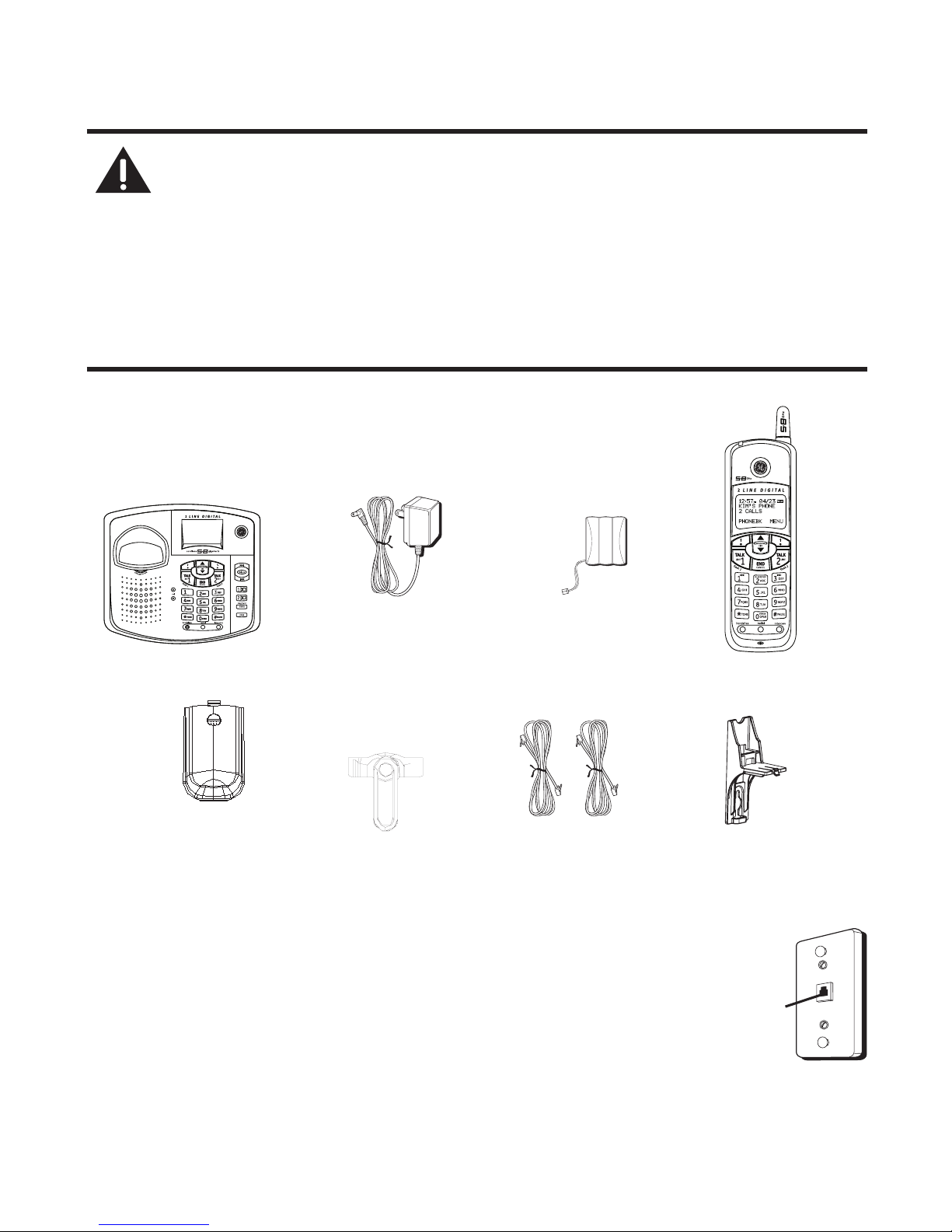
Make sure your package includes the items shown here.
Base Handset
Belt clip
AC power
adaptor
2 Telephone
line cords
Handset
battery
Battery
compartment
door
Telephone Jack Requirements
To use this phone, you need two RJ11C type modular telephone
jacks (one for each Line 1 and Line ), which might look like the one
pictured here, installed in your home OR an RJ14 type modular jack.
If you need a modular jack, call your local phone company to nd out
how to get one installed.
Modular
telephone
line jack
Wall plate
Wall mount
bracket

7
Installation
Digital Security System
Your cordless phone uses a digital security system to protect against false ringing,
unauthorized access, and charges to your phone line.
INSTALLATION NOTE: Some cordless telephones operate at frequencies
that may cause or receive interference with nearby TVs, microwave
ovens, and VCRs. To minimize or prevent such interference, the base
of the cordless telephone should not be placed near or on top of a TV,
microwave ovens, or VCR. If such interference continues, move the
cordless telephone farther away from these appliances.
Certain other communications devices may also use the 5.8 GHz
frequency for communication, and, if not properly set, these devices
may interfere with each other and/or your new telephone. If you are
concerned with interference, please refer to the owner’s manual for
these devices on how to properly set channels to avoid interference.
Typical devices that may use the 5.8 GHz frequency for communication
include wireless audio/video senders, wireless computer networks,
multi-handset cordless telephone systems, and some long-range
cordless telephone systems.
Important Installation Guidelines
• Avoid sources of noise and heat, such as motors, uorescent lighting, microwave
ovens, heating appliances and direct sunlight.
• Avoid areas of excessive dust, moisture and low temperature.
• Avoid other cordless telephones or personal computers.
• Never install telephone wiring during a lightning storm.
• Never install telephone jacks in wet locations unless the jack is specically designed
for wet locations.
• Never touch non-insulated telephone wires or terminals, unless the telephone line has
been disconnected at the network interface.
• Use caution when installing or modifying telephone lines.

8
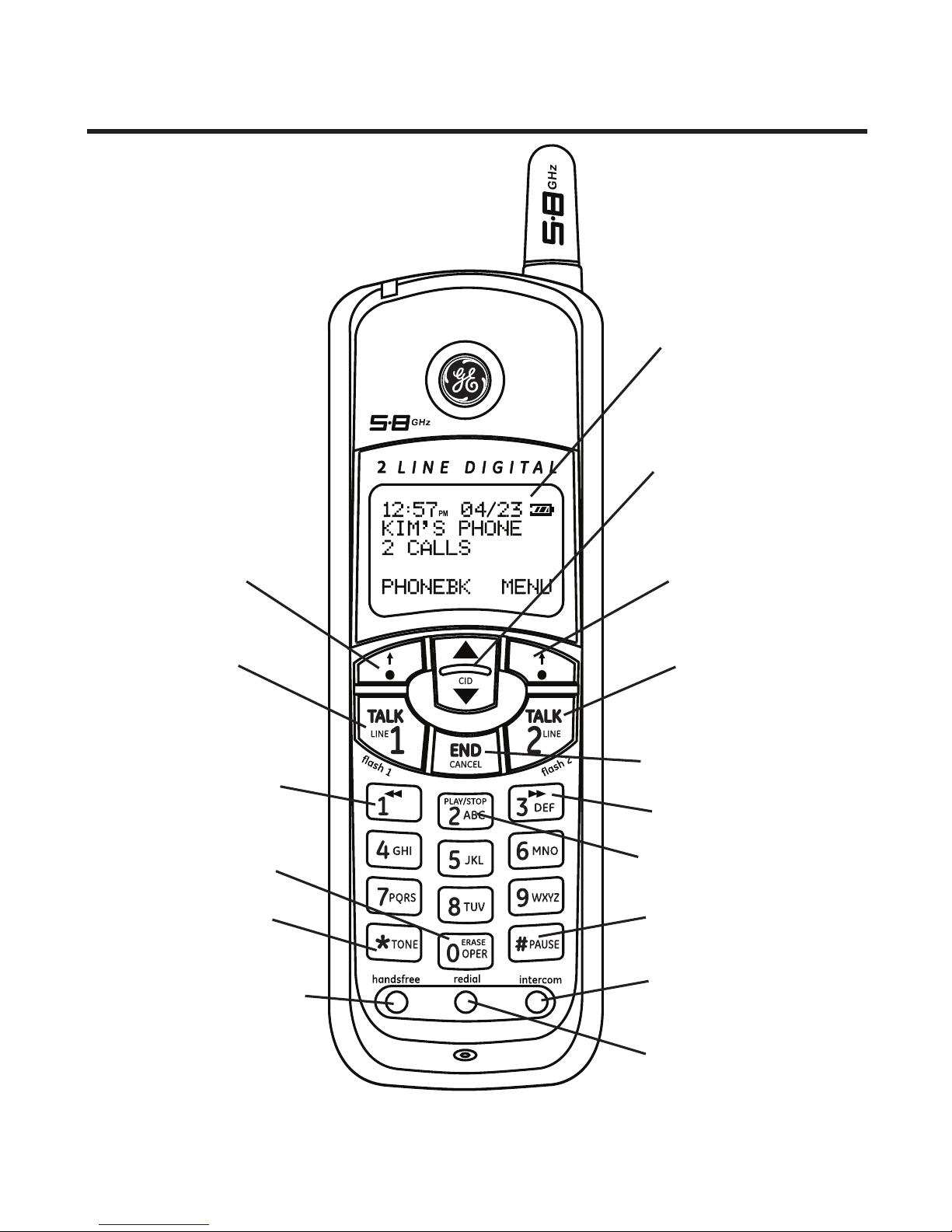
Handset Layout
intercom (button)
handsfree (button)
END/CANCEL (button)
ERASE (button)
redial (button)
*TONE (button)
7(review button)
TALK/LINE 2/flash 2
(button)
Display
CID 5 or 6/soft key
for display prompt
selection
(caller ID -/+ button)
soft key for right
display prompt
PLAY/STOP (button)
8(skip button)
#PAUSE (button)
TALK/LINE 1/flash 1
(button)
soft key for left
display prompt

9
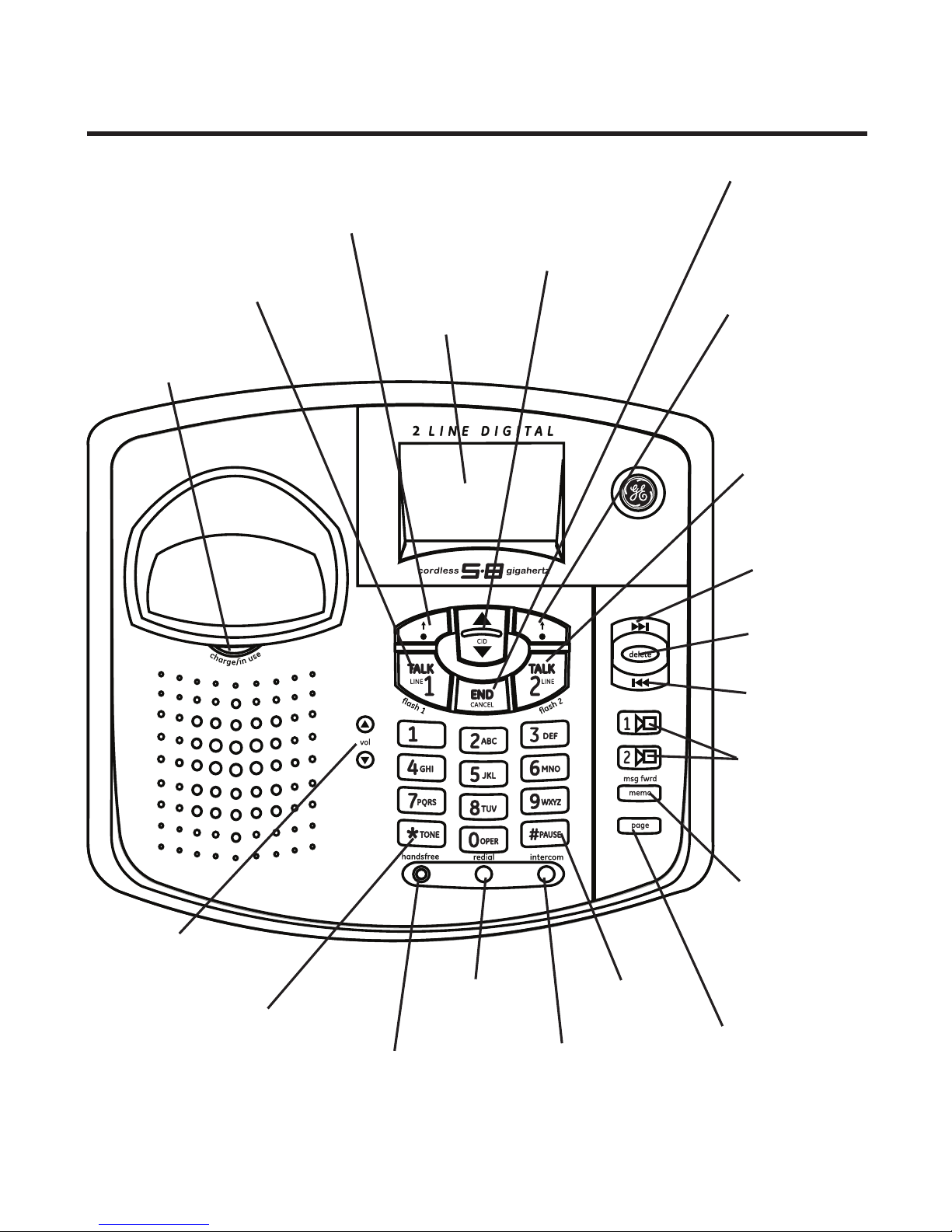
msg fwrd/memo
(message forward/
memo button)
PLAY/STOP
1 and 2
(buttons/
indicators)
redial
(button)
page
(button)
5 or 6 vol
(+/- speaker
volume buttons)
delete
(button)
Base Layout
intercom (button)
handsfree (button)
END/CANCEL
(button)
*TONE (button)
7(review
button)
TALK/LINE
2/flash 2
(button)
Display
8(skip
button)
#PAUSE
(button)
TALK/LINE 1/flash 1
(button)
charge/in use
(indicator)
CID 5 or 6/soft key
for display prompt
selection
(caller ID -/+ button)
soft key for right
display prompt
soft key for left
display prompt

10
Installing the Phone
Installing the Handset Battery
NOTE: You must connect the handset battery before using the cordless
handsets.
CAUTION: To reduce the risk of fire or personal injury, use only the
Thomson Inc. appoved Nickel-Cadmium (Ni-Cd) battery model
5-2548, which is compatible with this unit.
1. Locate battery and battery door which are packaged together inside a plastic bag and
are separate from the handset.
. Locate the battery compartment on the back of the handset.
3. Plug the battery pack cord into the jack inside the compartment.
NOTE: It is important to maintain the polarity (black and red wires) to
the jack inside the compartment. To ensure proper battery installation,
the connector is keyed and can be inserted only one way.
4. Insert the battery pack.
5. Close the battery compartment by pushing the door up until it snaps into place.
6. Place the handsets in the charging cradles.
Allow handsets to charge for 16 hours prior to first use. If you don’t properly charge
the handsets, battery performance is compromised.
black wire
red wire
battery
pack
PRESS DOWN
FIRMLY
Questo manuale è adatto per i seguenti modelli
2
Indice
Lingue:
Altri manuali GE Telefono senza fili