◾
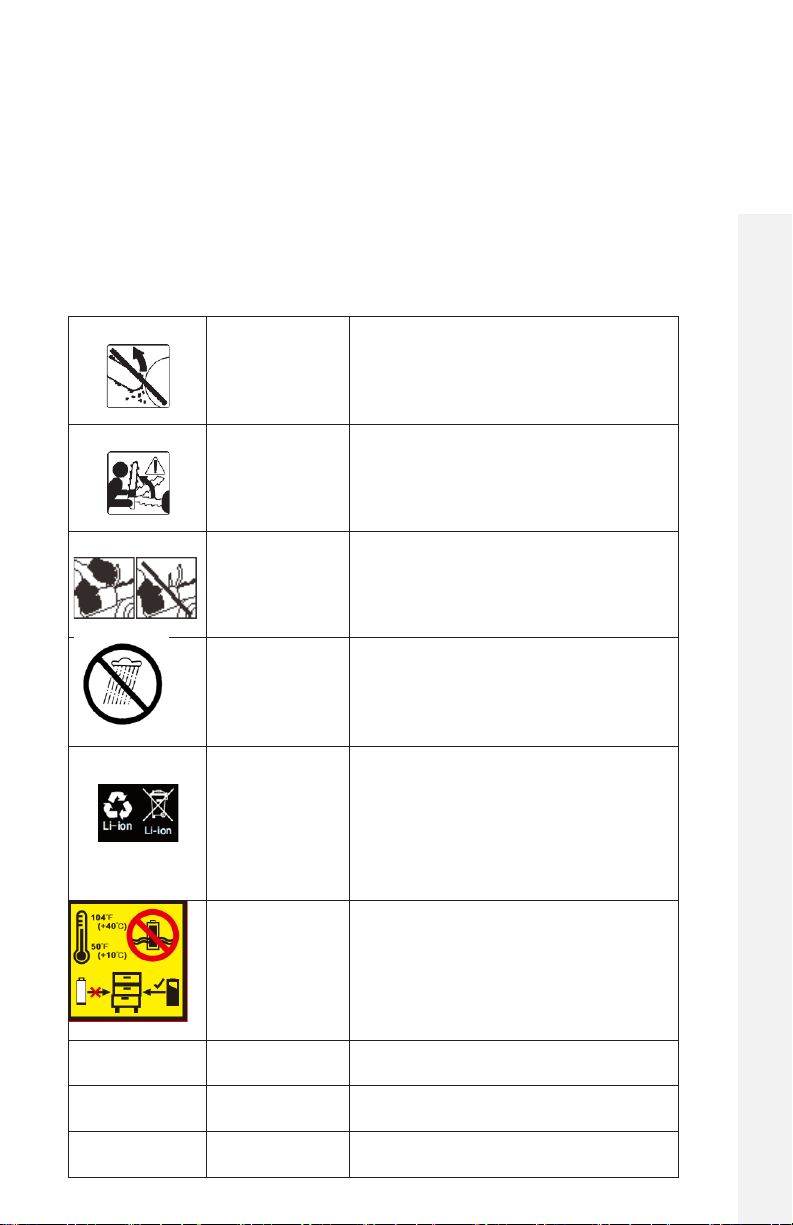
Do not expose power tools to rain or wet conditions.
Water entering a
power tool will increase the risk of electric shock.
◾
Do not abuse the cord. Never use the cord for carrying, pulling or
unplugging the power tool. Keep cord away from heat, oil, sharp edges
or moving parts.
Damaged or entangled cords increase the risk of electric
shock.
◾
When operating a power tool outdoors, use an extension cord suitable
for outdoor use.
Use ofacord suitablefor outdooruse reduces the riskof
electric shock.
◾
If operating a power tool in a damp location is unavoidable, use a
Ground-fault circuit interrupter protected supply.
Use of GFCI reduces the
risk of electric shock.
PERSONAL SAFETY
◾
Stay alert, watch what you are doing and use common sense when
operating a power tool. Donot use a power tool while you are tired
or under the influence of drugs, alcohol, or medication.
A moment of
inattention while operating power tools may result in serious personal injury.
◾
Use personal protective equipment. Always wear eye protection.
Protectiveequipmentsuch asdustmask,non-skidsafety shoes,hardhat,or
hearing protection used for appropriate conditions will reduce personal injuries.
◾
Prevent unintentional starting. Ensure that the switch is in the off-
position before connecting to power source and/or battery pack, picking
up or carrying the tool.
Carrying power tools with your finger on the switch or
energizing power tools that have the switch on invites accidents.
◾
Remove any adjusting key or wrench before turning the power tool on.
A wrench or a key left attached to a rotating part of the power tool may result in