DMR HD | 1
1 DMR HD Introduction & Overview
Introduction
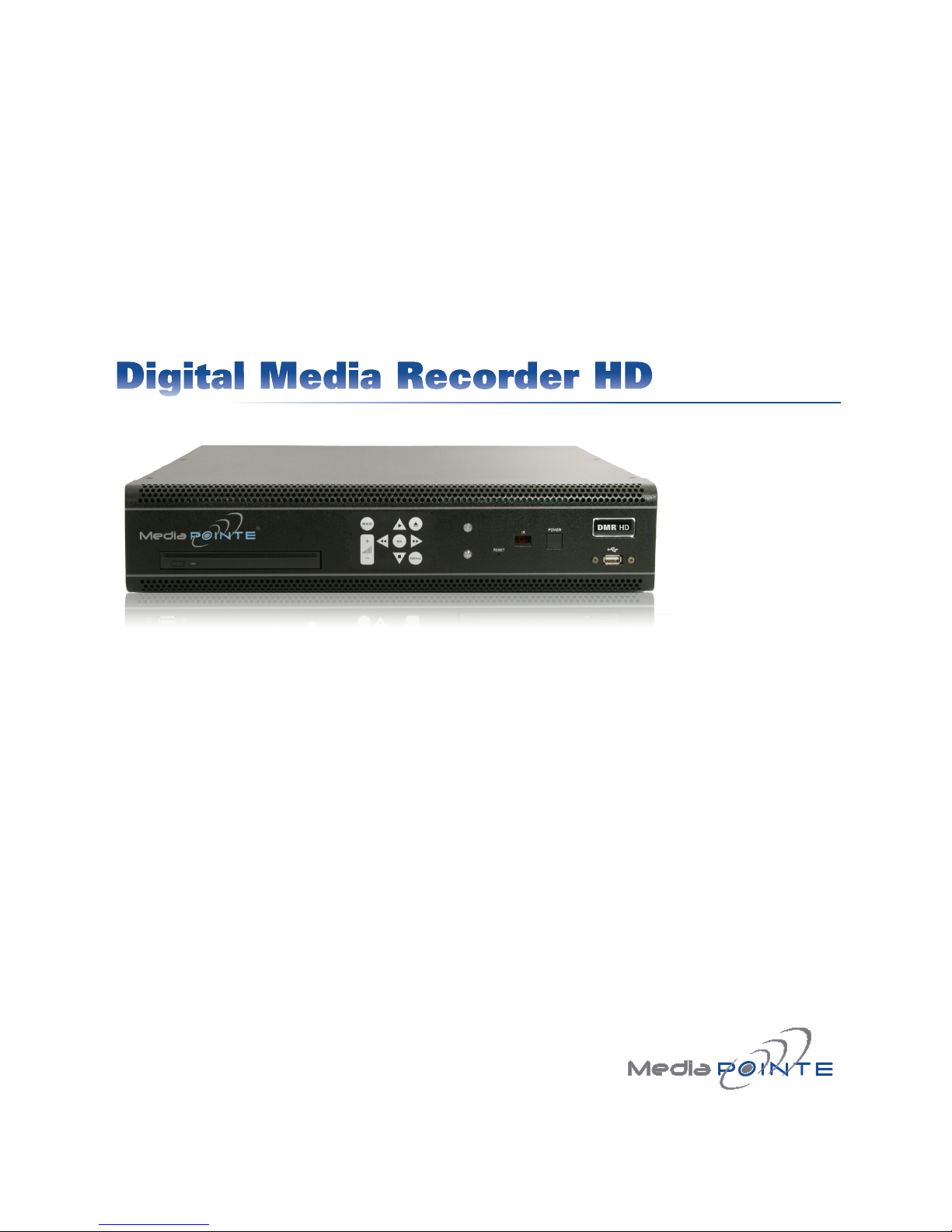
Welcome to the user’s guide for the MediaPOINTE®
DMRHD.TheDMRHDisoneoftheeasiesttouse,
cost-effective and reliable archiving and streaming
products on the market today. It can archive important
audio, video, and graphical data while simultaneously
transmitting it anywhere on your network.
This user’s guide describes how to set up and use
theDMRHDtorecordandtransportgraphics,video
and audio content over IP networks. As with all
MediaPOINTEAV-over-IPproducts,youcancontrolthe
DMRHDbydifferentmethods.Thesemethodsinclude:
Web Portal interface, remote control, contact closure,
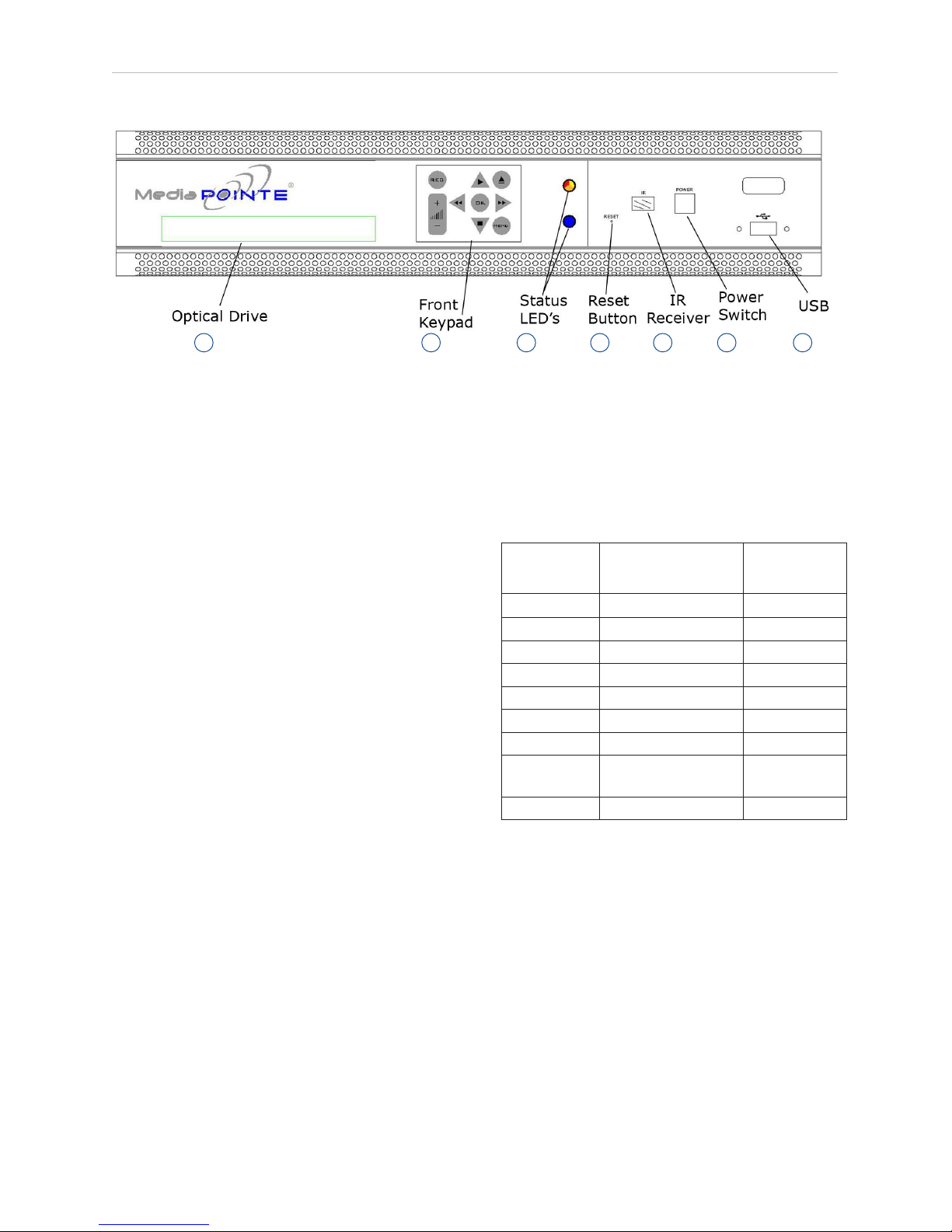
RS-232serialport,Telnet,orfromtheconvenientfront
keypad.
This guide is written for units running 4.0 software.
IfyourDMRHDisoperatingonadifferentversionof
software, some capabilities and screenshots may be
different.
Key Features
TheDMRHDmaybeusedinavarietyofsituationsfor
live communication and collaboration, including:
• Archive media content from multiple independent
sources.
• Share visual information, designs, and concepts with
dispersed groups of people to gather input during a
video conference.
• Stream important videoconferences to other locations
suchasoverowroomsorremoteconferencelocations
over your corporate network.
• Conduct customer or employee training across vast
geographical areas.
• Discuss research, engineering, architecture, product
design, or process analysis when the participants are
not able to meet in one central location.
• Access a centralized data bank of expertise from a
eldlocation.
How ItWorks (Method of Operation)
TheDMRHDcanarchiveandstreamvideoandaudio
media.TheDMRHDacceptsDVI-D,analogRGBHV,
S-Video,compositevideo,andunbalancedlinelevel
stereo audio inputs. The selected input source along
withtheassociatedaudioiscapturedintoalewhich
can be simultaneously streamed live over your network
during the archival process.
Userscanselectfromseveralcongurableparameters
(proles)forcapturingandsubsequentplaybackofthe
recordedmaterial.Theseprolesarefullycongurable,
allowing the user to specify the input source, capture
resolution, bit and frame rates.
ThearchivedrecordingsarestoredontheDMRHD’s
harddrive.Therecordedlecanthenbeviewedon
yourPCorreplayeddirectlyfromtheDMRHDona
local monitor. The content can also be copied to a
USBmemorystick,burnedtoDVD-R,DVD+RorCD-R
disk, downloaded to a PC, attached to an e-mail, or
automaticallytransferred(FTP)toaserverafterthe
lehasbeenindexed.
TheDMRHDrecordscontentinstandardMPEG-4ASP,
which can be played on a variety of desktop client
players including QuickTime. It can record content in
Windows Media Format that can be played in Windows
Media Player.