
MGF IHC150 Manuale utente

mgf.co.uk
EXCAVATOR
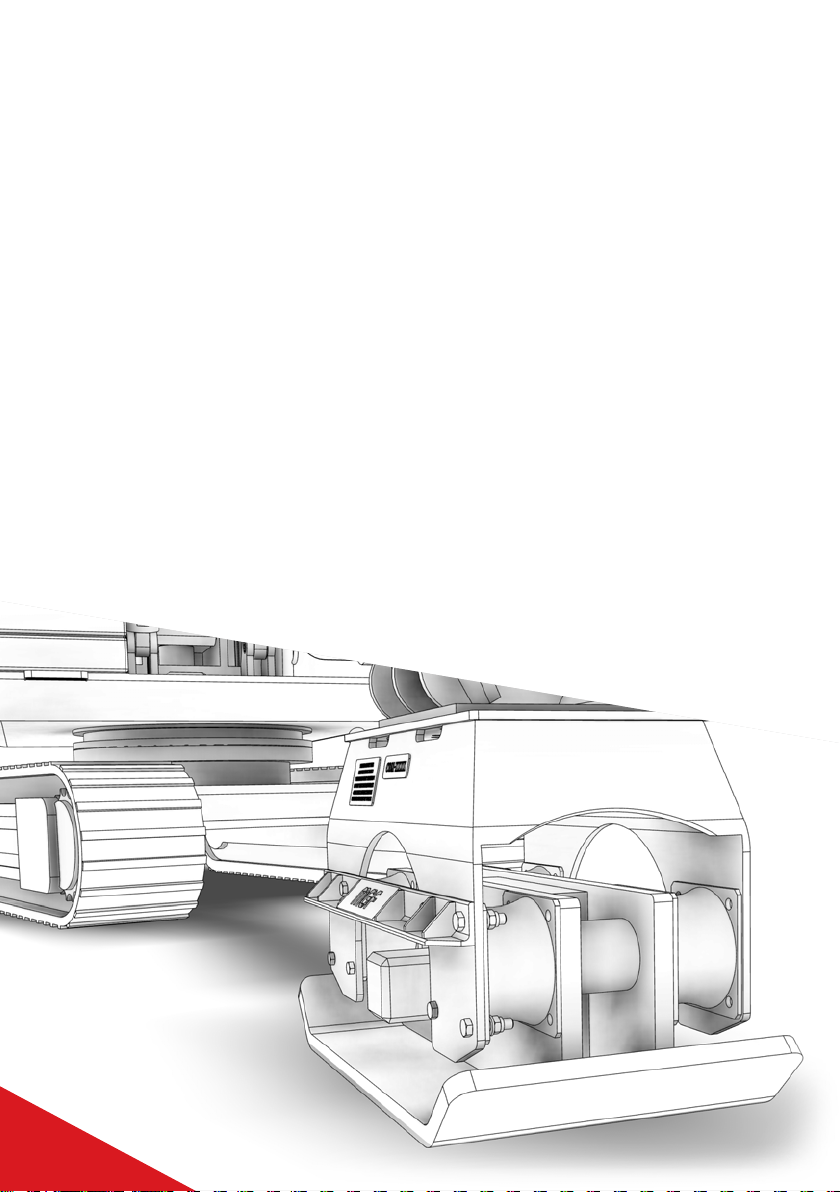
MOUNTED COMPACTOR
IHC150 MODEL
CREATING SAFE WORKING ENVIRONMENTS
With 40 years of experience, MGF is a privately-owned company whose primary focus is the
provision of fully engineered excavation support solutions to the civil engineering, construction,
rail and utilities sectors. We combine technical expertise and operational performance to ensure
the highest levels of customer service. With a focus on developing and promoting industry
best practice in excavation safety we aim to assist our customers in creating safe working
environments for their employees.
CUSTOMER SERVICE AND SUPPORT
The hire and sale of our products is fully supported by our team of qualified engineers,
experienced Technical Sales Representatives, hire desk and operational staff. Our hire centres
provide the focal point for service delivery where our hire desk team will be pleased to receive
your enquiry.
DELIVERY CAPABILITIES
Our dedicated fleet of vehicles offer a flexible solution to quickly meet our customers delivery
needs throughout the UK. We partner with several global shipping companies to ensure we can
quickly deliver our products on a global scale.
CREATING SAFE
WORKING ENVIRONMENTS
2

CONTENTS
SECTION 1: INTRODUCTION 4
SECTION 2: TECHNICAL DATA 5
SECTION 3: PARTS DESCRIPTION / IDENTIFICATION 6
SECTION 4: COMPONENT WEIGHTS & DIMENSIONS 7
SECTION 5: RISK ASSESSMENT CHECKLIST 8
SECTION 6: DO’S / DON’TS 9
SECTION 7: COMPACTOR OPERATION 11
7.1 DELIVERY
7.2 CONNECTING TO THE COMPACTOR VIA AN EXCAVATOR QUICK HITCH
7.3 CONNECTING THE HYDRAULIC LINES
7.4 PREUSE CHECKS
7.5 OPERATING INSTRUCTIONS
7.6 GENERAL ADVISE / INSTRUCTIONS
SECTION 8: MAINTENANCE 16
SECTION 9: CHECKS / FREQUENCY OF CHECKS 16
SECTION 10: STEPS TO ATTEMPT RELEASE OF
HYDRAULIC PRESSURE IN ‘PECKER CIRCUIT’ OF
AN EXCAVATOR 17
ISSUE 1
USER GUIDE
EXCAVATOR MOUNTED COMPACTOR

Excavator mounted compactors (also named compaction plates) can be used to provide
safe, fast, efficient compaction for surfaces including soil sand gravel hardcore or recycled
materials.
In addition to open areas, they can also be used within excavations and on embankments.
They can be used to drive in piles or formwork.
They work quickly and economically and are easy for even inexperienced operators to use.
There are many safety benefits to using an Excavator Mounted Compactor Plate as they can
be operated remotely completely removing humans from hazardous area.
Areas of use include:
• Floor levelling
• Soil compaction
• Trench compaction
• Foundation pile driving
• Compaction around pillars
• Guard rail driving
• Asphalt repair
• Maintenance work
INTRODUCTION
4
USER GUIDE SECTION 1
EXCAVATOR MOUNTED COMPACTOR

IHC150
Excavator Range 8 to 22 Tons
Equipment Weight 970 Kg
Height 790mm
Baseplate size 710 x 1200mm
Centrifugal Force 10’000 Kgf (98 KN)
Compacting Force 1.8 Kg/cm2(17.7 N/cm2)
Frequency 2000 rpm 33hz
Oil Flow to motor 120 L/min
Max Working Pressure adjusted to the excavator 200 bar
Max Backpressure 21 bar
Note: Weights stated above do not include QH connection bracket.
TECHNICAL
DATA
IHC150 CENTRIFUGAL FORCE VS FLOW IN
IHC150 IHC150
5
USER GUIDE SECTION 2
EXCAVATOR MOUNTED COMPACTOR

03
01
02
09
05
07
08
04
10
06
PARTS DESCRIPTION
/ IDENTIFICATION
01 Quick Hitch Connection Bracket
02 Compactor
03 Motor Impact Guard
04 Hydraulic Connections (on compactor)
05 Elastomer Block – or – Cushion Plate
06 Transport Skid (compatible with 7t – 15t Forklift)
07 Alternate size QH Bracket Pins (IHC 150 only – Ø65 & Ø80 pin options provided)
08 Spare QH Pin – Locking Bar
09 4 x Lift Point (suitable for – MGF Std Duty 4 Leg Chain)
10 4 x Ratchet Strap attachment points – see blue lines in image above for strap pathway
Each Lift point (4 total) has
1.0 Tonne WLL (FOS 6.0)
6
USER GUIDE SECTION 3
EXCAVATOR MOUNTED COMPACTOR

COMPONENT WEIGHTS
& DIMENSIONS
1360
1230 max height (on transport skid)
1080 max height (not on skid)
1240
470 (Ø80 pin centres)
365 (Ø65 pin centres)
1010 - max transport with skid
710 - compactor plate width
330 - max QH
frame width
IHC150 WEIGHTS:
• Compactor IHC150 = 800kg
• Quick Hitch Connection Bracket
(with 2 pins fitted) = 190kg
• Spare Pins (2off) = 30kg total (15kg ea)
• Carry Frame = 208kg
• Max In-Use Weight Total (no skid) =
1000kg
• Max Transport Weight Total (with skid 7
spare pins) = 1230kg
7
USER GUIDE SECTION 4
EXCAVATOR MOUNTED COMPACTOR

RISK ASSESSMENT CHECKLIST
• Consult manufacturers manuals before use of any equipment / plant if in doubt
• Ensure a pre-hire checklist has been completed
• All site activity must be thoroughly planned before work commences to identify hazards
and assess risks
• Ensure that a site/task specific Risk Assessment/Method Statement has been prepared
prior to use
• Ensure that lifting operations have been appropriately planned prior to use
• Ensure that all associated equipment is of sound condition, rated appropriately and is
tested in accordance with legislative requirements
• Ensure that Temporary Works Coordinators (TWC) and Temporary Works Supervisors
(TWS) have been consulted prior to operations commencing
• For any non standard applications (or if application in doubt) - a suitably qualified
engineer should be consulted for approval
• Ensure appropriate PPE is specified and worn. This should include both eye and ear
protection, in addition to other PPE required by site
• Ensure all personnel are properly briefed and adequately supervised by a competent
person(s)
• Ensure control measures are in place for the protection of operatives, third parties, plant
and structures in the proximity of operations prior to them commencing
• Any excavator fitted with a compactor should only be operated from stable ground
• Ensure any overhead cable hazards and associated risks are identified and controlled
• Ensure that regular checks are carried out to ensure that hazards are controlled and the
equipment is in good working order
• Ground vibrations may lead to substantial nuisance or hazard to the adjoining areas.
*MGF Ground Vibration Monitors are available for hire.
• Improper use of the compactor can lead to dangerous situations
CONSIDER THE FOLLOWING WHEN PREPARING YOUR RAMS
The following list is not exhaustive:
• Have all relevant persons been consulted prior to operations commencing
• The selection of competent fitters and operatives and slinger/bankspersons
• Items that could fall from height
• High pressure fluid injection
• Overturning of plant/equipment
• Proximity of operatives
• Third parties and plant in proximity of operations
• Trapping/impact and other mechanical hazards
• Heat from compactor when in use and post use
• Proximity of overhead cables and underground services
• Ground conditions
• Flying Stone chips/etc – due to compaction
• Environmental impacts
8
USER GUIDE SECTION 5
EXCAVATOR MOUNTED COMPACTOR

DO’S/DON’TS
DO’S:
Wear appropriate safety equipment
Only operate the compactor if you are suitably qualified and competent to do so
Ensure the excavator has sufficient load (tonnage) capacity for the compactor
being used
Ensure the quick hitch is fully locked and all hydraulic connections are secure
and leak free
Set up and enforce an ‘Exclusion Zone’
Complete all the required weekly, daily and pre-use checks and report any
defects
Ensure there is always visual contact between the operator and any operatives
near operations
Monitor the compactor operation constantly, interrupt the process immediately
if there are operational issues or any dangerous (or suspected dangerous)
situation occurs
Follow the agreed (and briefed) safe system of work/RAMS
Be aware of any buried services (gas water pipes - or electric cable)
Use the compactor flat to the surface being compacted
Store the compactor in a safe clean area, on or with its transport skid when not
in use
Place compactor onto transport skid and fit ratchet straps when ready for re-
collection
Have hydraulic spill kits available (can be sourced from MGF) before
commencing works
Employ Safe manual handling techniques where applicable
9
USER GUIDE SECTION 6
EXCAVATOR MOUNTED COMPACTOR

DONT’S:
Do not operate the compactor if anyone is in the exclusion zone
Do not enter the ‘Exclusion Zone’ if the compactor is being operated
Do not use the compactor if it is faulty in any way
Do not touch the compactor during the operating process (even if the excavator
is switched off) as it can become hot
Do not over compact and this can lead to services damage. If in doubt STOP and
consult relevant engineers
Do not submerge the compactor in water or operate submerged
Do not obscure the ‘line of sight’ of the operator
Do not use excessive force to disconnect quick release couplings, if they will not
disconnect by normal force they likely have pressure trapped within them. (see
section 8). Do not use levers or tools to force fittings apart as this can result in
damage/charges and could lead to operatives being sprayed by forced hot oil
Do not re-use nyloc nuts on vibration equipment, use a new part when
re-fitting
Do not put yourself or other in danger of falling from the excavator or
equipment during fitting or use
Do not operate the compactor whilst moving the excavator or travelling across
site
Do not position or pass the compactor above or over operatives. No one should
ever be under the compactor even whilst moving position
Do not expose operatives to danger of ‘Working at Height’ - when connecting
or disconnecting hoses. Always lower and position the excavator stick arm to
assist and minimise working from height
10
USER GUIDE SECTION 6
EXCAVATOR MOUNTED COMPACTOR
Indice


