3DJH
7Operational and functional description
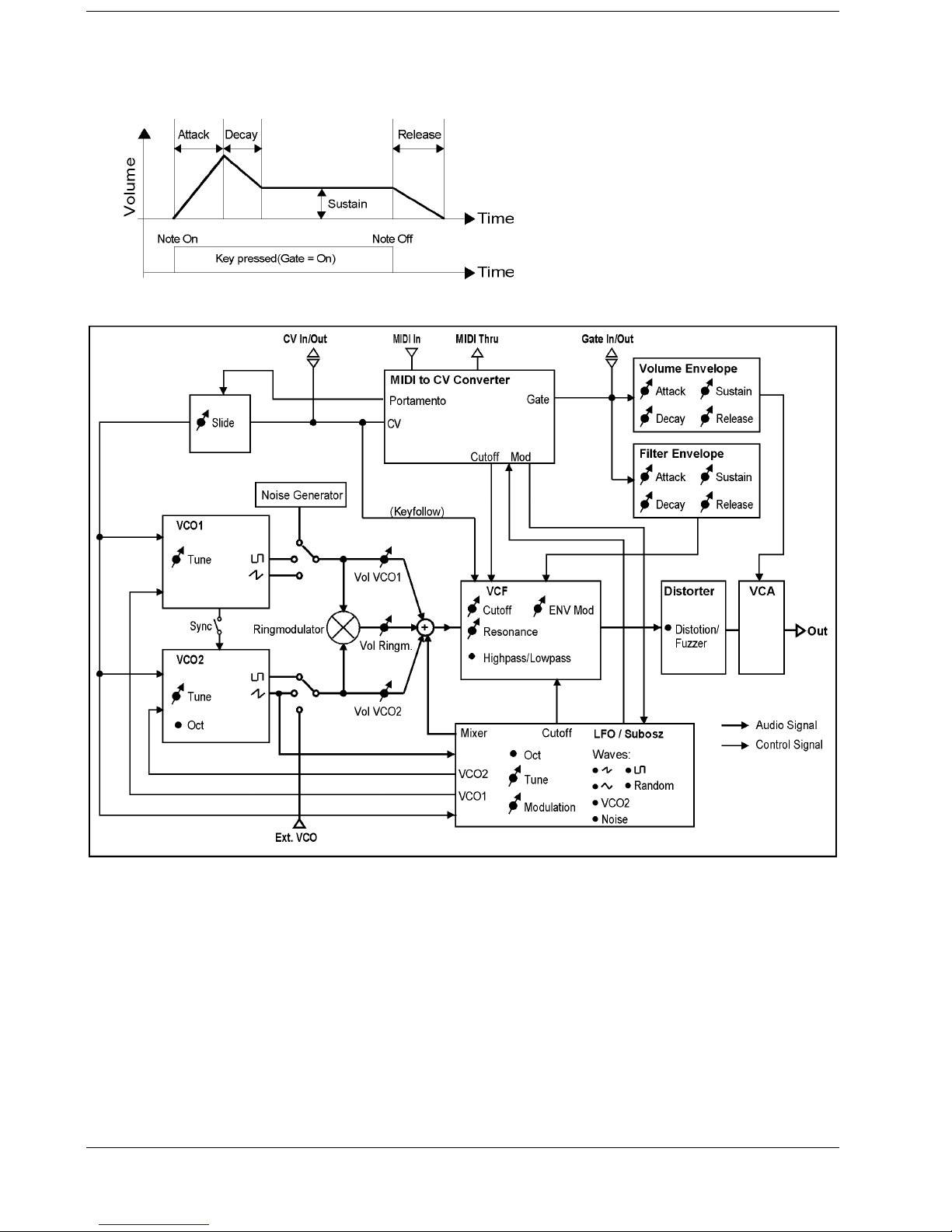
The basic principle of the Neptune II corresponds to classic subtractive analog synthesis which incorporates
interconnection between a VCO, VCF, VCA, envelope generators and LFO.
To make the Neptune II suitable for MIDI, an additional MIDI to CV converter is added which converts the
MIDI signals into analog control voltage signals. These control the VCOs, the filter, as well as the envelope
generators. It is able to create Control Voltage (CV) for 5 octaves. However, the oscillators in the Neptune II
are able to process up to 7 octaves.
The raw material for the sound is provided by the VCOs (Voltage Controlled Oscillators, known as
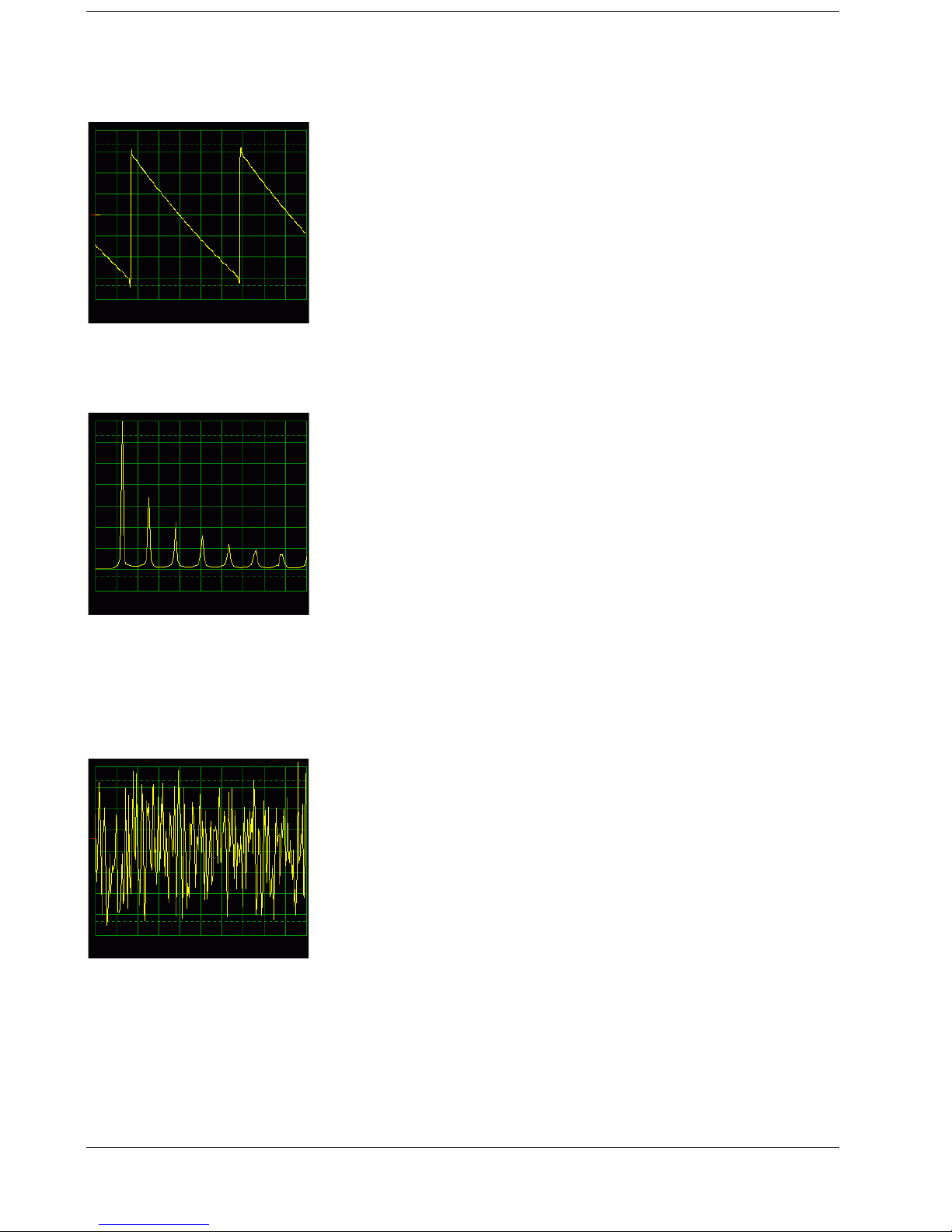
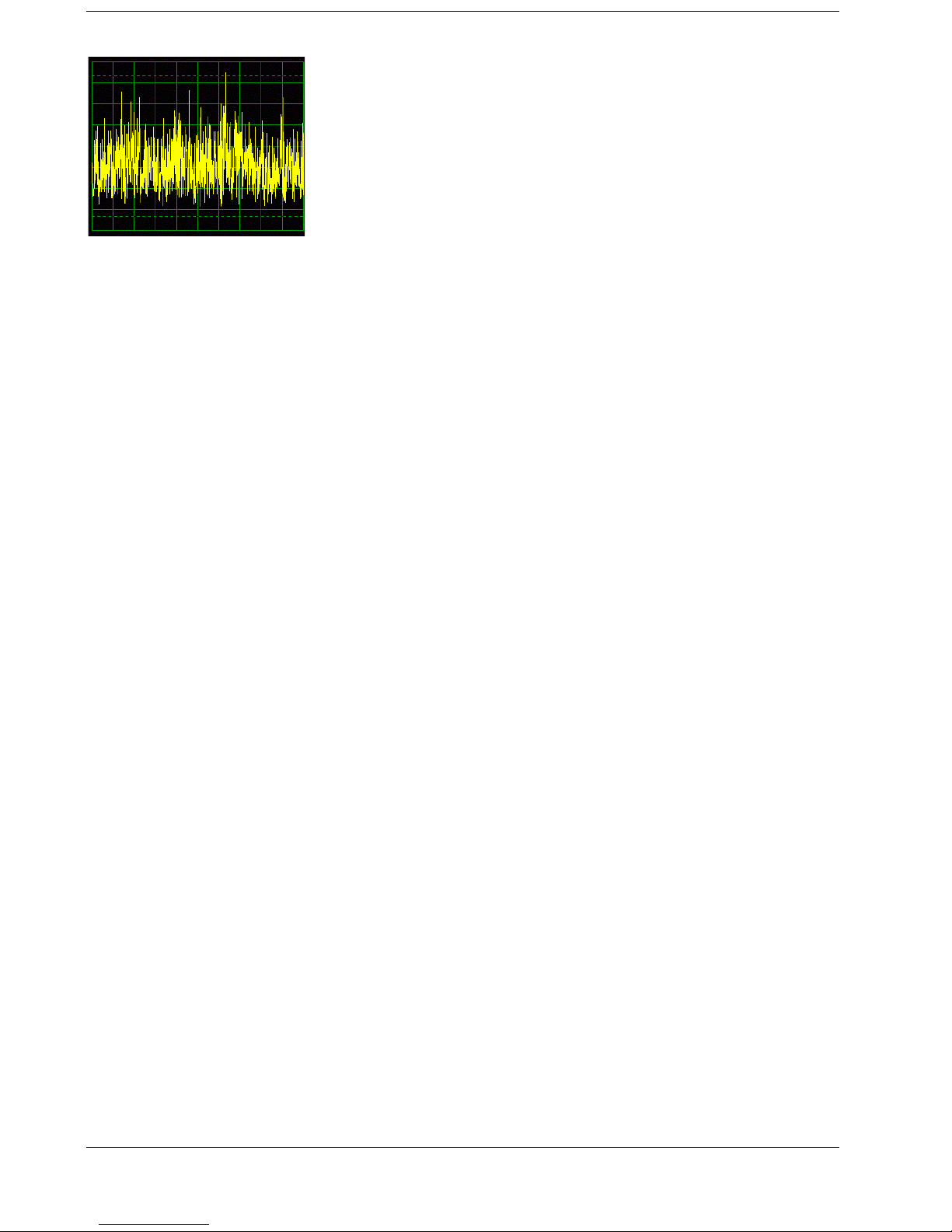
OSC1..OSC3) in the form of a sawtooth or rectangular signal as well as the noise generator (for effects such
as wind and thunder sounds). OSC2 is synchronized to OSC1 with the SYNC switch. The sound becomes
especially interesting when the TUNE control of OSC2 is turned (or modulated by the LFO), resulting in the
typical "Sync-Sound". By means of the external OSC input, other sources can also serve as raw material. The
TUNE range is a good compromise between having a useful pitch range but still able to finely adjust the
pitch.
The ring modulator multiplies the signals of the two OSCs. This significantly amplifies the beats (frequency
difference).
Note: When the SYNC switch is switched on, no beats are developed and the ring modulator therefore has
no effect.
The SLIDE control determines the glide time from one note to another and is valid for all OSCs. It is possible
to switch the slide function on or off by using MIDI controller 65.
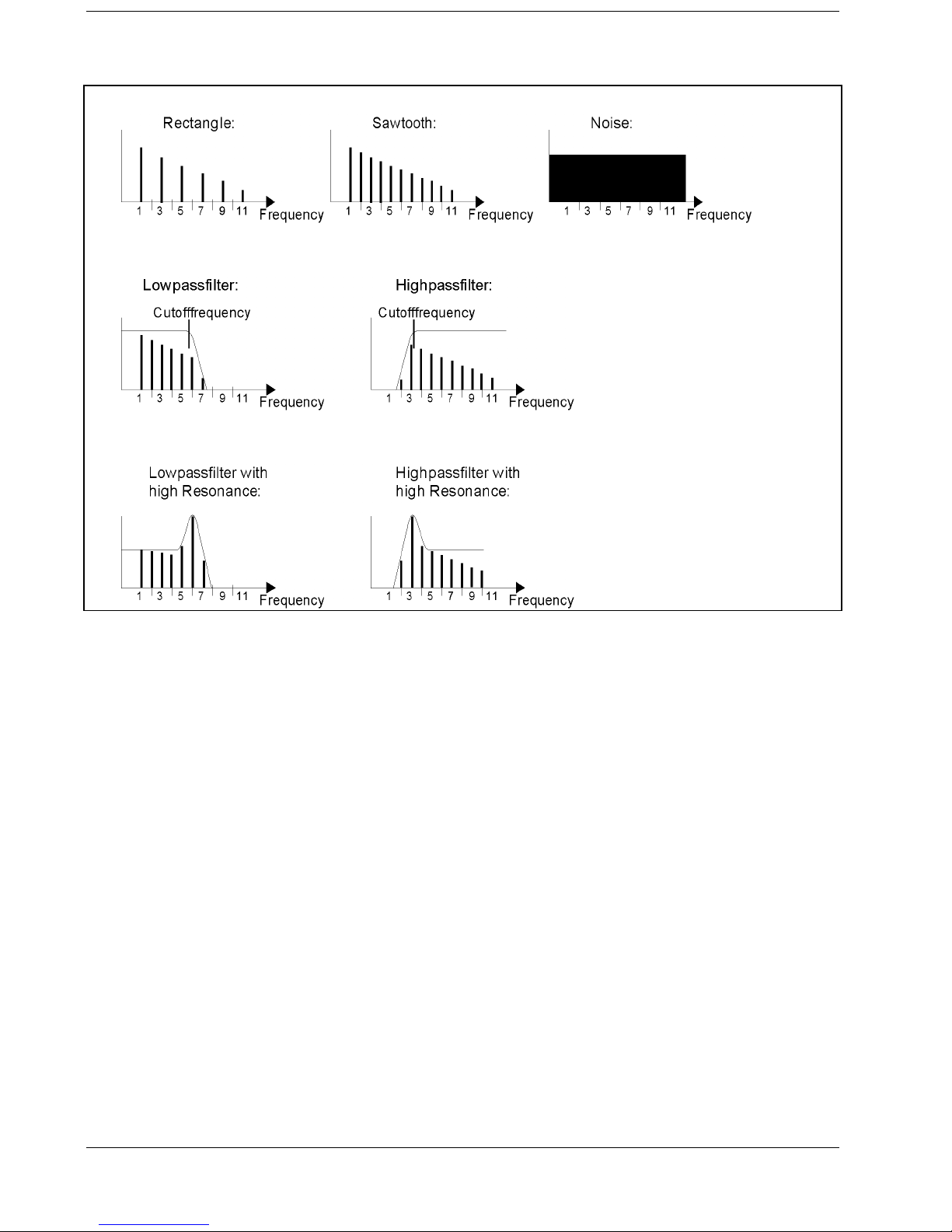
Afterwards, the signal flows through the Voltage Controlled Filter (VCF), within which certain frequency
ranges are suppressed. The lowpass filter allows low frequencies to pass and suppresses the high ones, the
highpass filter lets high frequencies pass and suppresses the low ones. The frequency from which the signals
are suppressed is called the limit or cut-off frequency. In the Neptune II, this is formed by various sources:
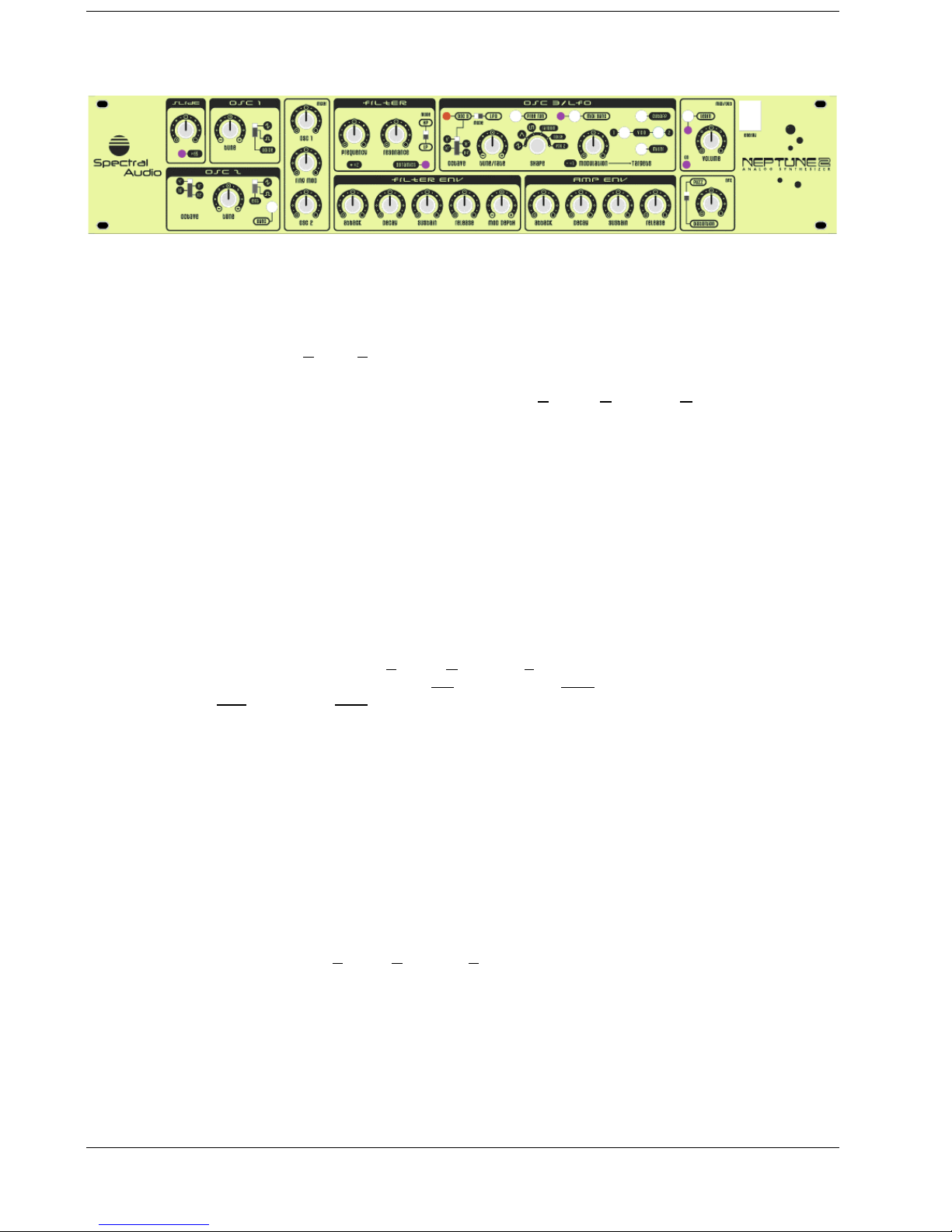
1. CUTOFF frequency control
2. ENV MOD control (the influence of the envelope curve on the cut-off frequency)
3. OSC3/LFO when the Cut-off target push switch is on
4. KEYFOLLOW.
The KEYFOLLOW may be set to no KEYFOLLOW, 50% or 100%. It causes the cut-off frequency to increase
on higher notes so that the audible frequency band always remains the same. Moreover the filter can be used
as an oscillator, if the resonance is set to the maximum. The resonance forms a feedback of the output to the
input of the filter and causes an amplification of the frequencies around the cut-off frequency. The Filter is
adjusted for exact tone scale.
After the filter, the signal reaches the distorter circuit, which provides two different types of distortion: Fuzz
distortion or clipping distortion, both known from (olden day) guitar effects units. Before the signal leaves the
Neptune II, it arrives at the VCA (Voltage Controlled Amplifier). The input signal is here multiplied by the
control signal formed by the Amp Envelope and the VOLUME potentiometer.
The OSC3/LFO is particularly well designed in the Neptune II. The oscillator is either freely controllable or
fixed to the MIDI to CV converter. The desired mode may be chosen using the FREERUN switch. Note:
When using the OSC3/LFO in LFO mode, the description at the OCTAVE switch does not apply. It is
however possible to adjust a coarse frequency. Using its signal, the pitch from OSC1 and OSC2 and also the
Cut-off frequency of the filter can be modulated. If the MIXER switch is on, the OSC3/LFO output is directly
audible. In this case, the MODULATION pot controls the volume level.
The rotary switch allows 5 different signal forms to be selected. Additionally, the OSC2 can be used as a
modulation source. The MIDI SYNC switch allows the LFO to be synchronized to MIDI Clock.