
Beko D 9400 NM Manuale utente
D 9400 NM
Instructions for use

Safety first/1
Electrical requirements/2
Transportation instructions/2
Installation instructions/2
Getting to know your appliance/3
Suggested arrangement of food in
the appliance/3
Temperature control and adjustment/4
Before operating/4
Storing frozen food/5
Freezing fresh food/5
How to use accessories/5
Replacing the interior light bulb/6
Reversing the door opening direction/6
Cleaning and care/6
Do’s and don’ts/7
Trouble - shooting/8
Index 1-
8
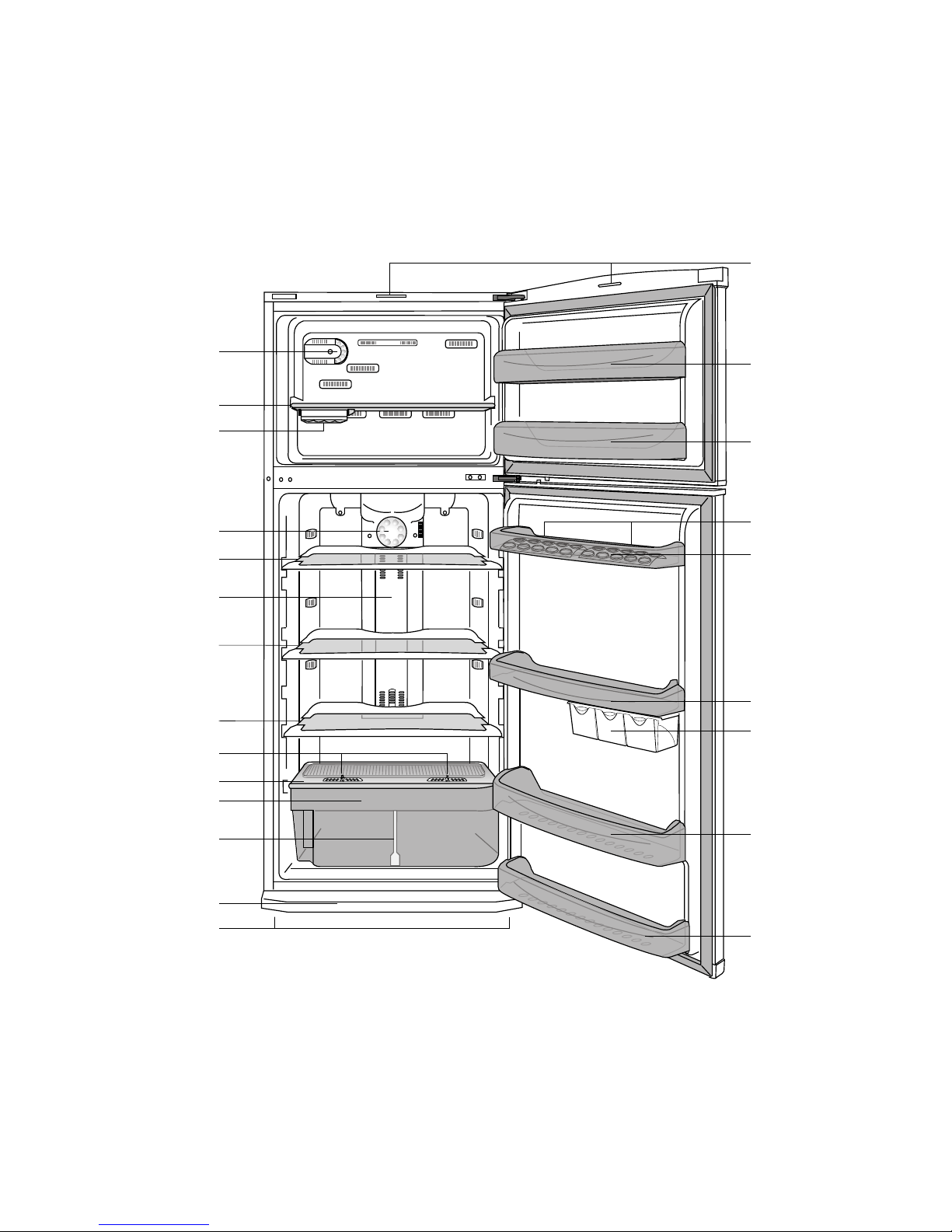
Fig.1
1
2
3
4
5
5
6
5
13
14
16
16
16
16
15
14
17
7
8
9
11
12
10
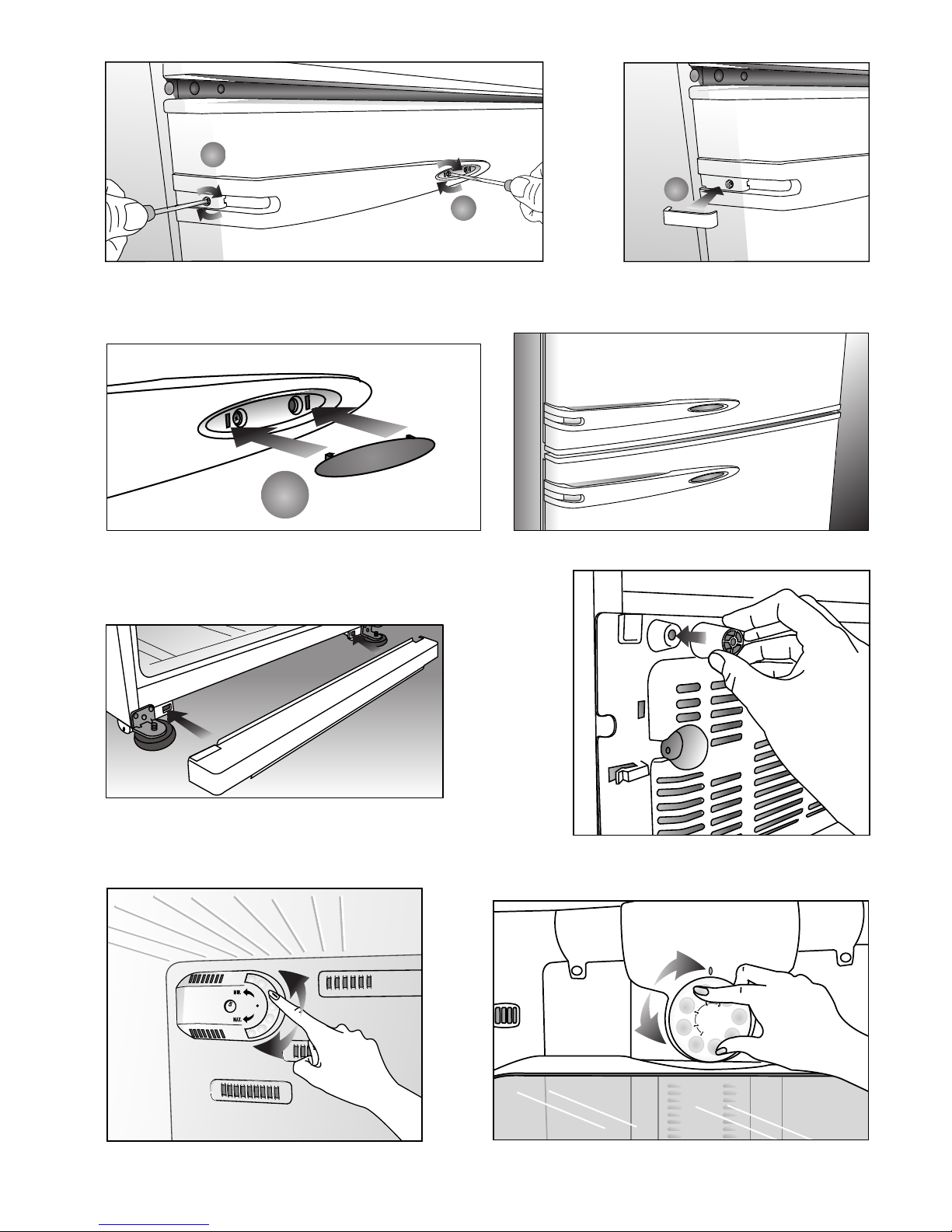
Fig.2 Fig.3
Fig.4 Fig.5
Fig.7
Fig.6
Fig.8 Fig.9
3
1
2
4
Fig.10 Fig.11
Fig.12
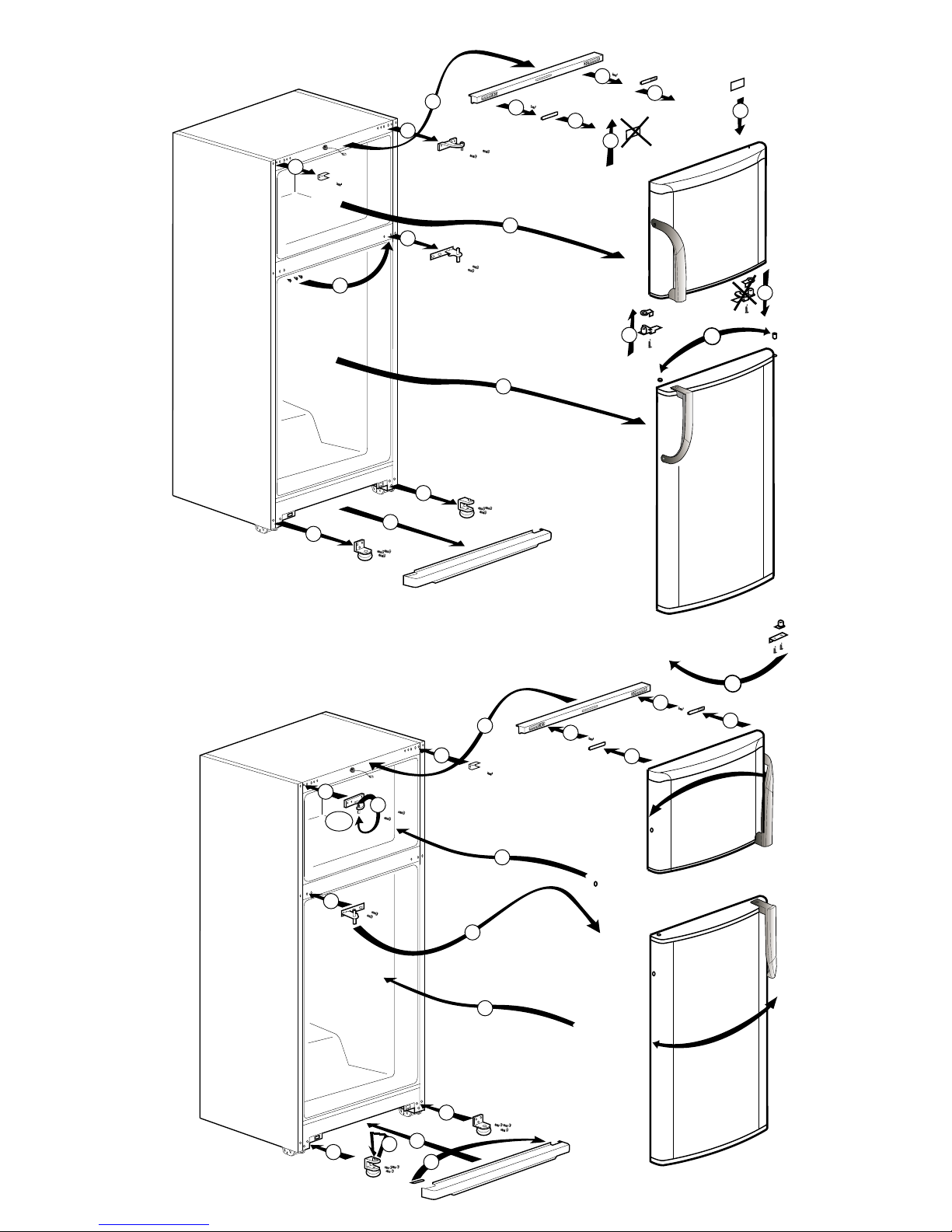
Fig.13
15
16
1
7
8
1
9
10
3
12
11
19
29
28
30
24
25 27
26
26
27
1
8
4
5
5
6
4
2
4
29
180°
21 32
31
22
20
23
13
14
1
Instructions for use
Safety first!
Do not connect your appliance to the electricity supply
until all packing and
transit protectors have been removed.
• Leave to stand for at least 4 hours before switching
on, to allow compressor oil to settle, if transported
horizontally.
• If you are discarding an old appliance with a lock or
latch fitted to the door, ensure that it is left in a safe
condition to prevent the entrapment of children.
• This appliance must only be used for its intended
purpose.
• Do not dispose of the appliance on a fire. Your
appliance contains non CFC substances in the insulation
which are flammable. We suggest you contact your local
authority for information on disposal and available
facilities.
• We do not recommend use of this appliance in an
unheated, cold room. (e.g. garage, conservatory, annex,
shed, out-house etc.)
To obtain the best possible performance and trouble free
operation from your appliance it is very important to
read these instructions carefully. Failure to observe these
instructions may invalidate your right to free service
during the guarantee period.
Please keep these instructions in a safe place for easy
reference.
Congratulations on your choice of a Quality
Appliance, designed to give you many years of service.

2
Instructions for use
Electrical requirements
Before inserting the plug into the wall socket
make sure that the voltage and the
frequency shown in the rating plate inside the
appliance corresponds to your
electricity supply.
We recommend that this appliance be
connected to the mains supply via a
suitably switched and fused socket in a readily
accessible position.
Warning! This appliance must be
grounded.
Repairs to electrical equipment should only be
performed by a qualified technician. Incorrect
repairs carried out by an unqualified person
are carry risks that may have critical
consequences for the user of the appliance.
Transportation
instructions
1. The appliance should be transported only
in a upright position. The packing as supplied
must be intact during transportation.
2. If during the course of transport the appliance,
has been positioned horizontally, it must not
be operated for at least 4 hours, to allow the
system tosettle.
3. Failure to comply with the above instructions
could result in damage to the appliance, for
which the manufacturer will not be held liable.
4. The appliance must be protected against
rain, moisture and other atmospheric influences.
Important!
• Do not attempt to sit or stand on top of your
appliance as it is not designed for such use.
You could injure yourself or damage the
appliance.
• Make sure that the mains cable is not caught
under the appliance during and
after moving, as this could damage the cable.
• Do not allow children to play with the
appliance or tamper with the controls.
Installation instructions
1. Do not keep your appliance in a room where
the temperature is likely to fall below 10 degrees
C at night and/or especially in winter, as it is
designed to operate in ambient temperatures
between +10 and +43 degrees C. At lower
temperatures the appliance may not operate,
resulting in a reduction in the storage life of
the food.
2. Do not place the appliance near cookers
or radiators or in direct sunlight, as this will
cause extra strain on the appliance's functions.
If installed next to a source of heat or a freezer,
maintain the following minimum side clearances:
From Cookers 30 mm
From Radiators 300 mm
From Freezers 25 mm
3. Make sure that sufficient room is provided
around the appliance to ensure free air
circulation.
• Fit the two round wedges given with your
refrigerator to their places. These wedges
provide free air-circulation better and set the
distance between the refrigerator and the wall
while preventing your refrigerator from standing
upright against the wall completely (Fig. 2).
• Fit the bottom airing lid given in your appliance
as shown in the diagram to the pins facing one
another on the feet at the bottom of the door.
Make sure claws and pins to hold each other
for the pins-claws connection (Fig. 3).
4. The appliance should be positioned on a
smooth surface. The two front feet can be
adjusted as required.To ensure that your
appliance is standing upright adjust the two
front feet by turning clockwise or counter
clockwise, until firm contact is secured with the
floor. Correct adjustment of feet prevents
excessive vibration and noise.
5. Refer to "Cleaning and Care" section to
prepare your appliance for use.
3
Instructions for use
good quality and fresh.
•Food should be separated into
portionsaccording to the daily or meal needs.
•Even if food will be stored for a short
period,foodshould be wrapped so that will not
leak air to prevent driying. Packing materials
should be resistant to cold, being torn,
moisture,odor,oil and acid. And also should
not let air-pass through. Besides they should be
closed well, handy and made of convenient
material for using in the deep freezers.
4. Dairy products should be stored in the special
compartment provided in the door liner.
5. Cooked dishes should be stored in airtight
containers.
6. Fresh wrapped produce can be kept on the
shelf. Fresh fruit and vegetables should be
cleaned and stored in the crisper bins.
7. Bottles can be kept in the door section.
8. To store raw meat, wrap in polythene bags
and place on the lowest shelf. Do not allow to
come into contact with cooked food, to avoid
contamination. For safety, only store raw meat
for two to three days.
9. For maximum efficiency, the removable
shelves should not be covered with paper or
other materials to allow free circulation of cool
air.
10. Do not keep vegetable oil on door shelves.
Keep the food packed, wrapped or covered.
Allow hot food and beverages to cool before
refrigerating. Leftover canned food should not
be stored in the can.
11. Fizzy drinks should not be frozen and
products such as flavoured water ices should
not be consumed too cold.
12. Some fruit and vegetables suffer damage
if kept at temperatures near 0°C. Therefore
wrap pineapples, melons, cucumbers, tomatoes
and similar produce in polythene bags.
13. High-proof alcohol must be stored upright
in tightly closed containers. Never store products
that contain an inflammable propellant gas
(e.g. cream dispensers, spray cans, etc.) or
explosive substances. These are an explosion
hazard.
Suggested
arrangement of food
in the appliance
Guidelines for obtaining optimum storage and
hygiene:
1. The fridge compartment is for the short-term
storage of fresh food and drinks.
2. The freezer compartment is rated
and suitable for the freezing and storage of
pre-frozen. The recommendation for
storage as stated on the food packaging should
be observed at all times.
3.•Hot meals should be cooled down to room
temperature before putting into the refrigerator.
•Food that you want to freeze should be in
Getting to know your
appliance (Fig. 1)
Freezer compartment thermostat knob
Freezer compartment shelf
Ice-matic
Refrigerator compartment thermostat knob
Refrigerator compartment shelves
Interior light
Crisper humidity-control knob
Crisper cover
Rotating crisper
Crisper seperator
Lower air-circulation cover
Adjustable front feet
On/off indicator
Freezer compartment door shelves
Egg holder
Refrigerator compartment door shelves
Sliding storage boxes
1.
2.
3.
4.
5.
6.
7.
8.
9.
10.
11.
12.
13.
14.
15.
16.
17.

4
Instructions for use
Temperature control
and adjustment
•Internal temperature changes of the refrigerator
which consists freezer compartment and
refrigeration compartment can be adjusted by
the thermostat adjustment knob on the illuminated
panel.
Operating temperatures are controlled by the
thermostat knob (Fig. 8) and may be set at
any position between MIN. and MAX. (the
coldest position).
The average temperature inside the fridge
should be around +5°C.
Therefore adjust the thermostat to obtain the
desired temperature. Some sections of the
fridge may be cooler or warmer (such as salad
crisper and top part of the cabinet) which is
quite normal. We recommend that you check
the temperature periodically with a thermometer
to ensure that the cabinet is kept to this
temperature. Frequent door openings cause
internal temperatures to rise, so it is advisable
to close the door as soon as possible after use.
•Refrigeration compartment temperature
adjustment
The temperature of the refrigeration compartment
depends on coming filled the amount of air
from the freezer is changed. You can make the
temperature adjustment of the freezer
compartment placed on the back wall of the
refrigeration compartment by bringing the
adjuster between 1and MAX. positions (Fig.
9).
Important !
•The temperature of freezer compartment is
affected by environmental conditions and upper
compartments.
•When the temperatures of the freezer and
refrigeration compartments are adjusted to
maximum, food stored just below the adjuster
of the refrigeration compartment may freeze.
Before operating
Final Check
Before you start using the appliance check that:
1. The feet have been adjusted for perfect
levelling.
2. The interior is dry and air can circulate freely
at the rear.
3. The interior is clean as recommended under
"Cleaning and care.”
4. The plug has been inserted into the wall
socket and the electricity is switched on. When
the door is open the interior light will come on.
And note that:
5. You will hear a noise as the compressor
starts up. The liquid and gases sealed within
the refrigeration system may also make some
(noise), whether the compressor is running or
not. This is quite normal.
6. Slight undulation of the top of the cabinet
is quite normal due to the manufacturing process
used; it is not a defect.
7. We recommend setting the thermostat knob
midway and monitor the temperature to ensure
the appliance maintains desired storage
temperatures (See section Temperature Control
and Adjustment).
8. Do not load the appliance immediately it is
switched on. Wait until the correct storage
temperature has been reached. We recommend
checking the temperature with an accurate
thermometer (see; Temperature Control and
Adjustment).
Indice
Altri manuali Beko Frigorifero

Beko
Beko GNE490E20DZXP Manuale utente

Beko
Beko GN163020W Manuale utente

Beko
Beko GN1416231JX Manuale utente

Beko
Beko TSE 1230 Manuale utente

Beko
Beko SN 144020 D Manuale utente

Beko
Beko CNE520E23ZDX Manuale utente

Beko
Beko CHE 42200 Manuale utente

Beko
Beko DS148013S Manuale utente

Beko
Beko B5RCNA365HW Manuale utente

Beko
Beko LA 120 Manuale del proprietario

Beko
Beko TSE 1424 Manuale utente

Beko
Beko RCSA340K30XBN Manuale di istruzioni

Beko
Beko 191625 ESC Manuale utente

Beko
Beko CXFG3691S Manuale utente

Beko
Beko CNE47520GB Manuale utente

Beko
Beko CCFM3571 Manuale di istruzioni

Beko
Beko CSA22022 Manuale utente

Beko
Beko HSA 20520 - Manuale utente

Beko
Beko GN141622ZGB Manuale utente

Beko
Beko GN162330XBRN Manuale utente


