4
TROUBLESHOOTING GUIDE
NOTE: For short-term testing of the emergency function, the battery must be charged for at least one
hour. The emergency driver must be charged for at least 24 hours before conducting a long-term test.
If the unit has encountered a problem after installation, then it will flash the error code with the indicator light. Count
the number of times the indicator is OFF to read the number of flashes. Then use the troubleshooting steps to solve the
issue.
MAINTENANCE
This self testing emergency driver automatically performs required routine testing. Results are
reported to maintenance personnel via the indicator light.
Note:
Maintenance personnel should periodically check the indicator light per Life Safety Code requirements
(NFPA 101). If the indicator light is flashing, follow steps in the following Troubleshooting Guide.
INDICATOR
LIGHT STATE ERROR CORRECTIVE ACTION
0x Flashes
Light On Steady None
No Action. The Unit is Operating Correctly.
2x Flashes Battery
Indicates that a self-test/self-diagnostic test did not meet full duration.
1. Charge the unit for the rated recharge time and perform a manual self-diagnostic test.
2. If error is still present then the product is past end of life and should be replaced.
3x Flashes Charging
1. Check input AC mains wiring of Unswitched Hot, Neutral, and Ground.
2. Verify Voltage and Frequency are stable and match the product’s input ratings on the label.
4x Flashes Commissioning
During a self-test/self-diagnostic test, the unit detected the LED load has changed of more than 25%
from the initial commissioned value.
1. Replace the LED Load and perform a manual self-diagnostic test.
2. If error is still present but the LED load is functioning properly, then recalibrate the commission
value by deactivating the unit. Apply AC mains to activate unit and it will recommission itself after
one hour.
5x Flashes Temperature
Product temperature is beyond its rated temperature range.
1. Ensure unit is within the rated temperature range stated on the product label.
2. Confirm by measuring at the Tc point on the product label.
Continuous Flashing LED Load
Indicates a problem with the connected emergency LED load.
1. Check output wiring to the LED Load and verify polarity is correct.
2. Check for Open or Short circuit on the output connections.
3. Check Vf is within the rated output voltage range in emergency mode.
4. Ensure LED load is operational and specified for unit.
Self-Test:
This unit contains a control/monitor circuit that if enabled automatically performs a 30-second discharge
test once a month and a full 90-minute discharge test once a year. During routine testing, the self-testing
emergency driver simulates an AC power failure causing the unit to automatically switch to emergency
mode. The unit will monitor the operation of the LED load, battery voltage, and emergency duration. If the
emergency system functions properly, then the unit will return to normal mode. Should the unit detect any
problems, the indicator light will flash per failure condition (see Troubleshooting Guide) until the condition
has been corrected and the unit passes the next test.
Commissioning: After the emergency driver has been charged for one-hour an automatic
commissioning test will be performed. The emergency driver will switch to the emergency mode for 30
seconds and store in its memory the current level of the connected load. If, during future self-test,
this level deviates by more than 25%, an error will be triggered.
Caution:Once commissioned, connecting this equipment to higher voltage loads will result in reduce
current levels triggering the derangement signal indicating the equipment requires re-calibration to ensure
proper operation.
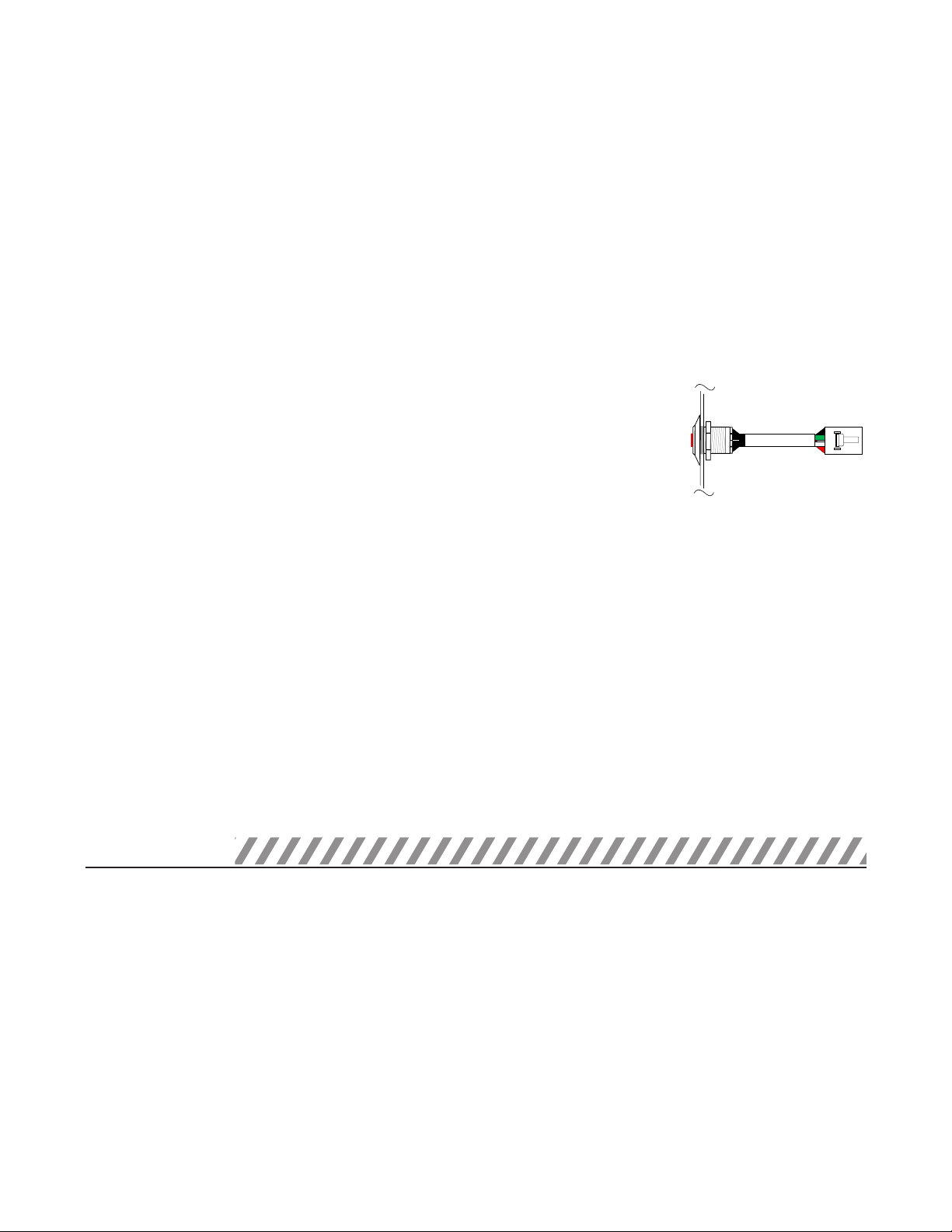
To reset a failure indication, briefly push the Test Switch. If the condition has not been corrected by the
next scheduled test, the unit will once again detect the failure and signal the failure indicator.
To perform a manual self-diagnostic test, push and hold the Test Switch for minimum of 5 seconds. Once
test switch is released the emergency driver will perform a 30 second diagnostic test. During this test, unit
will monitor the operation of the LED load, and battery voltage. If the emergency system functions properly,
the unit will return to normal mode. Should the unit detect any problems, the indicator light will flash per
failure condition (see Troubleshooting Guide) until the condition has been corrected and the unit passes
the next test.