Comtek PR-216 Manuale utente

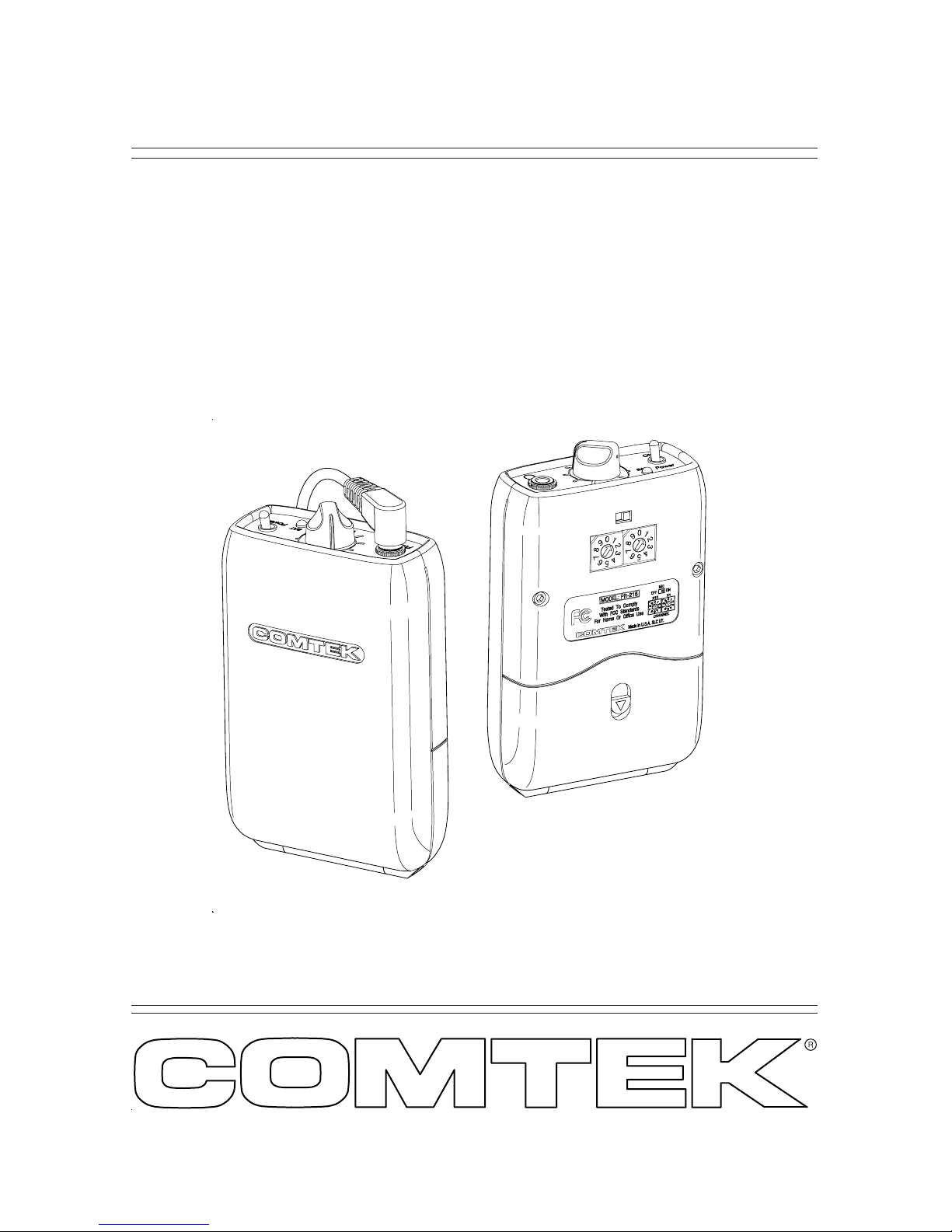
PR-216 OPERATOR’S MANUAL
357 West 2700 South • Salt Lake City, Utah 84115 • Phone: (800) 496-3463 • Fax: (801) 484-6906 • www.comtek.com
PR-216
High Performance
Personal Receiver

TABLE OF CONTENTS
Introduction ..........................................................
Controls ..............................................................
Setup ...................................................................
Frequency Selection ...........................................
Multiple Channel Operation .............................
Frequency Groups ..............................................
Frequency Chart .................................................
Monitoring Capabilities ....................................
Low Battery Indicator ......................................
Battery Removal and Replacement ....................
Battery Charging ...............................................
Belt Clip Installation and Removal .................
Optional Accessories ........................................
Specifications ....................................................
Warranty and Service .......................................
© 2010 COMTEK®All rights reserved.
Print Release Date 05-27-2010
1
2
3
4
4
5
6
7
8
8
9
10
11
12
13

INTRODUCTION
Page 1
The PR-216 is a professional
quality, personal monitor
receiverdesignedtooperatewith
transmitters in the 216-217 MHz
band under Part 95ofthe FCC
regulations. This versatile receiver
can tune both standard and
high- fidelity channels for a variety
of speciality applications:
assistive listening, personal cueing,
language interpretation,tourguide
monitoring, and other personal
remotemonitoringapplications.
The PR-216 receiver incorporates both
advanced digital and analog micro-
circuittechnologies toproduce
superior audio performance
with the convenience of
channel-selectability to
accommodateadverse
multi-channel operation.
PR-216
High Performance
Personal Receiver

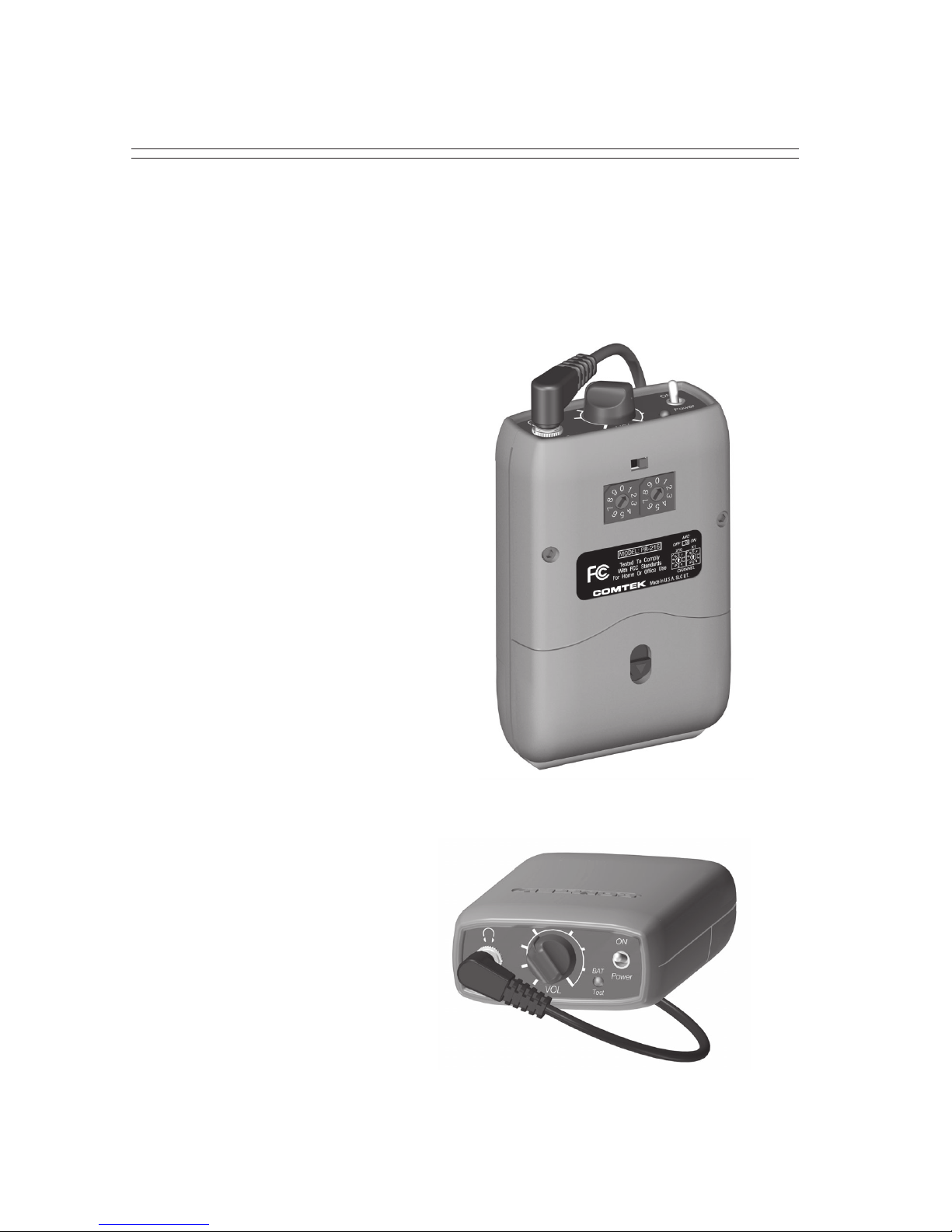
nAUDIO OUTPUT JACK: This stereo 3.5 mm audio output jack accommodates
any low impedance headphone — either stereo or mono; also, charging input for
rechargeable battery, and auxiliary power input.
oVOLUME CONTROL: This control has 50 dB of range to adjust the audio
output for a comfortable listening level (clockwise for maximum level).
pPOWER / RECEIVER STATUS INDICATOR:
The LED test indicator displays three functions:
1.The indicator will illuminate continuously
when unit is “ON” and NO signal is being
received.
2. A steady slow flash indicates the receiver
is receiving a signal on the tuned channel.
3. A rapid flash of the LED indicator and a
subtle beeping signal indicates a low battery.
qON / OFF SWITCH: This switch turns the
receiver on and off.
rOPTIONAL EnviroMic ON / OFF:
Note: If receiver does not have
EnviroMic option, this switch is
non-operational.
sCHANNEL SWITCHES:
These rotary switches select the
channel. Channel must be the
same as transmitter’s channel.
(See page 6 for frequency
selection chart.)
tBATTERY COMPARTMENT: The battery
compartment features a hinged battery cover
and an alignment system that ensures proper
battery polarity. Battery installation and removal is
facilitated by simply manipulating the rear of the battery.
PR-216 CONTROLS
Page 2
OptionalEnviroMic
Battery
CoverLatch

Setup
a. Check to ensure that the PR-216 receiver’s radio frequency channel is the
same as the associated COMTEK transmitter’s channel.
(Channels are indicated by the rotary switches on the back of the receiver. See page 4.)
b. Open the battery cover on the receiver (see page 8) and insert a new nine
volt alkaline battery (Eveready E522 or equivalent). This type of battery will
offer up to 30 hours of operation. (Replace the battery before every use if the
demand for fail-safe operation outweighs battery cost. The use of carbon batteries is
notrecommended.)
NOTE: If a rechargeable battery is to be used, ensure that the
battery has a full charge before use. (See page 9 for battery
charger instructions.)
c. Connect the headphone to the receiver by inserting the headphone plug
into the receptacle on the top of the receiver. The receiver is operating when
the receiver power switch is turned on and the battery status on indicator
illuminates.
NOTE: The headphone cord also functions as part of the
receiver’s antenna system. For optimum performance, this cord
should be fully extended. Coiling or bunching the headphone
cord may reduce the range of the receiver. Also, coil-cord
type headphone cords are not recommended. The receiver
should be carried by the snap-on belt clip (included) or in a
pocket or belt-clip pouch.
d. Set the audio output level control to a comfortable listening volume. This
control is turned clockwise for maximum output level.
PR-216 OPERATING INSTRUCTIONS
Page 3

Page 4
PR-216 OPERATING INSTRUCTIONS
Frequency Selection (216-217 MHz)
The PR-216 personal receiver can operate on one of 76 available channels
between 216 MHz and 217 MHz. COMTEK’s channel designations
indicate both standard non-companded channels and
high-fidelity, companded channels. Channels 1-40
are non-companded channels offering compatibility
with other manufacturers. Channels 41-60 are
high-fidelity, companded channels for use with
COMTEK transmitters. Channels 61-79 are
standard non-companded channels for compatibility
with other manufacturers transmitters. COMTEK
transmitters automatically transmit the proper mode when set
to channels 1-40 for non-companded or 41-60 for companded
channels.
After you have determined the channel on which you are going to operate,
position the two rotary switches to indicate the channel. The left rotary
switch is for tens and the right rotary switch is for ones. To select channel 41
(216.0250 MHz), position the left rotary switch to point to 4 (X10), and
position the right rotary switch to point to 1 (X1). Refer to frequency charts
on pages 5 and 6 for selectable frequencies.
Multiple Channel Operation
Simultaneous operation of more than two channels
requires frequency coordination to avoid intermodulation
interference. This interference could result in poor or unusable performance.
When multiple transmitters are broadcasting, the RF signals will “mix”
together generating additional signals. If these product frequencies are
too close to a frequency which you are using, you will experience this
type of interference. This condition is common to all radio receivers to some
extent. This interference produces whistle and whine type sounds
and/or reductions of range. Toavoid this typeof interference, you should
selectfrequencies from oneof the standardgroups (see frequency group
chartson page 5),oryou can useCOMTEK’sfrequency selection guide
softwaretodetermineappropriate frequencies. Contact COMTEK to
obtain a free copy of the frequency selection software or download it off
the web at www.comtek.com/support.html
IMPORTANT

Page 5
CHANNEL FREQUENCY
1
9
15
24
31
36
216.0125MHz
216.2125MHz
216.3625MHz
216.5875MHz
216.7625MHz
216.8875MHz
GROUPA
216 MHz
COMPANDED
FREQUENCY GROUPS
For COMTEK
equipment only
PR-216PR-216
216 MHz
NON-COMPANDED
FREQUENCY GROUPS
CompatiblewithCOMTEK
andothermanufacturers
CHANNEL FREQUENCY
4
10
14
32
35
40
216.0875MHz
216.2375MHz
216.3375MHz
216.7875MHz
216.8625MHz
216.9875MHz
GROUPB
CHANNEL FREQUENCY
3
5
12
22
38
216.0625MHz
216.1125MHz
216.2875MHz
216.5375MHz
216.9375MHz
GROUPC
CHANNEL FREQUENCY
17
23
30
34
39
216.4125MHz
216.5625MHz
216.7375MHz
216.8375MHz
216.9625MHz
GROUPD
CHANNEL FREQUENCY
41
44
51
55
60
216.0250MHz
216.1750MHz
216.5250MHz
216.7250MHz
216.9750MHz
GROUP1
CHANNEL FREQUENCY
42
49
53
58
216.0750MHz
216.4250MHz
216.6250MHz
216.8750MHz
GROUP2
CHANNEL FREQUENCY
43
46
51
57
216.1250MHz
216.2750MHz
216.5250MHz
216.8250MHz
GROUP3
CHANNEL FREQUENCY
44
47
54
59
216.1750MHz
216.3250MHz
216.6750MHz
216.9250MHz
GROUP4

Page 6
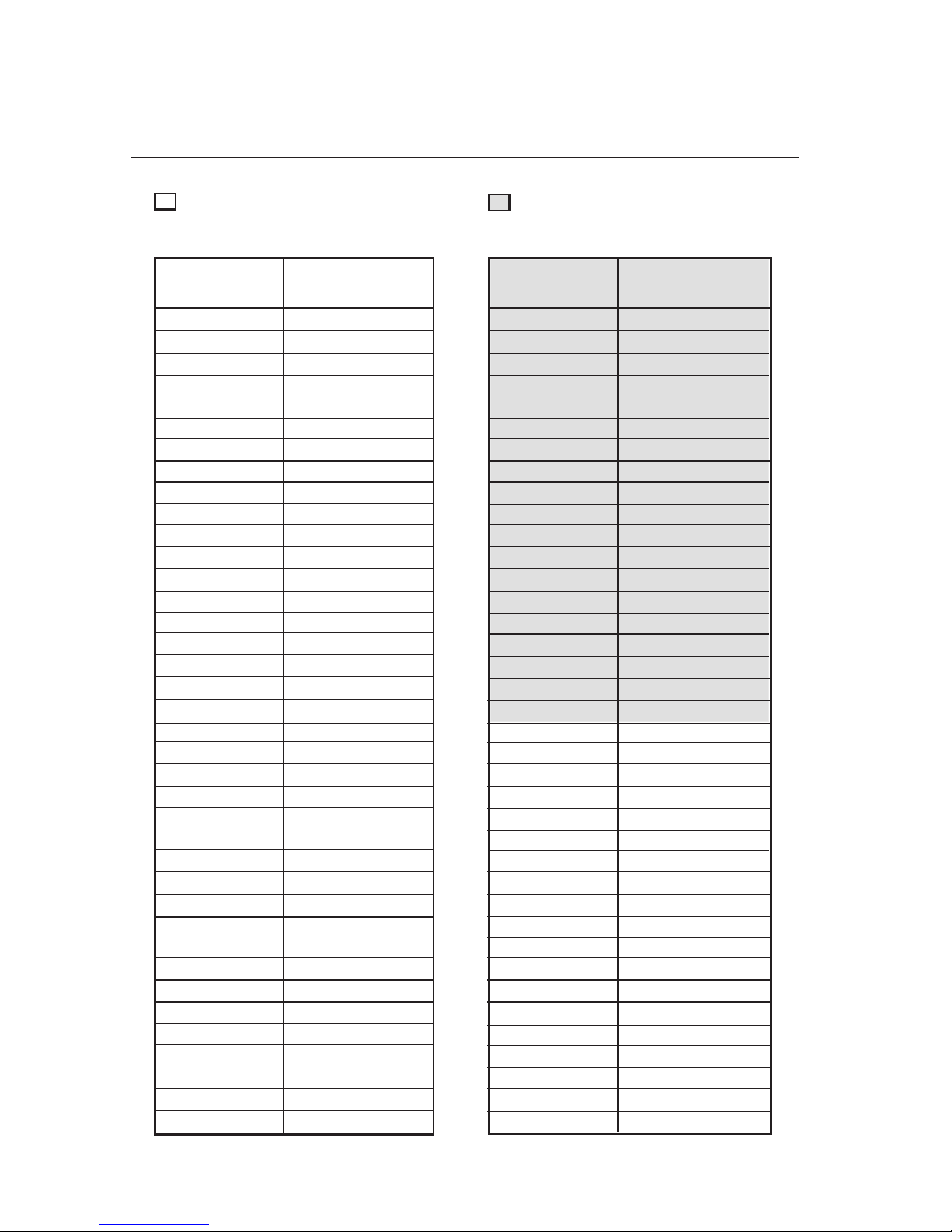
PR-216 FREQUENCY CHART (216-217 MHz band)
CHANNEL
(SWITCH POSITION) FREQUENCY
01
02
03
04
05
06
07
08
09
10
11
12
13
14
15
16
17
18
21
22
23
24
25
26
27
28
29
30
31
32
33
34
35
36
37
38
39
40
216.0125 MHz
216.0375 MHz
216.0625 MHz
216.0875 MHz
216.1125 MHz
216.1375 MHz
216.1625 MHz
216.1875 MHz
216.2125 MHz
216.2375 MHz
216.2625 MHz
216.2875 MHz
216.3125 MHz
216.3375 MHz
216.3625 MHz
216.3875 MHz
216.4125 MHz
216.4375 MHz
216.5125 MHz
216.5375 MHz
216.5625 MHz
216.5875 MHz
216.6125 MHz
216.6375 MHz
216.6625 MHz
216.6875 MHz
216.7125 MHz
216.7375 MHz
216.7625 MHz
216.7875 MHz
216.8125 MHz
216.8375 MHz
216.8625 MHz
216.8875 MHz
216.9125 MHz
216.9375 MHz
216.9625 MHz
216.9875 MHz
Non-Companded Channels
For use with COMTEK and other manufacturers
(Educational Standard)
Companded Channels
For use with COMTEK equipment only
216.0250 MHz
216.0750 MHz
216.1250 MHz
216.1750 MHz
216.2250 MHz
216.2750 MHz
216.3250 MHz
216.3750 MHz
216.4250 MHz
216.5250 MHz
216.5750 MHz
216.6250 MHz
216.6750 MHz
216.7250 MHz
216.7750 MHz
216.8250 MHz
216.8750 MHz
216.9250 MHz
216.9750 MHz
216.0250 MHz
216.0750 MHz
216.1250 MHz
216.1750 MHz
216.2250 MHz
216.2750 MHz
216.3250 MHz
216.3750 MHz
216.4250 MHz
216.5250 MHz
216.5750 MHz
216.6250 MHz
216.6750 MHz
216.7250 MHz
216.7750 MHz
216.8250 MHz
216.8750 MHz
216.9250 MHz
216.9750 MHz
41
42
43
44
45
46
47
48
49
51
52
53
54
55
56
57
58
59
60
61
62
63
64
65
66
67
68
69
71
72
73
74
75
76
77
78
79
70
FREQUENCYCHANNEL
(SWITCH POSITION)

Page 7
PR-216 OPERATING INSTRUCTIONS
MonitoringCapabilities
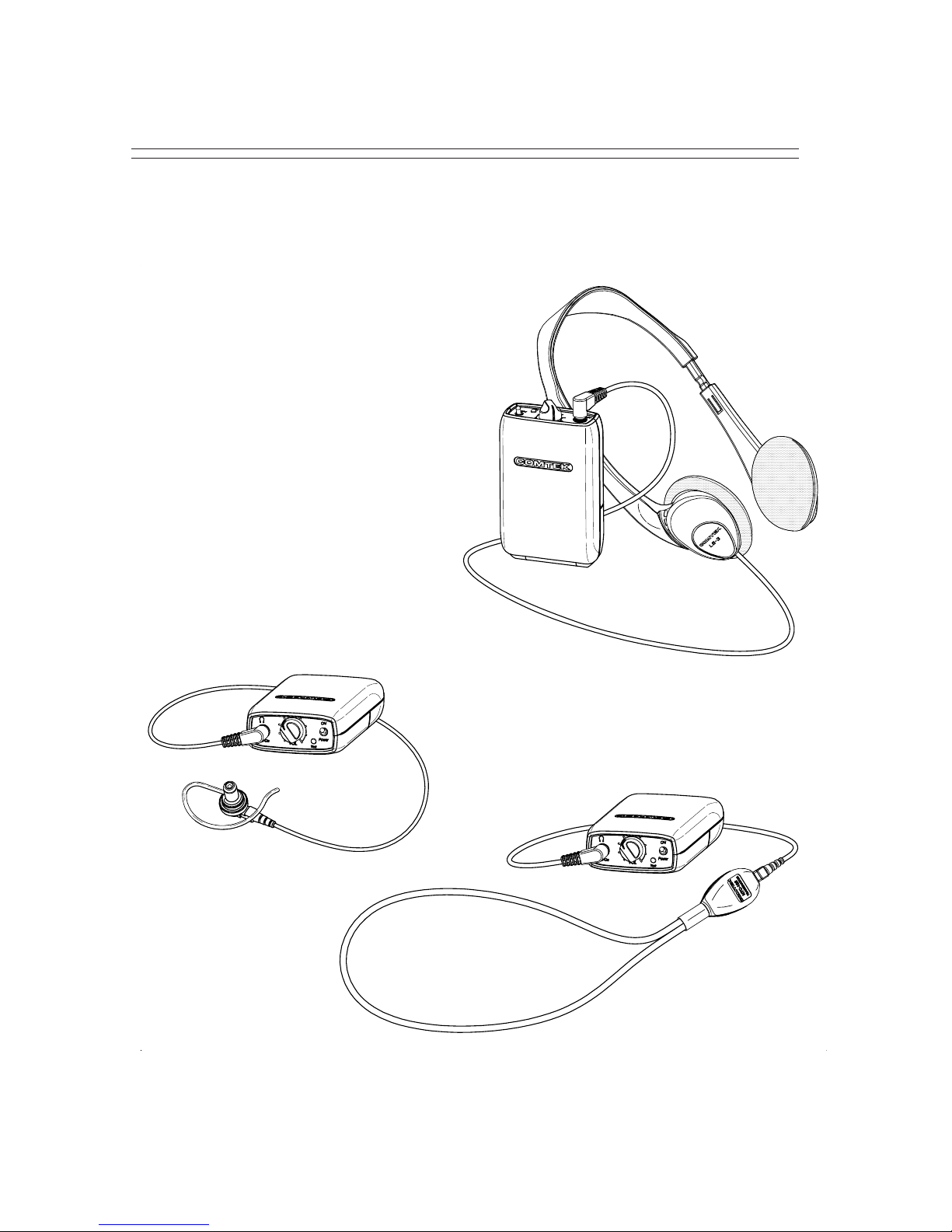
Because each monitoring application requires a
different headphone or transducer to best
satisfy each listening need, the PR-216 can
source a strong audio signal (+16 dBu) to
either stereo or mono headphones with
an impedance as low as 16 ohm.
Ahearing-aidtypebuttonreceivermay
be used with impedances as high as
2 k ohm and still produce a strong
audio signal.
The PR-216 is ideal for use with the
COMTEKNTC-102neckloop
transductor and wireless IR-230
miniature universal-fit ear canal
inductor receiver or hearing aids
having a “T” switch.
Canbeusedwithconsumeror
professionalheadphones.
Canbeusedwith
hearingaidbutton
receiverforassistive
listeningoracoustic
eartubeforIFB
application. Canbeusedto
driveneckloopfor
usewithIR-230
inductorreceiveror
hearing aids.

PR-216 OPERATING INSTRUCTIONS
Page 8
Low Battery Indicator
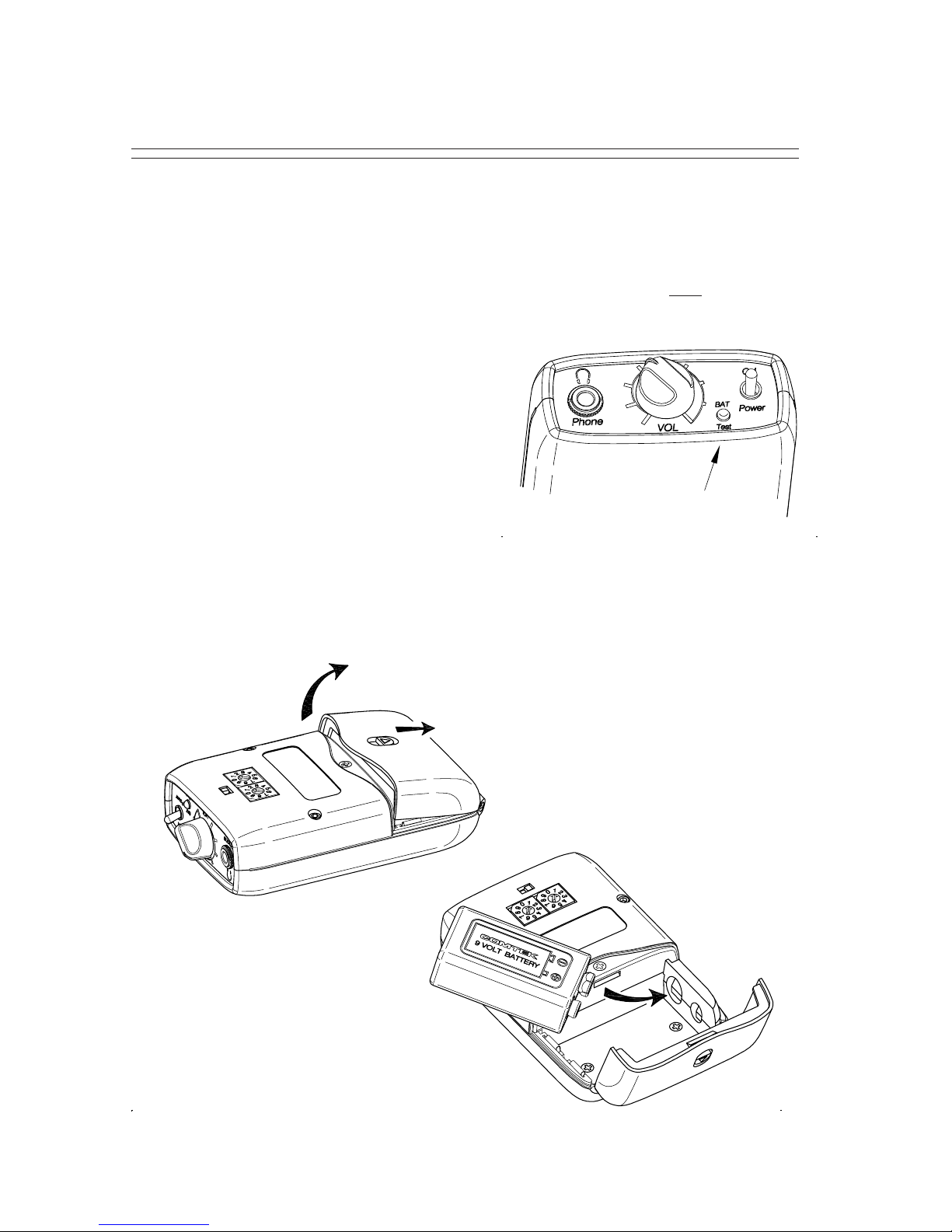
The LED on the receiver is a multi-function indicator which includes low
battery detection. When the receiver is first turned on, the indicator will
illuminate continuously indicating that the unit is “ON” and NO signal is
being received. When the receiver is receiving a signal on the tuned
channel, the LED will show a steady slow
flash indicating reception. A rapid flash
on the LED indicator and a subtle beeping
signal through the headphone indicates
a low battery. Replace battery as soon as
possible with a new alkaline battery or
charge the rechargeable battery, as
performance of the receiver will be
unpredictable and may vary from audio
distortiontocompletefailuretooperate.
Battery Removal / Replacement
Battery indicator LED
Pull back battery door latch and allow
battery cover door to spring open. To
remove battery, simply manipulate the
bottom of battery out of the
compartmentandremove.
To insert battery, face
battery with negative
terminal in line with large hole in
batterycompartment,pressbattery
into compartment and close battery door until
it snaps shut. Note: It is not possible to put
batteryin backwards.
Indice
Altri manuali Comtek Ricevitore