
Donaldson Torit TRB-1 Manuale utente
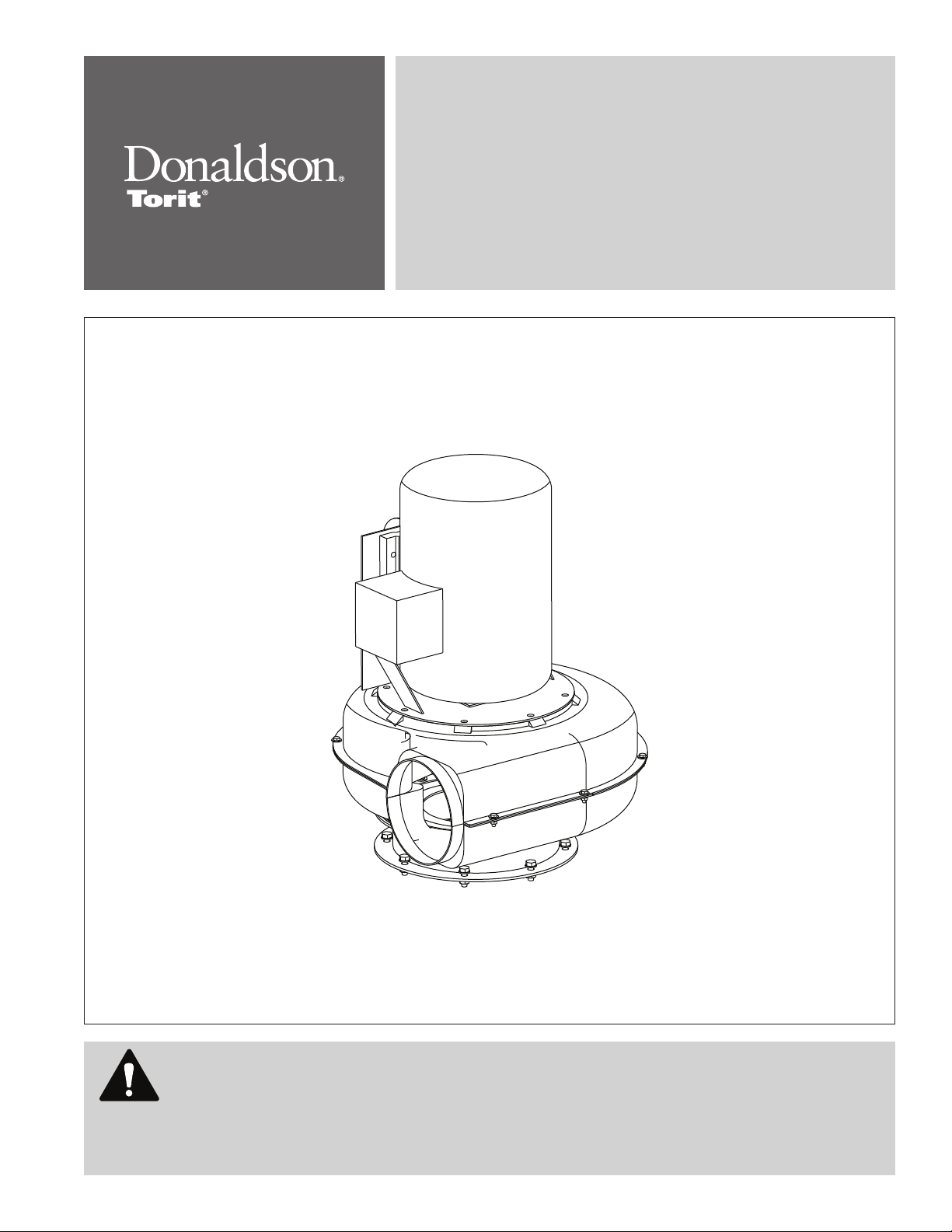
Torit Radial Blade Fan
TRB-1 to TRB-10 (60 and 50 Cycle)
Installation and Operation Manual
Installation, Operation and Service Manual
IOM AG8130401 (ENG)
Revision 3
English
Master Language
This manual contains specic precautions related to worker safety. The hazard alert image denotes safety
related instructions and warnings in this manual. DO NOT install, operate, or perform maintenance on this
collector until you have read and understood the instructions, precautions and warnings contained within this
manual.

Donaldson Company, Inc.
i
The Safety Alert Symbol indicates a hazardous situation which, if not avoided could
result in death or serious injury. Obey all safety messages following this symbol to
avoid possible injury or death. The possible hazards are explained in the associated
text messages.
NOTICE indicates a potential situation or practice which is not expected to
result in personal injury, but which if not avoided, may result in damage to
equipment.
This manual has been supplied to assist with the installation, operation and maintenance for
the collector purchased. Please read the manual before installing, operating, or performing
maintenance on the collector as it contains specic precautions for worker safety. It is the
owner’s responsibility to ensure that this manual is available for use by installers, operators and
maintenance personnel that will be working with this collector. This manual is the property of the
owner and should be left with the collector when installation has been completed. DO NOT operate
this collector until you have read and understood the instructions and warnings located in this
manual.
For additional copies of this manual, contact Donaldson Torit.
IMPORTANT NOTES

Torit Radial Blade Fan TRB-1 through TRB-10
ii
Contents
IMPORTANT NOTES .......................................................................................................................................................................i
1 Safety Communication ..............................................................................................................................................................1
2 Product Description ...................................................................................................................................................................3
3 Operation ...................................................................................................................................................................................3
4 Product Service .........................................................................................................................................................................4
Motor Maintenance .............................................................................................................................................................5
Grease Motors ....................................................................................................................................................................5
Wheel Balance ...................................................................................................................................................................5
Vibration .............................................................................................................................................................................5
Troubleshooting ..................................................................................................................................................................6
Appendix A - Installation ..................................................................................................................................................................8
Installation ..........................................................................................................................................................................9
Lifting Information .............................................................................................................................................................10
Storage .............................................................................................................................................................................10
Electrical Wiring ................................................................................................................................................................10
Fan Installation .................................................................................................................................................................11
Motor Drain Hole Orientation (for Side Mounted Fans) .............................................................................................13
TBI to TRB Fan Adapter Conversion Installation .......................................................................................................13
Side Mount Fan and Adaptor Installation (for MB collectors) ....................................................................................14
Duct Connections and Support .........................................................................................................................................15
Top Mount Chamber Silencer ...........................................................................................................................................15
Start-up / Commissioning .................................................................................................................................................16
Decommissioning .............................................................................................................................................................17
Product Information ..........................................................................................................................................................18
Service Notes ...................................................................................................................................................................19
Donaldson Industrial Air Filtration Warranty ..............................................................................................................................20

1
Donaldson Company, Inc.
Rotating blades can cause serious injury. Operate equipment only when all guards are correctly and securely in
place.
Turn all power off and lock out all power before performing service or maintenance work. It is not unusual for the
equipment to be operated from a remote location, so equipment may start or stop unexpectedly.
Keep body, hands and foreign objects away from the inlet, the outlet and the other moving parts of the fan such as
shafts, belts and pulleys.
This fan has moving parts that can cause serious bodily injury. Before operating or starting maintenance, read the
installation and maintenance instructions provided with this manual and AMCA Publication 410 “Recommended
Safety Practices for Air Moving Devices.”
Improper operation of dust collectors and/or dust control systems may contribute to conditions in a work area or
facility which could result in severe personal injury, and product or property damage. All dust collection equipment
should be used only for its intended purpose and should be properly selected and sized for its intended use.
Process owners have important responsibilities relating to identifying and addressing potential hazards in their
processes. When the potential for handling combustible dust exists within a process the process owner should
include combustion hazards in their risk management activities and should comply with applicable codes and
standards related to combustible dust.
Electrical installation must be performed by a qualied electrician.
This equipment is not designed to support site ducts, piping, or electrical services. All ducts, piping, or electrical
services must be adequately supported to prevent injury and/or property damage.
Site selection must account for wind, seismic zone, and other load conditions.
Equipment may reach peak sound pressure levels above 80 dB (A). Noise levels should be considered when
selecting collector location.
Most dusts present safety and health hazards that require precautions. Wear eye, respiratory, head and other
protection equipment suitable for the type of dust.
Some components may be heavier than they appear. Use appropriate lifting methods to avoid personal injury and/or
property damage.
1 Safety Communication

2
Combustible Dust Hazards
Among other considerations, the current NFPA standards require owners whose processes involve potentially combustible
materials to have a current Dust Hazard Analysis, which can serve as the foundation for their process hazard mitigation strategy.
Mitigation may include but is not limited to:
• Prevention of all ignition sources from entering any dust collection equipment.
• Selection and implementation of re and explosion mitigation, suppression, and isolation strategies appropriate for the
risks in their process.
• Development and use of work practices to maintain safe operating conditions, and to ensure combustible dust does not
accumulate within their plant or process equipment.
Donaldson designs, manufactures, and sells industrial air ltration products for a wide variety of applications. Some applications
may include processes or materials with inherent re and explosion hazards. Donaldson is neither an expert nor a certied
consultant in re, spark, or explosion detection, suppression, or control. Donaldson does not provide engineering consulting
services related to process or dust hazard analyses, or code and standard compliance. Complying with applicable codes and
standards and managing the risks associated with the process or materials remains the responsibility of the process owner/
operator. Donaldson may provide referrals to consultants, suppliers of equipment or services related to the detection and/
or mitigation of sparks, res and/or explosions, but Donaldson does not assume responsibility for any such referrals, nor does
Donaldson assume any liability for the tness of a mitigation strategy or product for a particular installation or application. The
process owner’s nal selection of dust collectors and risk mitigation strategies should be based on the outcome of a Dust Hazard /
Process Hazard Analysis performed by the process owner. Although early engagement of a dust collector supplier provides helpful
insights on the availability and features of various products, process owners should consult with a combustible dust expert and/or a
process safety expert before making actual product and mitigation strategy selections.
Donaldson recommends that all industrial air ltration system designs be reviewed and approved by an expert consultant who is
responsible for the integrity of the system design and compliance with applicable codes and standards. It is the process owner’s
responsibility to understand the risks in their process and mitigate those risks in accordance with all applicable laws, regulations
and standards, including those published by the NFPA. Donaldson also recommends that proper maintenance and housekeeping
procedures and work practices be evaluated, developed, and followed to maintain any industrial air ltration products in safe
operating condition.
Many factors beyond the control of Donaldson can affect the use and performance of Donaldson products in a particular
application, including the conditions under which the product is used. Since these factors are uniquely within the user’s knowledge
and control, it is essential the user evaluate the Donaldson products to determine whether the product is t for the particular
purpose and suitable for the user’s application. All products, product specications, and data (airow, capacity, dimensions, or
availability) are subject to change without notice, and may vary by region or country.
Torit Radial Blade Fan TRB-1 through TRB-10
3
Donaldson Company, Inc.
Torit Radial Blade (TRB) Fans provide a convenient, cost-effective method of integrating a fan with a Donaldson®Torit® dust
collector. The TRB mounts directly to the clean-air outlet of the dust collector, eliminating costly transition ducts, and reducing the
footprint of the system.
The TRB Fans feature a radial blade fan wheel which provides high static pressure. It also has direct drive operation to eliminate
maintenance of fan bearings and belts. TRB Fans have computer balanced fan and motor assemblies to ensure vibration-free
operation. When mounted to a Donaldson Torit Dust collector, the fan is designed to pull dusty air through the collector to be
ltered. Cleaned air then exits the collector via the outlet of the TRB Fan.
2 Product Description
Electrical work during installation, service or maintenance must be performed by a qualied electrician and comply
with all applicable national and local codes.
Turn all power off and lock out all power before performing service or maintenance work.
Check that the collector is clear and free of all debris before starting.
Do not install in classied hazardous atmospheres without an enclosure rated for the application.
3 Operation
The use of a damper or variable frequency drive (VFD) is required to control airow through the collector.
Lack of a control damper or VFD will shorten lter life.
When a variable frequency drive (VFD) is used to control fan operation precautions should be taken to eliminate or reduce any
shaft currents which may be imposed on the motor by the VFD as stated per NEMA Mg-1. Part 31.
Torit Radial Blade Fan TRB-1 through TRB-10
4
LOCK-OUT all energy sources prior to performing any service or maintenance on the equipment.
Electrical service or maintenance work must be performed by a qualied electrician and comply with all applicable
national and local codes.
Rotating blades can cause serious injury. Operate equipment only when all guards are correctly and securely in
place.
Turn all power off and lock out all power before performing service or maintenance work. It is not unusual for the
equipment to be operated from a remote location, so equipment may start or stop unexpectedly.
4 Product Service
Donaldson Torit TRB fans are manufactured to high standards with quality materials and components. Proper maintenance will
ensure a long and trouble-free service life.
The key to good fan maintenance is regular and systematic inspection of all fan parts. Inspection frequency is determined by the
severity of the application and local conditions. Strict adherence to an inspection schedule is essential.
Regular fan maintenance should include the following:
Check the fan wheel for any wear or corrosion, as either can cause catastrophic failures. Check also for
the build-up of material which could cause unbalance resulting in vibration, bearing wear and serious
safety hazards. Clean or replace the wheel as required.
Lubricate the bearings, but do not over lubricate.
Periodically inspect the shaft for dirt buildup, corrosion and signs of excess stress or fatigue.
During any routine maintenance, all setscrews and bolts should be checked for tightness. See Torque
Value Table.
Specically for side mounted fans (motor horizontal) conrm the motor drain hole will be oriented facing down in the fan installed
orientation. If the motor orientation in the TBI fan as-received condition will not have the motor drain hole facing down when
installed in the desired side orientation (i.e. forward blast, up blast, aft blast) then:
1. Unbolt the drive plate (with the fan wheel and motor still attached).
2. Rotate the fan wheel/motor/drive plate assembly on the fan case such that the motor drain hole will face downward when the
fan is installed in the desired side mount orientation.
3. Re-bolt the fan wheel/motor/drive plate assembly to the fan case.
Note that the fan wheel should remain attached to the motor shaft and the motor should remain bolted to the drive plate and the
wheel/motor/drive plate assembly should be rotated as a single assembly.
When the fan is mounted to the collector in the desired side mount orientation conrm that the motor drain hole is facing
downward.
Failure to position the motor drain hole facing downward in the installed fan position may result in damage
to the motor.

5
Donaldson Company, Inc.
Motor Maintenance
TRB Fans typically use motors with sealed bearings that are permanently lubricated for the life of the motor, but other types of
motors may have been selected for your fan.
ExxonMobil Polyrex™ EM is a trademark of Exxon Mobil Corporation
Vibration
The fan blower wheel should be periodically checked for material build-up and/or erosion. If material has built up on
any parts of the wheel, it must be removed and cleaned before it is put back into service.
If any parts of the wheel have been eroded, the wheel must be replaced. Failure to perform this inspection can cause
excessive vibration that will damage the fan blower and/or motor bearings. When vibration becomes excessive, it will
lead to complete fan blower failure that can result in severe personal injury and/or property damage.
The user must determine the frequency of this inspection based on the actual circumstances of their operation, but
check the vibration readings should never exceed a 12 month period.
The fan blower was balanced at the factory to comply with ANSI/AMCA Standard 204-05, Category BV-2. However, rough handling
in shipment and/or erection, weak and/or non-rigid foundations and misalignment may cause a vibration problem after installation.
After installation, the vibration levels should be checked by personnel experienced with vibration analysis and vibration analysis
equipment.
Note: The fan blower should not be operated if the vibration velocity of the fan exceeds 0.50 inches per second, lter out,
with the blower rigidly mounted.
Vibration readings for direct driven fan blowers should be taken on the motor at the top, sides, and end.
Grease Motors
Use the following steps for greaseable motors only:
1. Inspect the motor at approximately every 500 hours of operation or every 3 months, whichever occurs rst.
2. Keep the motor clean and the ventilation openings clear. If the motor is not properly ventilated overheating can occur.
3. Use an electrical insulation tester to periodically ensure that the integrity of the winding insulation has been maintained.
Investigate any signicant drop in resistance.
4. Grease the motor bearings using a high grade bearing grease. For standard service conditions ExxonMobil Polyrex™ EM
grease is recommended.
Under standard conditions, grease every 5,500 hours. In severe dirt and abrasive dust conditions, grease every 2750 hours.
Under extreme conditions, such as an environment with iron dust, grease every 550 hours.
Wheel Balance
Airstreams containing particulate or chemicals can cause abrasion or corrosion of the fan parts. This is often uneven and can lead
to wheel imbalance over time. When such wear is discovered, a decision must be made to rebalance or replace the wheel.
The soundness of all parts should be determined making sure there is no hidden structural damage. The airstream components
should also be cleaned to remove any build-up of foreign material. Specialized equipment can be used to rebalance a cleaned
wheel that is considered structurally sound.
Balance weights should be rigidly attached at a point that will not interfere with the housing nor disrupt airow.

Torit Radial Blade Fan TRB-1 through TRB-10
6
Problem Probable Cause Remedy
Fan blower and motor do
not start
Improper motor wire size Rewire using the correct wire gauge as specied by
national and local codes.
Not wired correctly Check and correct motor wiring for supply voltage. See
motor manufacturer's wiring diagram. Follow wiring
diagram and the National Electric Code.
Collector not wired for available
voltage
Correct wiring for proper supply voltage.
Input circuit down Check power supply to motor circuit on all leads.
Electrical supply circuit down Check power supply circuit for proper voltage. Check for
fuse or circuit breaker fault. Replace as necessary.
Damaged motor Replace damaged motor.
Fan blower and motor
start, but do not stay
running
Incorrect motor starter installed Check for proper motor starter and replace if necessary.
Access doors are open or not
closed tight
Close and tighten access doors. See Filter Installation.
Hopper discharge open Check that dust container is installed and properly sealed.
Damper control not adjusted
properly
Check airow in duct. Adjust damper control until proper
airow is achieved and the blower motor’s amp draw is
within the manufacturer’s rated amps.
Electrical circuit overload Check that the power supply circuit has sufcient power to
run all equipment.
Insucient airow Fan rotation backwards Proper fan rotation is clockwise when viewed from the
motor side or counterclockwise when viewed through the
inlet cone. See Preliminary Start-Up Check.
Access doors open or not closed
tight
Check that all access doors are in place and secured.
Check that the hopper discharge opening is sealed and
that dust container is installed correctly.
Fan exhaust area restricted Check fan exhaust area for obstructions. Remove material
or debris. Adjust damper ow control.
Filters need replacement Remove and replace using genuine Donaldson
replacement lters. See Filter Replacement.
Excessive vibration Loose mounting bolts or set screws Tighten loose bolts or set screws.
Misalignment or excessive wear of
wheel
Align wheel and balance fan.
Misaligned or unbalanced motor Balance fan.
Bent shaft due to mishandling or
material impact
Replace motor with bent shaft and rebalance fan.
Troubleshooting

7
Donaldson Company, Inc.
Problem Probable Cause Remedy
Excessive vibration Externally transmitted vibration Isolate collector from external vibration.
Accumulation of foreign material on
the wheel
Clean the wheel.
Excessive system pressure or
restriction of airow due to closed
dampers
Open dampers far enough for fan to operate in stable ow
regime.
Inadequate performance Fan running too slowly Check power frequency against fan motor design
frequency.
Fan wheel rotating in wrong
direction or installed backwards on
shaft
Proper fan rotation is clockwise from the top of the fan.
The fan can be viewed through the back of the motor.
Poor system design, closed
dampers, air leaks or clogged lters
Check system for damper positions leak points. Check
lter Delta P.
Sharp deection of airstream at fan
outlet
Do not place fan discharge next to a wall.
Missing discharge ttings Install discharge ttings.
Excessive noise Fan operating near “stall” due
to incorrect system design or
installation
Correct system or replace with correctly sized fan.
Vibration originating elsewhere in
the system
Vibration isolate collector from the system.
Loose accessories or components Tighten accessories or components.
Questo manuale è adatto per i seguenti modelli
9
Indice
Altri manuali Donaldson Torit Fan


