Skil 1061 Manuale utente

JIG SAW
1061 (F0151061 . . )
SKIL Europe BV - Konijnenberg 60 03/11 2610Z02114
4825 BD Breda - The Netherlands
www.skileurope.com
ORIGINAL INSTRUCTIONS 9
NOTICE ORIGINALE 12
ORIGINALBETRIEBSANLEITUNG 15
ORIGINELE GEBRUIKSAANWIJZING 18
BRUKSANVISNING I ORIGINAL 22
ORIGINAL BRUGSANVISNING 25
ORIGINAL BRUKSANVISNING 28
ALKUPERÄISET OHJEET 31
MANUAL ORIGINAL 34
MANUAL ORIGINAL 37
ISTRUZIONI ORIGINALI 40
EREDETI HASZNÁLATI UTASÍTÁS 44
PŮVODNÍM NÁVODEM K POUŽÍVÁNÍ 47
ORİJİNAL İŞLETME TALİMATI 50
INSTRUKCJA ORYGINALNA 53
ПОДЛИННИК РУКОВОДСТВА
ПО ЭКСПЛУАТАЦИИ 57
ОРИГІНАЛЬНА ІНСТРУКЦІЯ
З ЕКСПЛУАТАЦІЇ 61
ΠΡΩΤΟΤΥΠΟ Ο∆ΗΓΙΩΝ ΧΡΗΣΗΣ 64
INSTRUCŢIUNI DE FOLOSIRE
ORIGINALE 68
ОРИГИНАЛНО РЪКОВОДСТВО
ЗА ЕКСПЛОАТАЦИЯ 71
PÔVODNÝ NÁVOD NA POUŽITIE 75
ORIGINALNE UPUTE ZA RAD 79
ORIGINALNO UPUTSTVO ZA RAD 82
IZVIRNA NAVODILA 85
ALGUPÄRANE KASUTUSJUHEND 88
ORIĢINĀLĀ LIETOŠANAS PAMĀCĪBA 91
ORIGINALI INSTRUKCIJA 95
104
102

2
ʿˀʽ
Ƙ
ʿˁʽ
˅ʽʽƘˀʽʽʽ
ʿƓ˂ÿ
ʽʾƯʿʽʽˀ
˅ʽʽ
¹ÌÌ
11061
CBD
A
FK
G
HL
EJ
2
3 4

3
5 6
7

4
K
8
9

5
0º
15º
30º
45º
1 2
3 4
5
6
7
0

6
D
!
E
@
F
#
G
X
$

7
%
2610388128
2610388130
2610388134
^
J
& *

8
2610388134
2610388130
2610388124
2610388132
2610388128
2610388126
2610388122
SEIROSSECC
2610388138
ACCESSORIES SKIL nr.
)(

9
Jig saw 1061
INTRODUCTION
• This tool is intended for making cut-throughs and cut-outs
in wood, plastic, metal, ceramic plates and rubber, and is
suitable for straight and curved cuts with mitre angles
to 45°
• Before using the tool for the rst time, paste the supplied
sticker in your national language over the English text of
warning label A 2
• Read and save this instruction manual 3
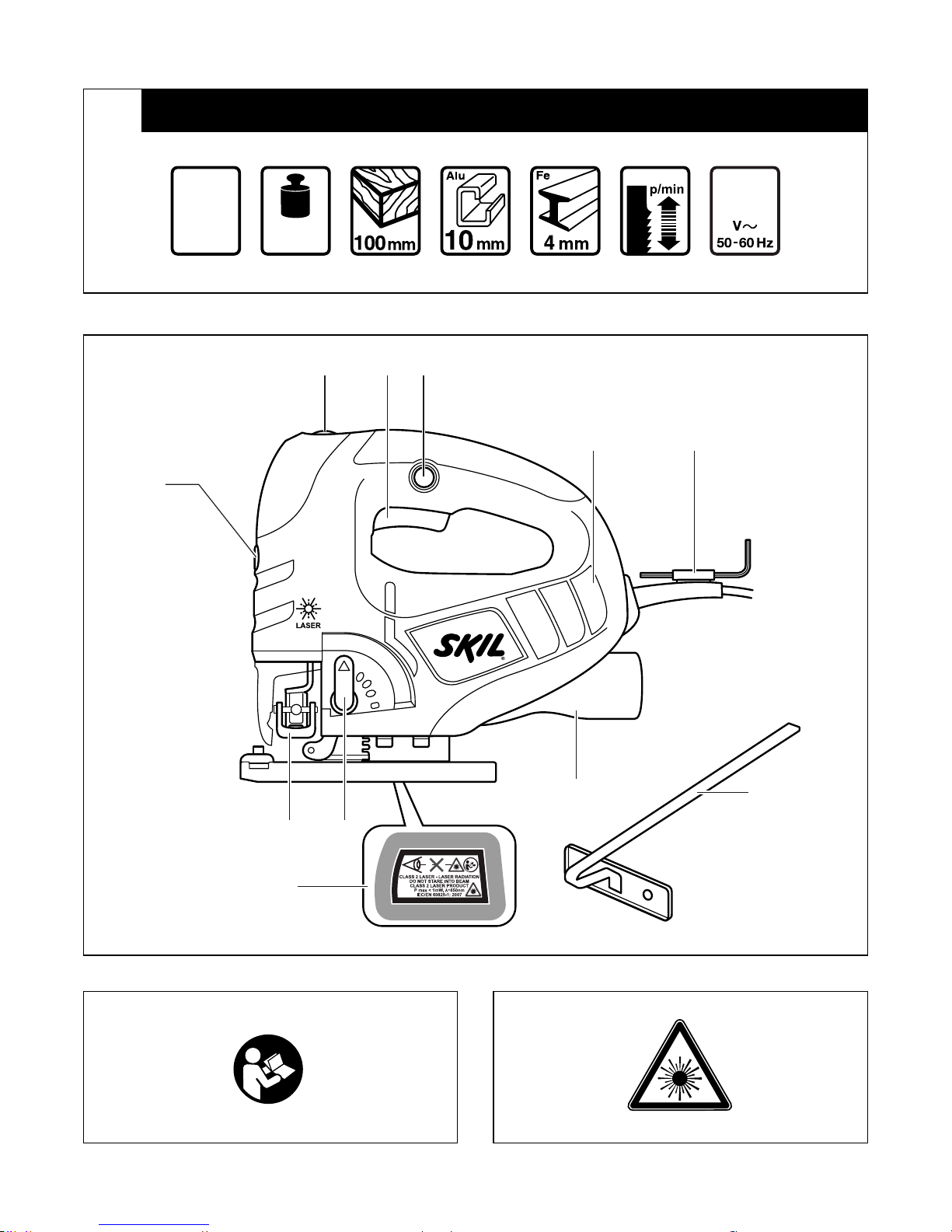
TECHNICAL SPECIFICATIONS 1
TOOL ELEMENTS 2
A Warning label
B Switch for on/o and speed control
C Button for switch locking
D Wheel for adjusting sawing speed
E Extension for vacuum cleaner
F Lever for selecting sawing mode
G On/o switch laser
H Ventilation slots
J Rip fence
K Clic-system for changing saw blades
L Storage for key
SAFETY
GENERAL SAFETY INSTRUCTIONS
WARNING! Read all safety warnings and all
instructions. Failure to follow the warnings and instructions
may result in electric shock, fire and/or serious injury. Save
all warnings and instructions for future reference. The
term “power tool” in the warnings refers to your mains-
operated (corded) power tool or battery-operated (cordless)
power tool.
1) WORK AREA SAFETY
a) Keep work area clean and well lit.
Cluttered or dark areas invite accidents.
b) Do not operate power tools in explosive
atmospheres, such as in the presence of flammable
liquids, gases or dust. Power tools create sparks which
may ignite the dust or fumes.
c) Keep children and bystanders away while operating
a power tool. Distractions can cause you to lose control.
2) ELECTRICAL SAFETY
a) Power tool plugs must match the outlet.
Never modify the plug in any way. Do not use any
adapter plugs with earthed (grounded) power tools.
Unmodied plugs and matching outlets will reduce risk of
electric shock.
b) Avoid body contact with earthed or grounded
surfaces such as pipes, radiators, ranges and
refrigerators. There is an increased risk of electric
shock if your body is earthed or grounded.
c) Do not expose power tools to rain or wet conditions.
Water entering a power tool will increase the risk of
electric shock.
d) Do not abuse the cord. Never use the cord for
carrying, pulling or unplugging the power tool.
Keep cord away from heat, oil, sharp edges or
moving parts. Damaged or entangled cords increase
the risk of electric shock.
e) When operating a power tool outdoors,
use an extension cord suitable for outdoor use.
Use of a cord suitable for outdoor use reduces the risk of
electric shock.
f) If operating a power tool in a damp location is
unavoidable, use an earth leakage circuit breaker.
Use of an earth leakage circuit breaker reduces the risk
of electric shock.
3) PERSONAL SAFETY
a) Stay alert, watch what you are doing and use
common sense when operating a power tool.
Do not use a power tool while you are tired or
under the influence of drugs, alcohol or medication.
A moment of inattention while operating power tools may
result in serious personal injury.
b) Use personal protective equipment. Always wear
eye protection. Protective equipment such as dust
mask, non-skid safety shoes, hard hat, or hearing
protection used for appropriate conditions will reduce
personal injuries.
c) Prevent unintentional starting. Ensure the switch is
in the off-position before connecting to power
source and/or battery pack, picking up or carrying
the tool. Carrying power tools with your nger on the
switch or energising power tools that have the switch on
invites accidents.
d) Remove any adjusting key or wrench before turning
the power tool on. A wrench or a key left attached to a
rotating part of the power tool may result in
personal injury.
e) Do not overreach. Keep proper footing and balance
at all times. This enables better control of the power tool
in unexpected situations.
f) Dress properly. Do not wear loose clothing or
jewellery. Keep your hair, clothing and gloves away
from moving parts. Loose clothes, jewellery or long hair
can be caught in moving parts.
g) If devices are provided for the connection of dust
extraction and collection facilities, ensure these are
connected and properly used. Use of dust collection
can reduce dust-related hazards.
4) POWER TOOL USE AND CARE
a) Do not force the power tool. Use the correct power
tool for your application. The correct power tool will do
the job better and safer at the rate for which it
was designed.
b) Do not use the power tool if the switch does not turn
it on and off. Any power tool that cannot be controlled
with the switch is dangerous and must be repaired.
c) Disconnect the plug from the power source and/or
the battery pack from the power tool before making
any adjustments, changing accessories, or storing
power tools. Such preventive safety measures reduce
the risk of starting the power tool accidentally.

10
d) Store idle power tools out of the reach of children
and do not allow persons unfamiliar with the power
tool or these instructions to operate the power tool.
Power tools are dangerous in the hands of
untrained users.
e) Maintain power tools. Check for misalignment or
binding of moving parts, breakage of parts and any
other condition that may affect the power tool’s
operation. If damaged, have the power tool repaired
before use. Many accidents are caused by poorly
maintained power tools.
f) Keep cutting tools sharp and clean.
Properly maintained cutting tools with sharp cutting
edges are less likely to bind and are easier to control.
g) Use the power tool, accessories and tool bits etc.,
in accordance with these instructions, taking into
account the working conditions and the work to be
performed. Use of the power tool for operations dierent
from those intended could result in a hazardous situation.
5) SERVICE
a) Have your power tool serviced by a qualified repair
person using only identical replacement parts.
This will ensure that the safety of the power tool
is maintained.
SAFETY INSTRUCTIONS FOR JIG SAWS
GENERAL
• Always check that the supply voltage is the same as the
voltage indicated on the nameplate of the tool (tools with
a rating of 230V or 240V can also be connected to
a 220V supply)
• Check the functioning of the tool before each use and, in
case of a defect, have it repaired immediately by a
qualied person; never open the tool yourself
• Do not work materials containing asbestos (asbestos
is considered carcinogenic)
• This tool should not be used by people under the age
of 16 years
• The noise level when working can exceed 85 dB(A);
wear ear protection
• Wear protective goggles when working with materials
which produce chips
• Dust from material such as paint containing lead, some
wood species, minerals and metal may be harmful
(contact with or inhalation of the dust may cause allergic
reactions and/or respiratory diseases to the operator or
bystanders); wear a dust mask and work with a dust
extraction device when connectable
• Certain kinds of dust are classied as carcinogenic
(such as oak and beech dust) especially in conjunction
with additives for wood conditioning; wear a dust
mask and work with a dust extraction device
when connectable
• Follow the dust-related national requirements for the
materials you want to work with
• Use completely unrolled and safe extension cords with
a capacity of 16 Amps (U.K. 13 Amps)
• Always disconnect plug from power source before
making any adjustment or changing any accessory
BEFORE USE
• Remove all obstacles on top of as well as underneath the
cutting path before you start cutting
• Avoid damage that can be caused by screws, nails and
other elements in your workpiece; remove them before
you start working
• Secure the workpiece (a workpiece clamped with clamping
devices or in a vice is held more securely than by hand)
DURING USE
• Hold power tool by insulated gripping surfaces,
when performing an operation where the cutting
accessory may contact hidden wiring or its own
cord (a cutting accessory contacting a “live” wire may
make exposed metal parts of the power tool “live” and
could give the operator an electric shock)
• When the plugged-in tool is not in use, the tool
handle may warm up; this is normal and does not
indicate a problem
• Always keep the cord away from moving parts of the tool;
direct the cord to the rear, away from the tool
• If the cord is damaged or cut through while working, do
not touch the cord, but immediately disconnect the plug
• Never use the tool when cord is damaged; have it
replaced by a qualied person
• In case of electrical or mechanical malfunction,
immediately switch o the tool and disconnect the plug
• Keep hands away from the saw blade while the tool is
in use
ACCESSORIES
• SKIL can assure awless functioning of the tool only
when original accessories are used
• Do not use a saw blade which is cracked, deformed
or dull
OUTDOOR USE
• When used outdoors, connect the tool via a fault current (FI)
circuit breaker with a triggering current of 30 mA maximum,
and only use an extension cord which is intended for outdoor
use and equipped with a splashproof coupling-socket
AFTER USE
• When you put away the tool, switch o the motor and
ensure that all moving parts have come to a
complete standstill
LASER RADIATION
• Do not look into the laser beam (laser radiation) 4
• Do not point the laser beam at persons or animals
• Do not use any magnifying optical tools (such as
magnifying glasses, telescopes, or binoculars) to view
the laser beam
• Do not operate the tool in the presence of ammable
liquids, gases or dust
• Do not operate the tool with children around
WHEN CONNECTING NEW 3-PIN PLUG (U.K. ONLY):
• Do not connect the blue (= neutral) or brown (= live) wire
in the cord of this tool to the earth terminal of the plug
• If for any reason the old plug is cut o the cord of this tool,
it must be disposed of safely and not left unattended
USE
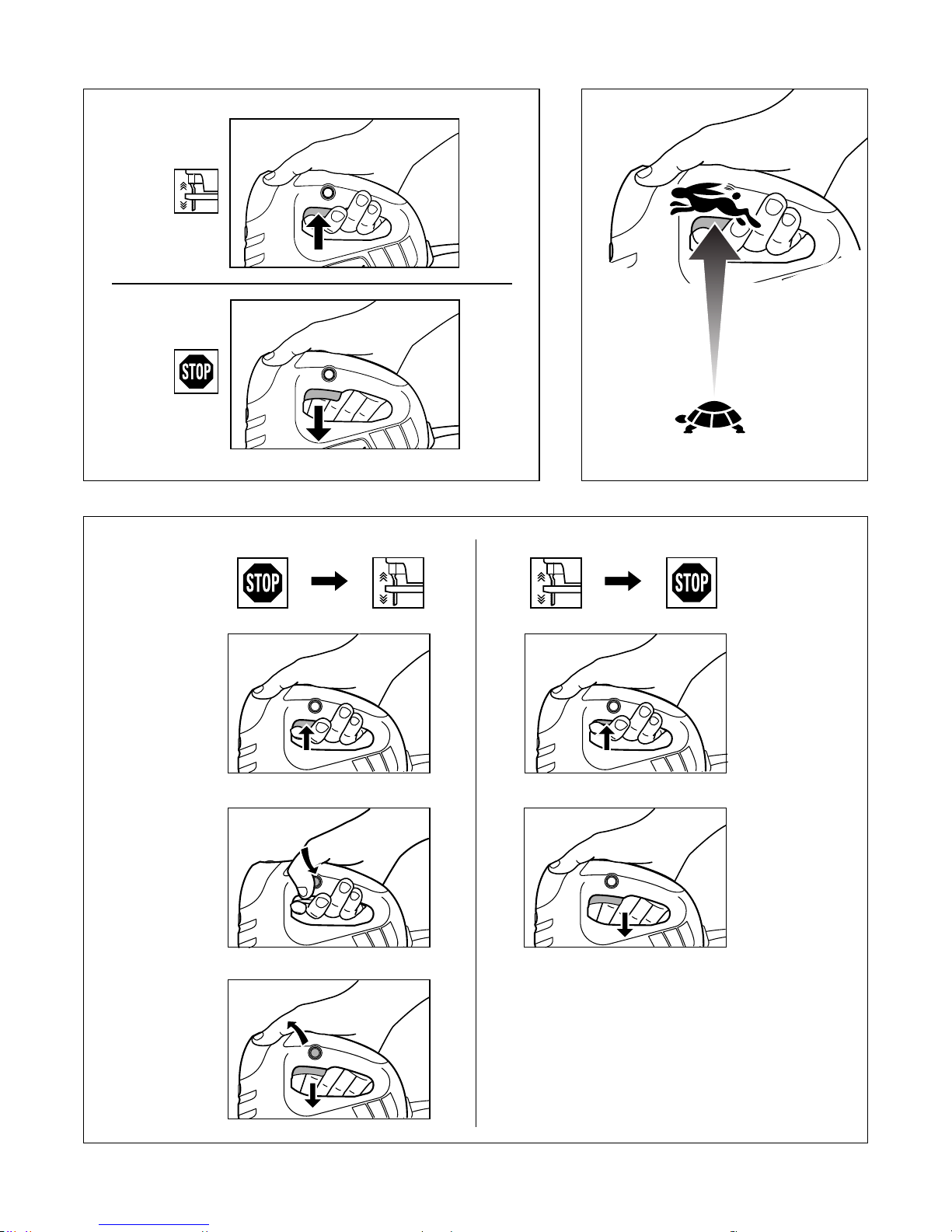
• On/o 5
• Speed control for smooth starting 6
• Switch locking for continuous use 7
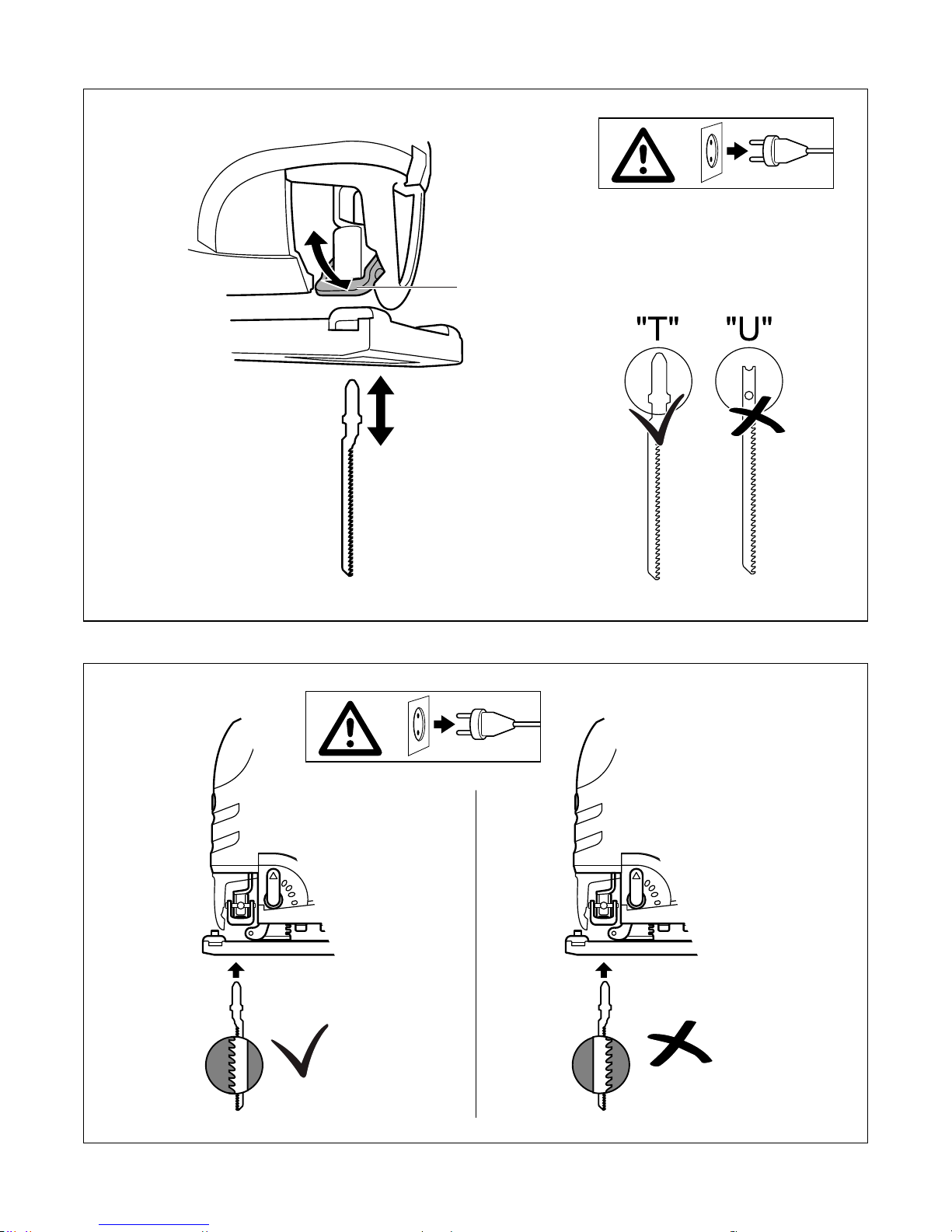
• Changing saw blades 8
! insert blade to full depth with teeth facing forward 9
! use T-shank blades only
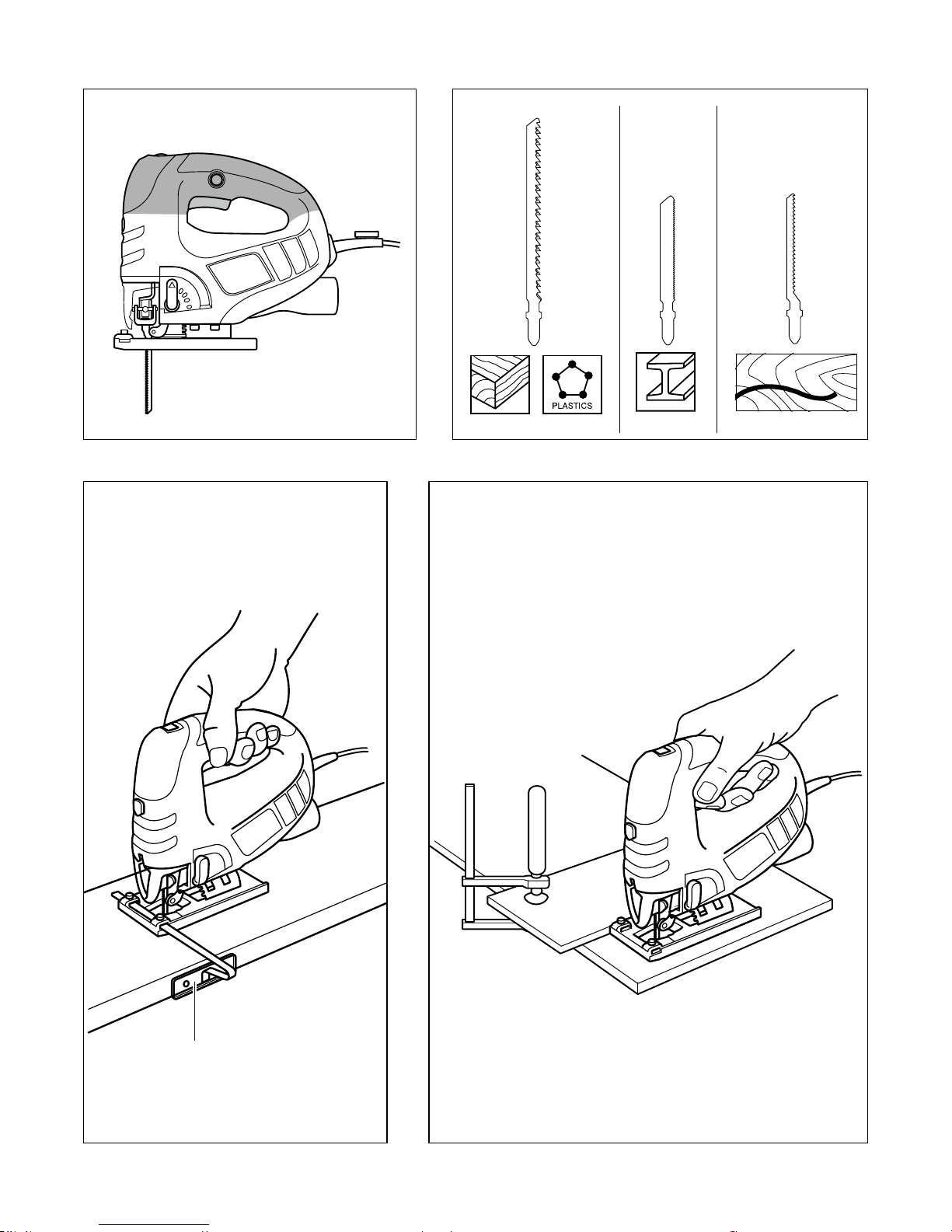
• Sawing at 15°/30°/45° 0
Altri manuali per 1061
1
Questo manuale è adatto per i seguenti modelli
1
Indice
Altri manuali Skil Sega

Skil
Skil 3550 Istruzioni per il montaggio

Skil
Skil Skilsaw 5166 Manuale utente

Skil
Skil 9225 Manuale utente

Skil
Skil PR0601B-00 Manuale utente

Skil
Skil skilsaw 5150 Manuale utente

Skil
Skil 5255 Manuale utente

Skil
Skil 3316 Istruzioni per il montaggio

Skil
Skil 5330AA Manuale utente

Skil
Skil Skilsaw 5155 Manuale utente

Skil
Skil 9225 Manuale utente

Skil
Skil 5860 Manuale utente

Skil
Skil 3571 Manuale utente

Skil
Skil 4950 Manuale utente

Skil
Skil 5385 Manuale utente

Skil
Skil 5885 Manuale utente

Skil
Skil 3540 Manuale utente

Skil
Skil CR5435B-00 Manuale utente

Skil
Skil Skilsaw 5840 Manuale utente

Skil
Skil BT1 1305 Series Manuale utente

Skil
Skil 3400 Manuale utente