PRACTICAL USE
When driving with a full hopper it’s NOT recommended to drive on an uneven
surface for a longer period of time –this might cause the material to compact.
The tractor’s stabilization chains must be tightened in order to prevent the spreader
from swinging from side to side while driving.
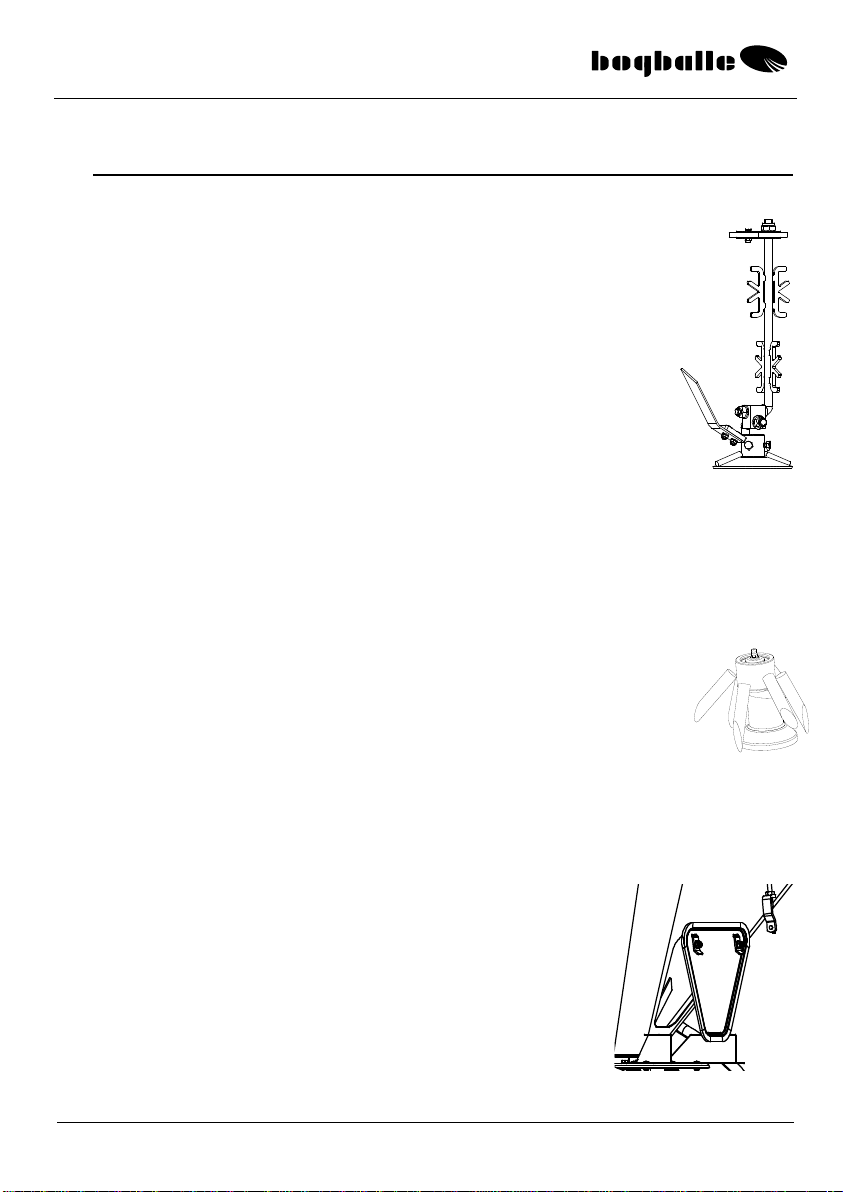
When the shutter/outlet is closed the spreading disc should not rotate for a longer
period of time. The material will compress and cause heat development and
crushing of the agitator. The agitator can be damaged and involve overheat and
damage of the friction clutch.
When filling the hopper the material has to be filled in cautiously in a steady flow.
Don’t let the material fall in at once and from too high a position. Never put
pressure on the material by pressing the material into the hopper with a
mechanical/hydraulic shovel.
Never leave the spreader with material in the hopper. Not even overnight!
For example, road salt, which is hygroscopic, can by exposure to air of varying
humidity form a coherent mass / lump which might block the outlet of the machine
and prevent the agitator from rotating with possibly defective slip clutch or lack of
power from the oil motor to follow.
At a humidity of more than 75% a salt solution is formed on the salt crystals. If the
humidity is reduced again, the water evaporates and the salt re-crystallize resulting
in the formation of a coherent mass / lump.
VANE POSITION
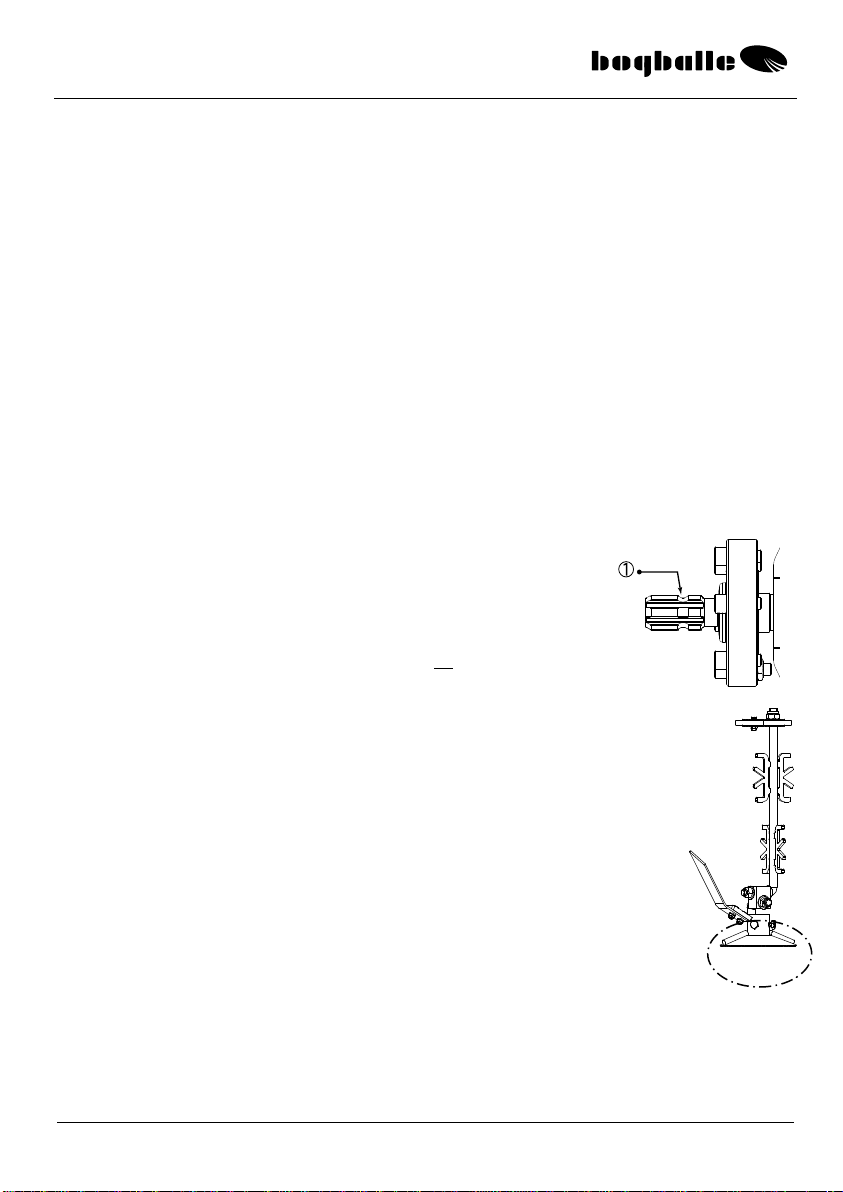
The spread chart states the setting of the vanes, i.e.:
1,2,3,4 –or a combination.
Setting / position of the vanes is decisive for the distribution of the material.
Basically the vanes are set according to the spread chart, but in case the material
does not have the wanted distribution from side to side it can be necessary to
adjust the spread pattern by adjustment of the vane position.
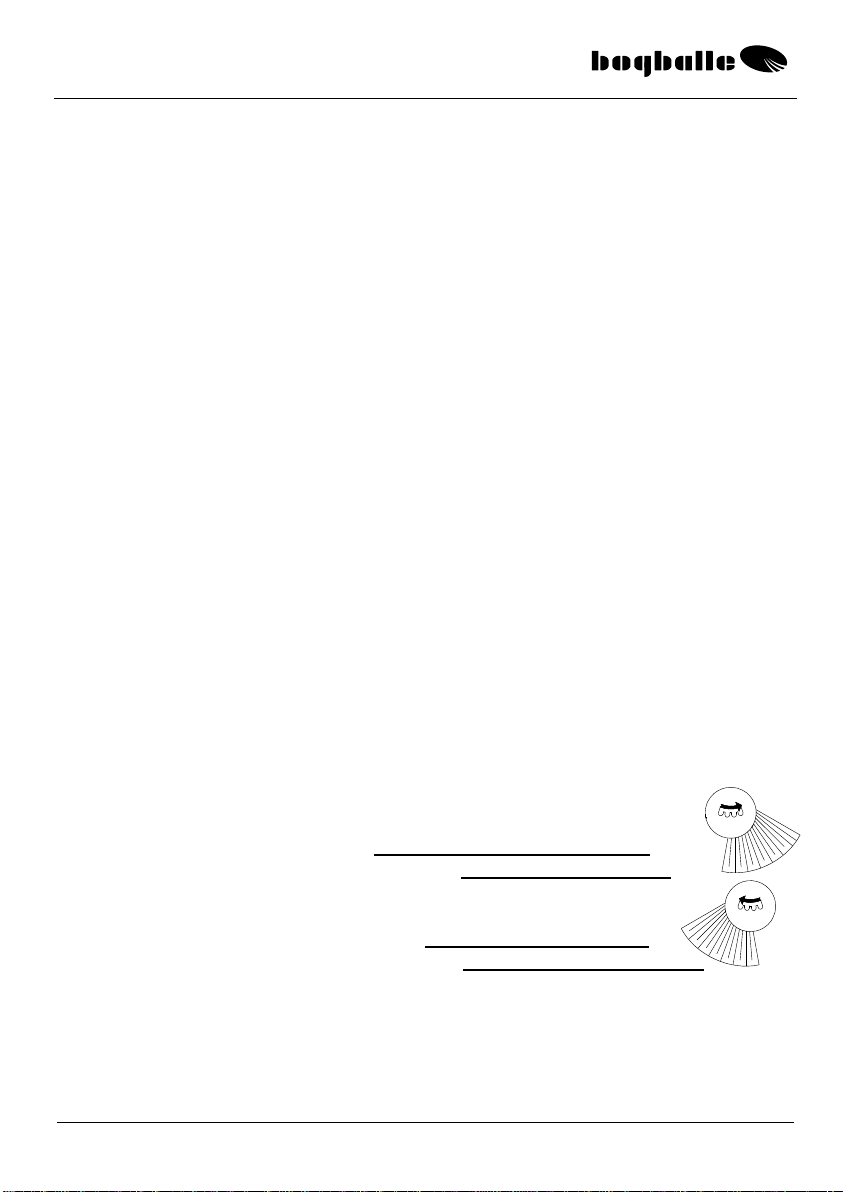
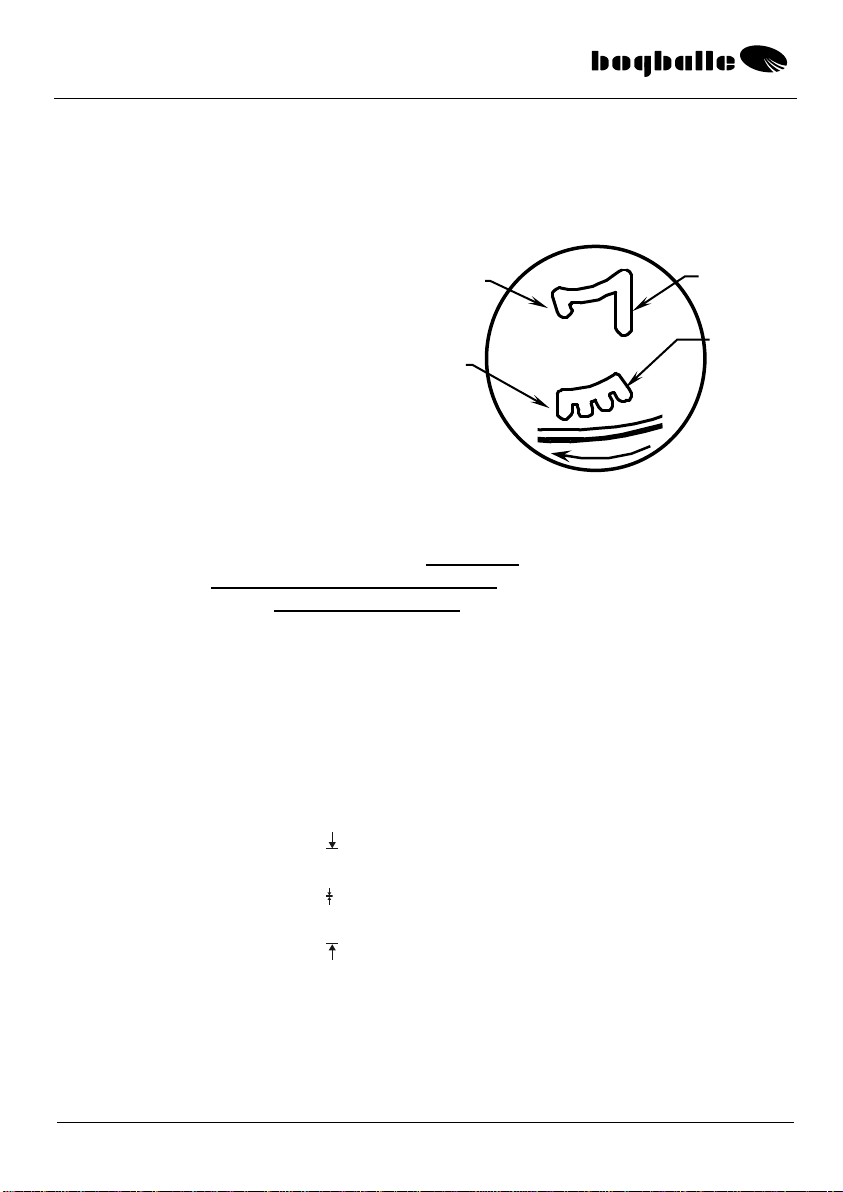
oIf the vanes are adjusted against the running direction
(Higher figure), the quantity is increased to the spreader's right side
oIf the vanes are adjusted in the in the running direction
(Lower figure), the quantity is increased to the spreader's left side
oIn order to ensure an even distribution of the material it is often an advantage to set
the vanes in two different positions, for instance 2-3-2-3.
This should be done in such a way that the two vanes placed opposite to each
other are set in the same position.