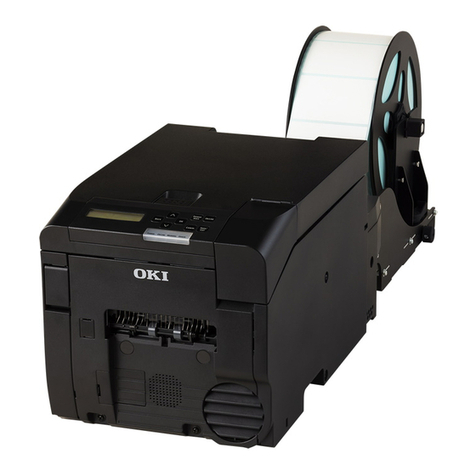
Oki OkiPos 441 Manuale utente

User’s Guide
59307701
OkiPos 441

Federal Communications Commission
Radio Frequency Interference
Statement
This equipment has been tested and found to comply with the limits for a Class A digital device, pursuant to Part 15
of the FCC Rules. These limits are designed to provide reasonable protection against harmful interference when the
equipment is operated in a commercial environment. This equipment generates, uses and can radiate radio frequency
energy and, if not installed and used in accordance with the instruction manual, may cause harmful interference to
radio communications. Operation of this equipment in a residential area is likely to cause harmful interference in
which case the user will be required to correct the interference at his own expense.
For compliance with the Federal Noise Interference Standard, this equipment requires a shielded cable.
This statement will be applied only for the printers marketed in U.S.A.
Statement of
The Canadian Department of Communications
Radio Interference Regulations
This digital apparatus does not exceed the Class A limits for radio noise emissions from digital apparatus set out
in the Radio Interference Regulations of the Canadian Department of Communications.
Le présent appareil numérique n’émet pas de bruits radioélectriques dépassant les limites applicables aux appareils
numériques de la classe A prescrites dans le Règlement sur le brouillage radioélectrique édicté par le ministère des
Communications du Canada.
The above statement applies only to printers marketed in Canada.
CE
Manufacturer’s Declaration of Conformity
EC Council Directive 89/336/EEC of 3 May 1989
This product, has been designed and manufactured in accordance with the International Standards EN 61000-6-
3 / 2001 and EN 55024 / 1998, following the provisions of the Electro Magnetic Compatibility Directive of the
European Communities as of May 1989.
EC Council Directive 73/23/EEC and 93/68/EEC of 22 July 1993
This product, has been designed and manufactured in accordance with the International Standards EN 60950-1,
following the provisions of the Low Voltage Directive of the European Communities as of 2001.
The above statement applies only to printers marketed in EU.
Trademark acknowledgments
OKIPOS441: Oki Data Corporation
Notice
•All rights reserved. Reproduction of any part of this manual in any form whatsoever, without OKI express
permission is forbidden.
•The contents of this manual are subject to change without notice.
•All efforts have been made to ensure the accuracy of the contents of this manual at the time of going to press.
However, should any errors be detected, OKI would greatly appreciate being informed of them.
•The above notwithstanding, OKI can assume no responsibility for any errors in this manual.
©Copyright 2007 Oki Data Corporation

TABLE OF CONTENTS
1. Outline.......................................................................................................................................................1
2. Unpacking and Installation.....................................................................................................................2
2-1. Unpacking ....................................................................................................................................2
2-2. Choosing a place for the printer...................................................................................................3
2-3. Handling Care ..............................................................................................................................4
2-4. Maintenance.................................................................................................................................4
3. Parts Identification and Nomenclature..................................................................................................5
4. Setup..........................................................................................................................................................6
4-1. Connecting the Cable to the PC ...................................................................................................6
4-2. Connecting the Cable to the Printer .............................................................................................7
4-3. Installing the Printer Software ...................................................................................................10
4-4. Connecting to a Peripheral Unit.................................................................................................11
4-5. Connecting the Power Cord .......................................................................................................12
4-6. Turning Power On......................................................................................................................13
4-7. Installing the Cable ....................................................................................................................14
4-8. Switch Blind Installation............................................................................................................14
5. Loading the Ribbon Cartridge and Paper...........................................................................................15
5-1. Loading the Ribbon Cartridge ...................................................................................................15
5-2. Loading the paper ......................................................................................................................16
5-3. Installing the Roll Paper Guide..................................................................................................18
6. Control Panel and Other Functions .....................................................................................................21
6-1. Control Panel..............................................................................................................................21
6-2. Basic Indicators..........................................................................................................................21
6-3. Errors..........................................................................................................................................22
6-4. Adjustment Mode.......................................................................................................................24
7. Preventing and Clearing Paper Jams...................................................................................................30
7-1. Preventing Paper Jams ...............................................................................................................30
7-2. Removing Paper Jam .................................................................................................................30
7-3. Releasing a Locked Cutter (Auto Cutter Mode only)................................................................31
8. Peripheral Unit Drive Circuit ...............................................................................................................33
9. General Specifications ...........................................................................................................................35
9-1. General Specifications ...............................................................................................................35
9-2. Power Supply Specifications......................................................................................................37
10. Dip Switch Setting................................................................................................................................38
10-1. RS-232C Interface Model ..........................................................................................................40
10-2. Parallel Interface Model.............................................................................................................41
10-3. USB Interface Model .................................................................................................................41
10-4. Ethernet Interface Model ...........................................................................................................41
10-5. Wireless LAN Interface Model..................................................................................................42
11. RS-232C Serial Interface.....................................................................................................................45
11-1. Interface Specifications ..............................................................................................................45
11-2. Pins and Signal Names...............................................................................................................46
11-3. Interface Connections ................................................................................................................47
12. Parallel Interface..................................................................................................................................48
12-1. Table of Connection Signals for Each Mode .............................................................................48

13. USB, Ethernet and Wireless LAN Interface......................................................................................50
13-1. USB Interface Specifications .....................................................................................................50
13-2. Ethernet Interface Specifications................................................................................................50
13-3. Wireless LAN Interface Specifications ......................................................................................50
14. Memory Switch Settings......................................................................................................................51

– 1 –
1. Outline
OKIPOS441 Series Serial Impact Dot Matrix Printer is designed for use with electronic instru-
ments such as POS, banking equipment, computer peripheral equipment, etc.

– 2 –
2. Unpacking and Installation
2-1. Unpacking
After unpacking the unit, check that all the necessary accessories are included in the package.
Note:The ferrite core and fastener provided with your
printer depend on your printer configuration.
Fig. 1-1 Unpacking
If anything is missing, contact the dealer where you bought the printer and ask them to supply
the missing part. Note that it is a good idea to keep the original box and all the packing materials
just in case you need to pack the printer up again and send it somewhere at a later date.
Printer
Switch blind
Power cord
Roll paper guide
Ribbon cartridge
Setup sheets
CD-ROM
Note

– 3 –
2-2. Choosing a place for the printer
Before actually unpacking the printer, you should take a few minutes to think about where
you plan to use it. Remember the following points when doing this.
3Choose a firm, level surface where the printer will not be exposed to vibration.
3The power outlet you plan to connect to for power should be nearby and unobstructed.
3Make sure that the printer is close enough to your host computer for you to connect
the two.
3Make sure that the printer is not exposed to direct sunlight.
3Make sure that the printer is well away from heaters and other sources of extreme
heat.
3Make sure that the surrounding area is clean, dry, and free of dust.
3Make sure that the printer is connected to a reliable power outlet. It should not be on
the same electric circuit as copiers, refrigerators, or other appliances that cause power
spikes.
3Make sure that the room where you are using the printer is not too humid.
WARNING
3Shut down your equipment immediately if it produces smoke, a strange odor, or unu-
sual noise. Immediately unplug the equipment and contact your dealer for advice.
3Never attempt to repair this product yourself. Improper repair work can be dangerous.
3Never disassemble or modify this product. Tampering with this product may result in
injury, fire, or electric shock.

– 4 –
2-3. Handling Care
1. Be careful not to drop paper clips, pins or other foreign matter into the unit as these cause
the printer to malfunction.
2. Do not attempt to print when either paper or ribbon cartridge is not located in the printer,
otherwise the print head can be damaged.
3. Do not open the cover while printing.
4. Do not touch the print head immediately after printing as it gets very hot.
5. Use only roll paper that is not glued to the core.
6. When the paper end mark appears on the paper, replace the roll paper before it runs out.
2-4. Maintenance
Essentially, your printer is a robust piece of equipment, but should be treated with a modicum
of care in order to avoid malfunctions. For example:
1. Keep your printer in a “comfortable” environment. Roughly speaking, if you feel comfort-
able, then the environment is suitable for your printer.
2. Do not subject the printer to physical shocks or excessive vibration.
3. Avoid over-dusty environments. Dust is the enemy of all precision mechanical devices.
4. To clean the exterior of the printer, use a cloth barely dampened with either water with a
little detergent or a little alcohol, but do not allow any liquid to fall inside the printer.
5. The interior of the printer may be cleaned with a small cleaner or a compressed-air aerosol
(sold for this purpose). When performing this operation, be sure not to bend or damage any
cable connections or electronic components.

– 5 –
3. Parts Identication and Nomenclature
Printer cover
Protects the printer from dust and reduces noise.
Do not open the cover while printing.
Control panel
Features one control switch and two indicators
to indicate printer status.
Interface connector
Connects the printer with host
computer.
Power switch
Turns printer power
on and off.
Peripheral unit drive circuit connector
Connects to peripheral units such as cash
drawers, etc.
Do not connect this to a telephone.
Power connector
For connection of the power cord.

– 6 –
4. Setup
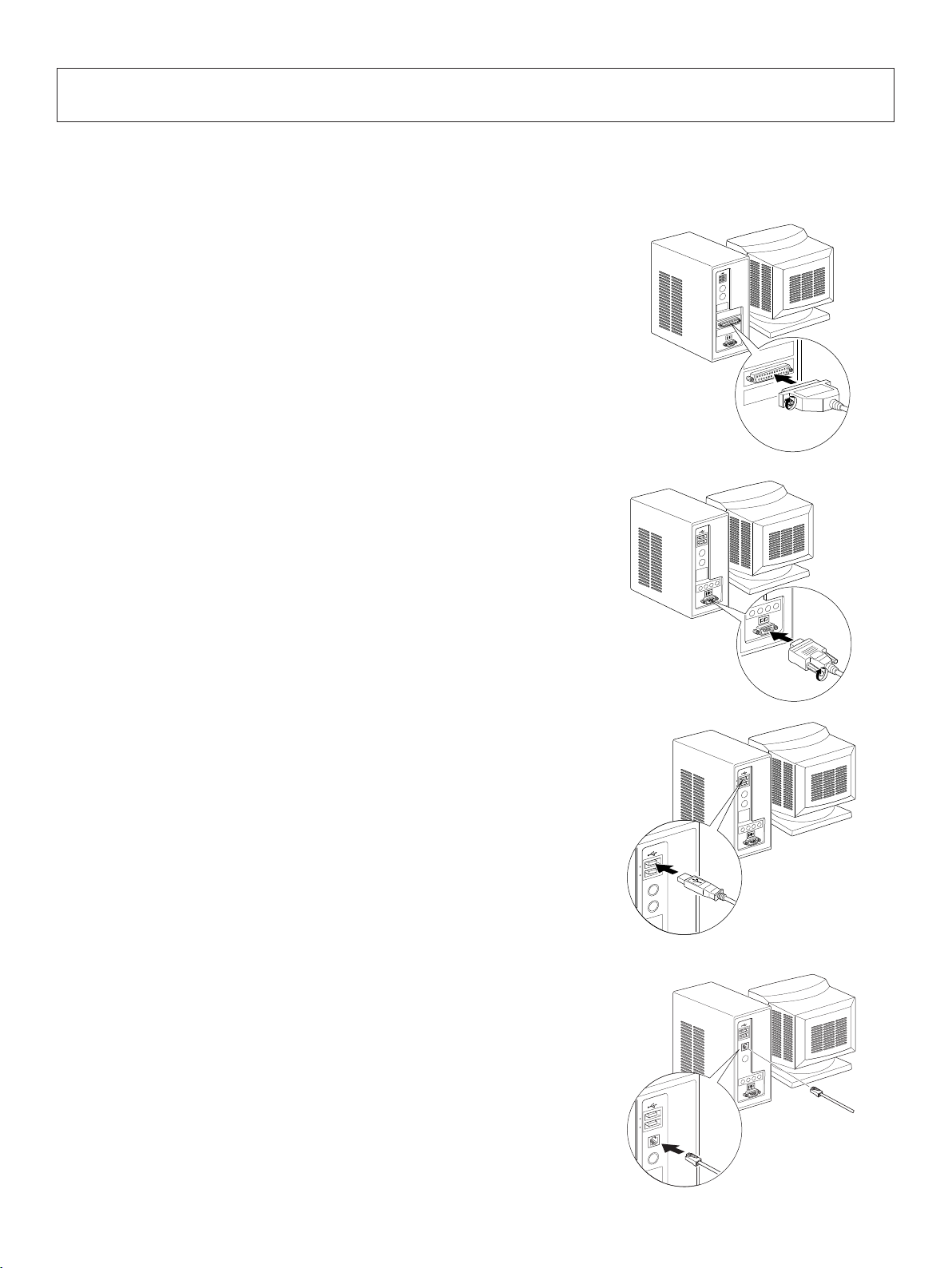
4-1. Connecting the Cable to the PC
4-1-1. Parallel Interface Cable
Connect the parallel interface cable to a parallel port
of your PC.
4-1-2. RC-232 Interface Cable
Connect the RC-232 interface cable to a RS-232 port
of your PC.
4-1-3. USB Interface Cable
Connect the USB interface cable to a USB port of
your PC.
4-1-4. Ethernet Interface cable
Connect the ethernet interface cable to a ethernet port
of your PC.
Altri manuali per OkiPos 441
2
Indice
Altri manuali Oki Stampante

Oki
Oki MICROLINE ML320 Manuale utente

Oki
Oki C911dn Istruzioni per il montaggio

Oki
Oki ES9541 Manuale utente

Oki
Oki Okipage8z Manuale d'uso e manutenzione

Oki
Oki MPS710c Manuale utente

Oki
Oki OKIPAGE8c Manuale di istruzioni

Oki
Oki ML8810 Manuale di formazione

Oki
Oki C3400n Manuale utente

Oki
Oki PRO330S Manuale utente

Oki
Oki C831TS Manuale del proprietario