MEMS Vertical In-Place Inclinometer, 2009/7/10 1
Introduction
Vertical In-Place
Inclinometers
The in-place inclinometer system
consists of inclinometer casing and a
string of in-place inclinometer
sensors.
The inclinometer casing provides
access for subsurface measurements,
controls the orientation of the sen-
sors, and moves with the surround-
ing ground.
In vertical installations, the casing is
installed in a borehole that passes
through a suspected zone of move-
ment into stable ground below. One
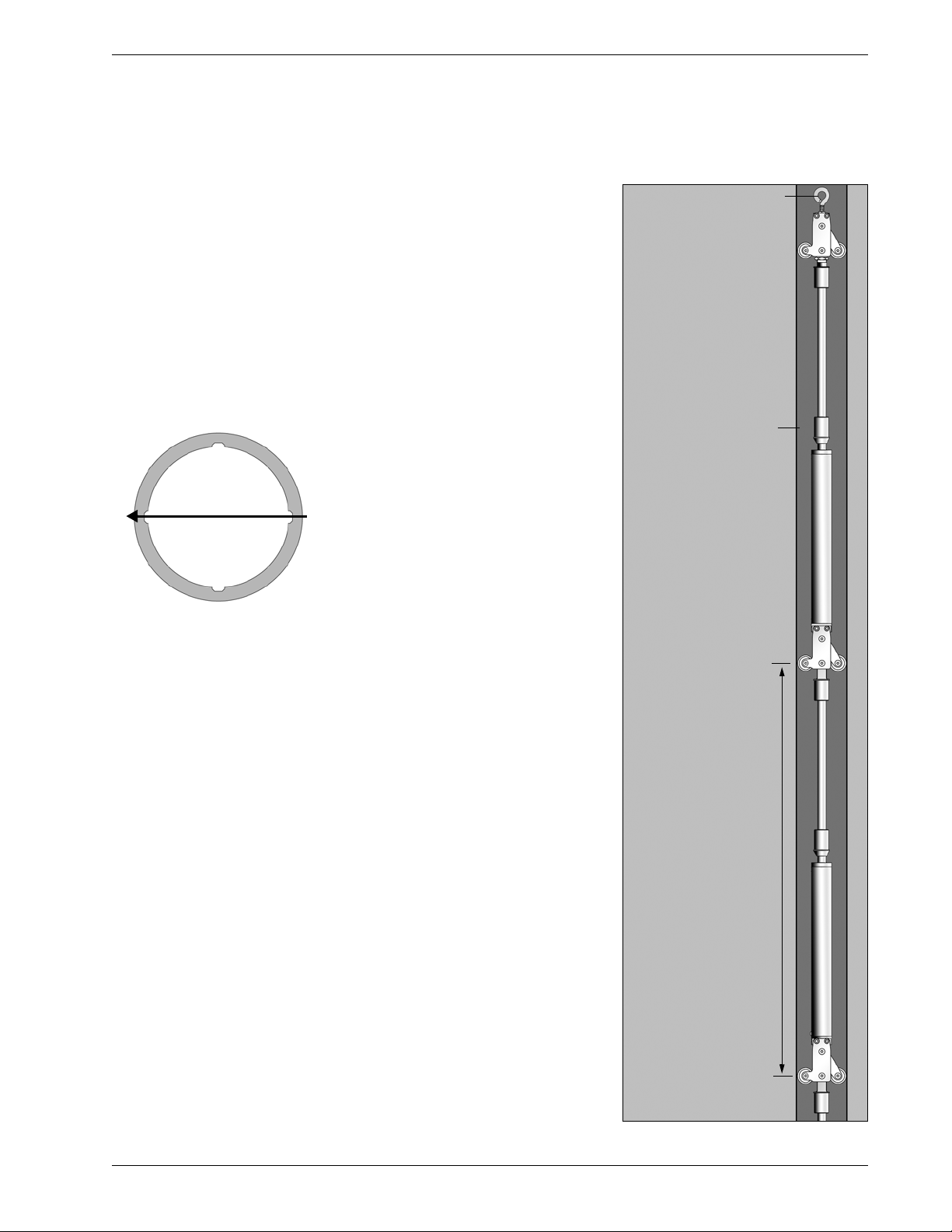
set of grooves in the casing is aligned
with the expected direction of move-
ment, as shown in the drawing at left.
The grooves in the casing control the
orientation of the in-place sensors. A
stainless steel cable keeps the sensors
at the required depth.
The sensors measure inclination
from vertical. As ground movement
occurs, the casing moves with it,
changing the inclination of the sen-
sors inside the casing.
The inclination measurements are
then processed to provide displace-
ment readings in mm or inches.
In most applications, sensors are
connected to a data acquisition
system and data processing is com-
pleted by a computer program.
Casing should be installed
with one set of grooves
aligned with the expected
direction of movement.
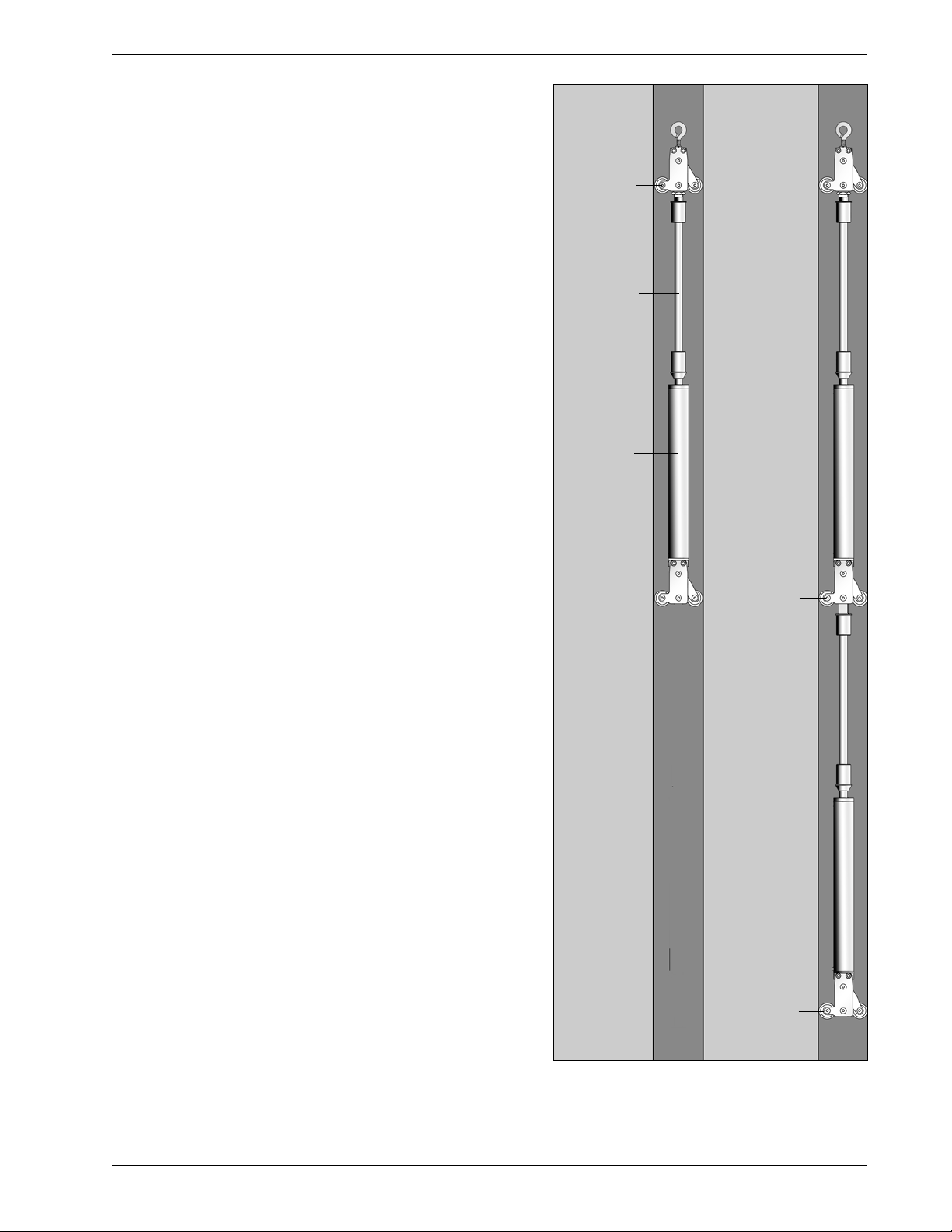
The wheels of the sensors are
inserted in these grooves.
Expected Direction
of Movement
Casing is installed with
one set of grooves
aligned with the
expected direction of
movement.
Sensors wheels are
inserted into these
grooves to maintain the
proper orientation of
the sensors.
The gauge length of
each sensor is the
distance between
the fixed wheels.
Sensors are suspended
in the casing by a cable
that is attached here.